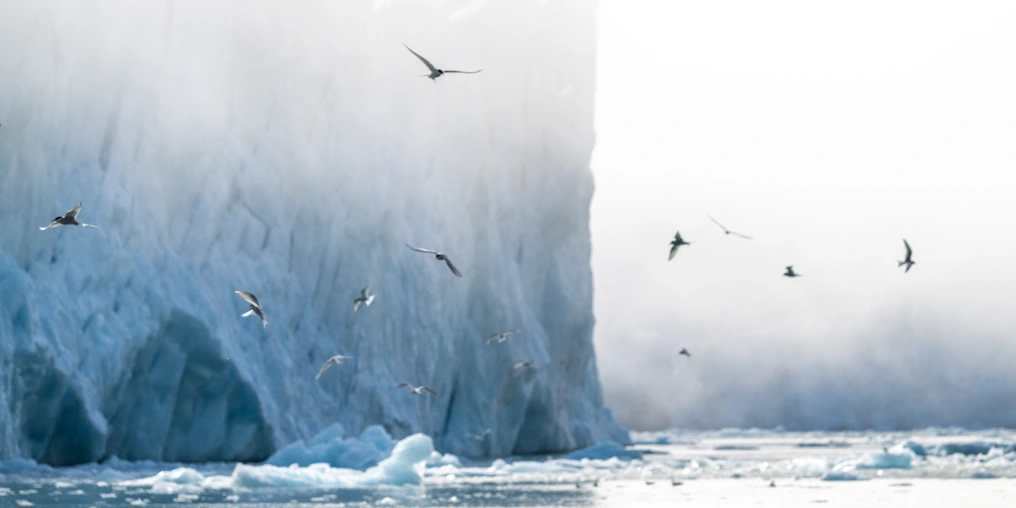

Svalbard is a remote Arctic archipelago touched by sea ice for many months of the year and bathed in 24-hour daylight from mid-April to late August. These islands are certainly a dream destination for the more rugged adventurer in search of a true polar experience, but it is a landscape that demands that you come properly prepared. The temperatures in early spring can be as low as -30°C (before windchill) and climb up to a balmy 6-7°C-ish at the height of summer.
I have spent many months in this Arctic paradise, guiding photographers, film crews, and wildlife enthusiasts on small-ship expeditions. As an expedition leader and guide, I have been privileged to travel to some of the world’s most remote places during my career; of all the locations I have explored, Svalbard was the one to steal my heart.
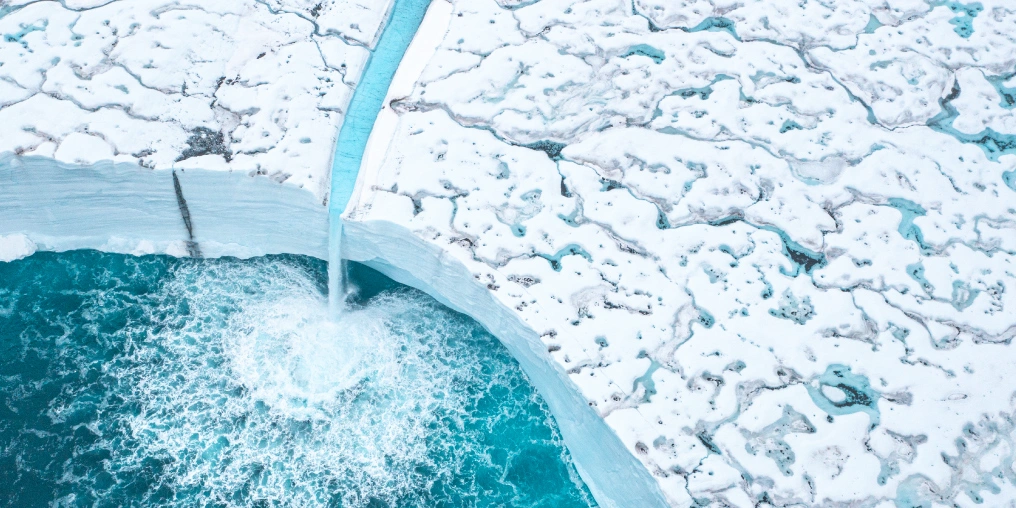
The islands of Svalbard are located between 74° and 81°N latitude; the northernmost tip is roughly 1000 km south of the North Pole. In the height of summer, depending on sea-ice conditions, vessels can travel up to a few hundred kilometres further north than the islands of Svalbard before encountering pack ice so thick that only icebreakers can move further. If wind and ocean swell allow, vessels that have proper ice-strengthened hulls can sit in the pack ice for days, waiting and watching for whales, seals, birdlife, or a polar bear to appear.
“The luckiest of visitors may have a curious polar bear approach their vessel.”
The polar bear
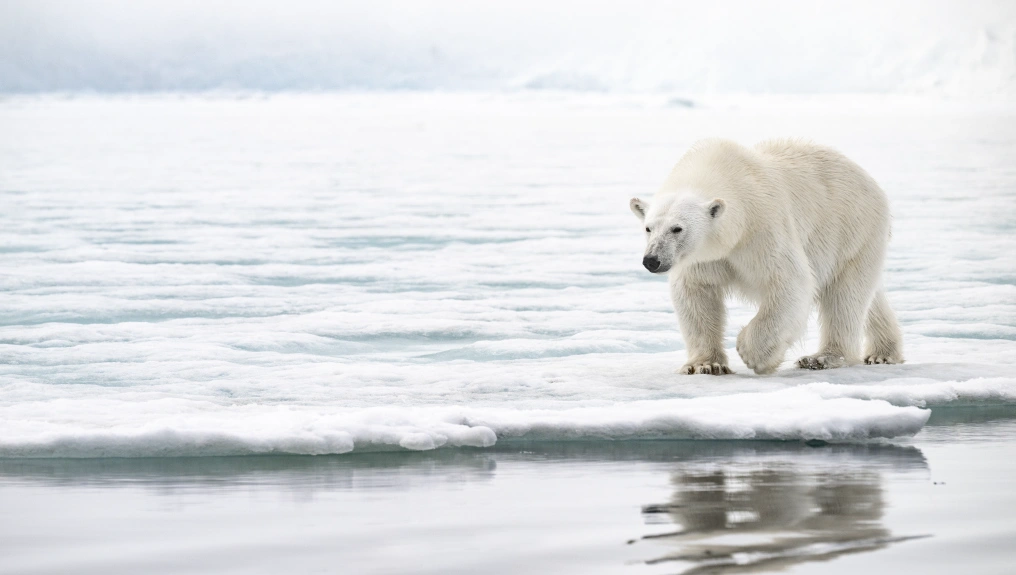
Any sighting of a polar bear is a privilege. It takes patience, strategy, a tolerant bear (and a whole lot of luck!). The luckiest of visitors may have a curious polar bear approach their vessel. If the humans on board are very well behaved, a polar bear might walk right up to the ship for a closer view (with proper bear/human safety protocols in place, of course).
Arctic birdlife
Svalbard is visited annually by over three million birds who come to breed, lay eggs, raise young, and fatten up on the incredible density of fish and crustaceans available here. All of this happens in the space of a couple of months, before the birds depart for warmer, more southerly climes for autumn and winter. It’s an ornithological marvel! Even folks who “don’t like birds” are unable to resist the allure of the Atlantic puffin after their first sighting. The king eiders, guillemots, and auklets are also sure to draw attention. Alkefjellet is a spectacular bird cliff, rising more than 100 metres from the sea, that houses over 60,000 breeding pairs of Brünnich’s guillemots alone. When seen from a Zodiac cruise along the base of the cliff, the adult birds coming and going make one heck of a spectacle.
Whales, walrus, and five species of seal
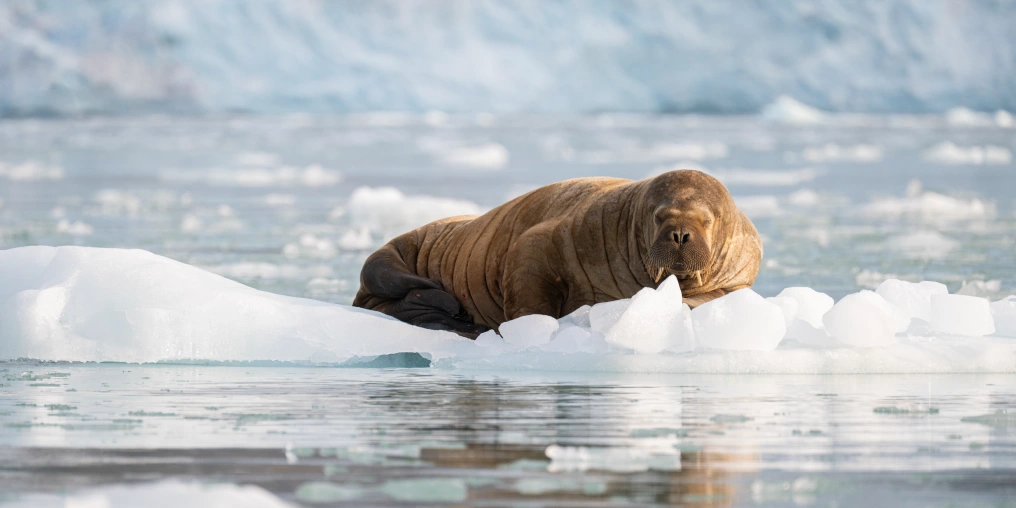
Aside from polar bears, other species of marine mammals that frequent the waters around Svalbard include walrus, five species of seal (ringed, harbour, bearded, harp, and hooded) and multiple species of whale, including minke, humpback, beluga, the ever-elusive narwhal, orca, bowhead, and fin, to name a few. Even the blue whale graces the mouths of the fjords here during the summer months.
“If you’re patient enough and the time is right, it’s possible to sit quietly near a den and wait to watch the kits emerge and wrestle with their siblings on the Arctic tundra.”
Arctic fox and Svalbard reindeer
On land, the arctic fox and the Svalbard reindeer, an endemic species that is much smaller than other species of reindeer, are crowd favourites. While hiking, both species can often be viewed at close range. Local guides know the location of many den sites—if you’re patient enough and the time is right, it’s possible to sit quietly near a den (with a guide on alert for wandering polar bears) and wait to watch the kits emerge and wrestle with their siblings on the Arctic tundra.
Wildlife aside, the experience of exploring Svalbard is sure to enthral any seasoned expeditioner. Between the wildflowers, the landscape, the glaciers, the waterfalls, and the interplay of light and ice, there is a surprise waiting around every corner. Under the midnight sun, it’s often hard to get to bed at a reasonable time. It seems that the later the hour, the more beautiful the views. Before you leave, don’t forget to do a polar plunge in the icy Arctic waters—but watch out for the walrus while you catch your breath—they can be prickly.