




The original trip plans to visit Morocco, coinciding with our sixtieth birthdays in 2020, were crushed by a motorcycle accident and COVID-19. Jump ahead to 2024, and we were finally going to get back to my wife’s birthplace, Casablanca, where she spent the first 13 years of her life. Then we’d roam around this geographically enticing land full of rich cultural experiences, eye-popping landscapes, and aromatic tagines and couscous.
The medinas (ancient walled cities) and souks (markets) were to be the main focus of our trip to this fabled and enigmatic country. Wandering off into ancient crumbling casbahs, Saharan dunes, and sand-dusted back roads would easily fill the rock-strewn spaces between.
Flying into Tangier in mid-September for our thirty-day trip allowed us to miss the sweltering summer months and depart before the colder winter weather set in. First, we hopped on a train to Casablanca and Rabat for a few days. On our return to Tangier, we picked up our rental car and entered the motoring fray of roundabouts and scooter-dodging. Other than the ubiquitous donkey carts, scooters, and motor tricycles, driving outside the cities would theoretically be less crazy.
Morocco’s rural landscapes
As we moved out of the cities, we were met with an unfolding tapestry of agriculture and landscapes. Rolling hills of olive trees told of the importance of this product both as an export and a cultural mainstay. Most of our breakfasts included olives and olive oil as a matter of course.
Groves of argan trees, indigenous to Morocco and Algeria, produce kernels that are pressed for their oil. It is consumed as a condiment and is also big in cosmetics. At first, we wondered what the small trees we saw in passing were; boxes of pomegranates answered the question. Palm dates were everywhere, in piles and boxes.
The agriculture eventually thinned out to a scene of crushed red and brown stone, with not much but the odd shrub here and there. It looked like a Martian landscape, but with small herds of goats or sheep, tended by walking shepherds miraculously scratching an existence out of nothing. Using Google Maps was a good aid, but at times it would lead us down more remote roads of ever-decreasing quality. We had some interesting “scenic routes” and some, such that when sand started to cover the roadway, a U-turn and re-routing were in order.
Exploring the great cities in Morocco
Our travels took us to all the great cities: Tangier, Chefchaouen, Fez, Rabat, Casablanca, and Marrakesh. We intended to stay in dars or riads, traditionally built houses made of brick, adobe brick, stone, or rammed earth. When we arrived at a dar, it would open up into an attractive atrium of multiple stories and rooms, and in the case of a riad, beautiful garden plants would line a large courtyard with a central fountain.
Usually, our first opportunity to go awry was after we had entered one of the city gates (babs) on our way to find our accommodation. Even with directions, maps, and photos, it was still easy to get befuddled in the maze of narrow streets, tunnels, and alleys before finally finding our destination. After a refresh and possibly some tips from a host, we would strike out, walking shoes on, into a timeworn city to discover the magic of its dizzying labyrinth.
The magic of Fez medina
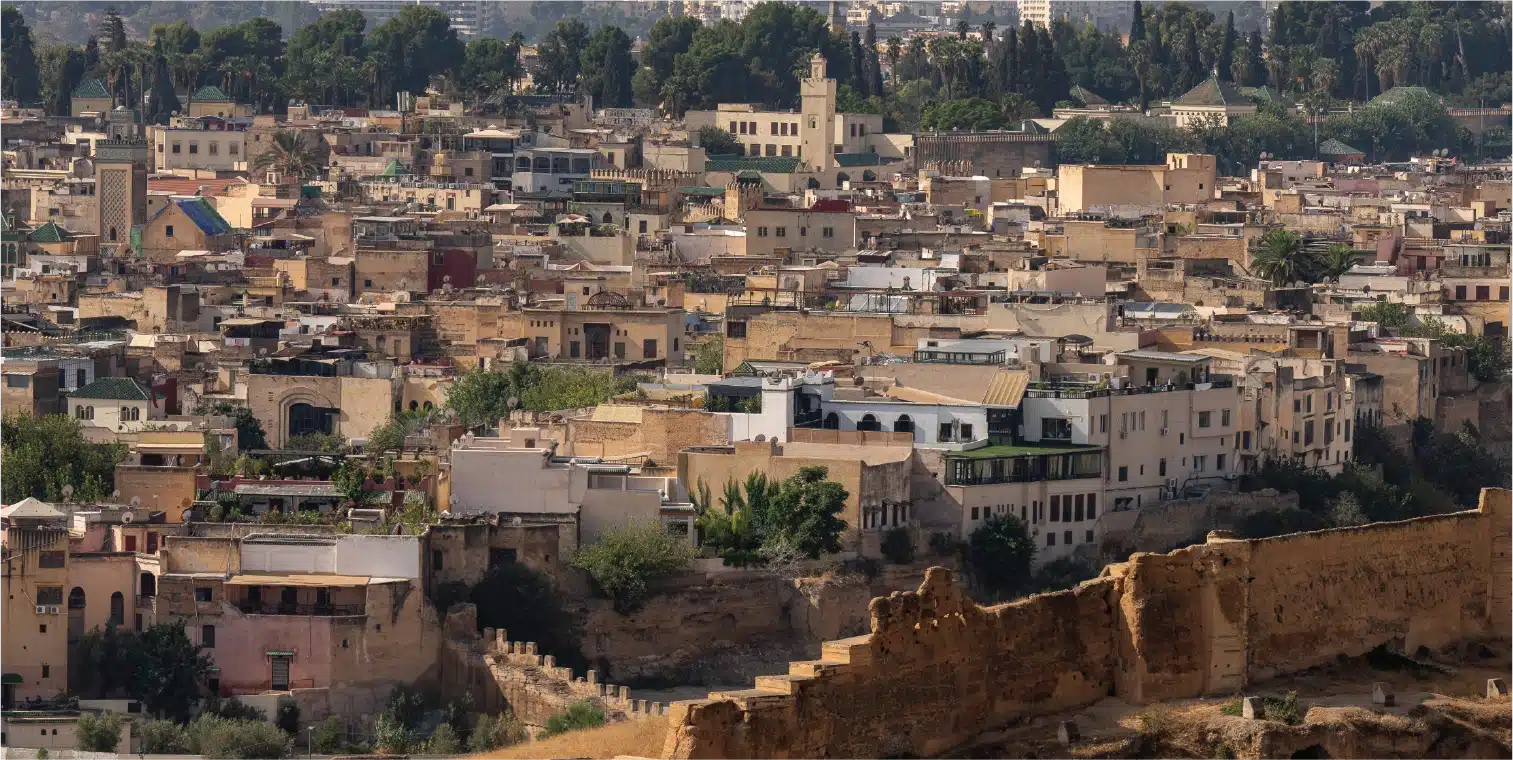
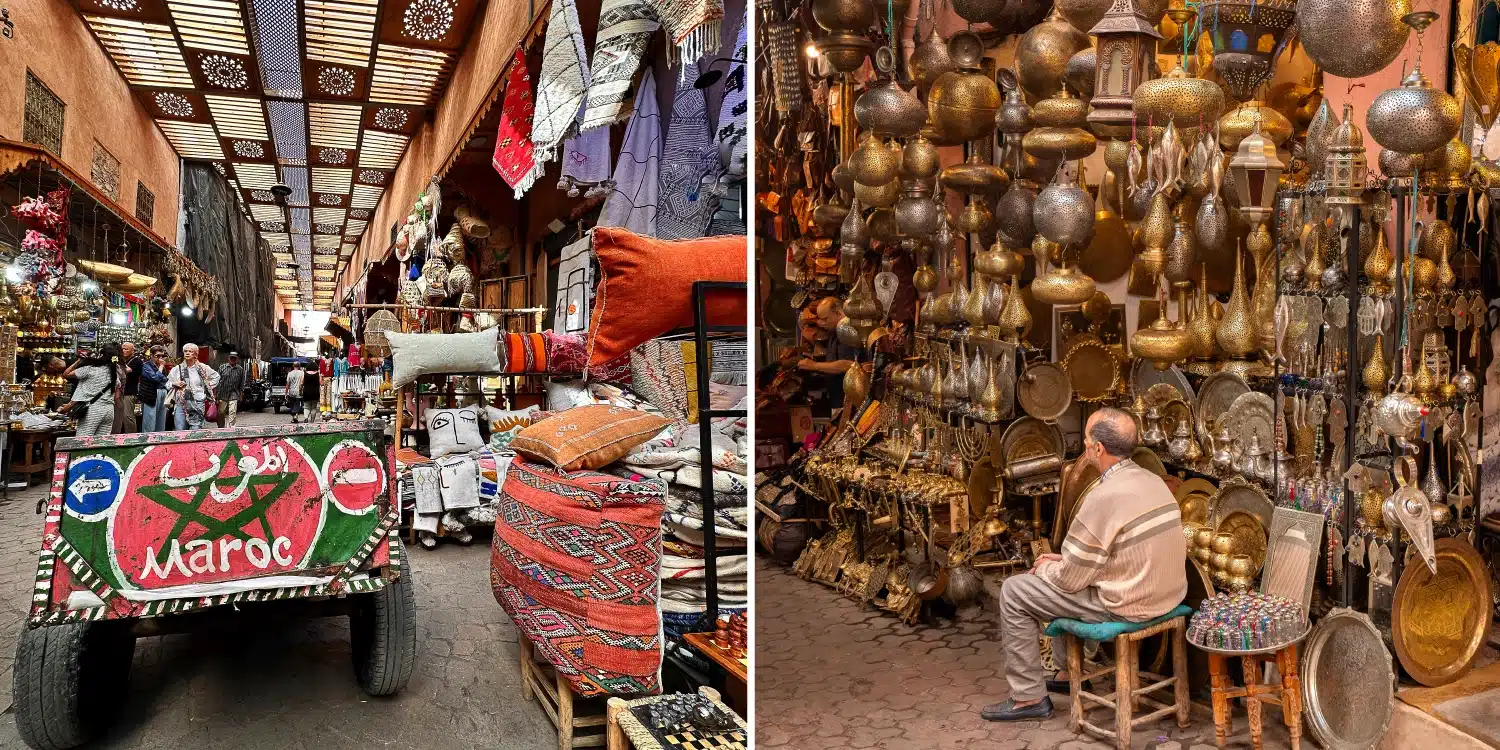
The Medina of Fez is the largest inhabited medina in the world. We were excited to have three and a half days there to explore. Markets have always been a big attraction for me, as this is where daily life goes on. Locals shop for produce, meats, herbs and spices, dry goods, and many of life’s other necessities. The souks of Fez draw you in. Their sights, sounds, and aromas crash against your normal expectations of what shopping is like. The tourist shops will make your head spin with colours, scents, textures, and shapes by the carpet pile. It almost overwhelms the senses. With over 9,400 cobblestone alleys leading you around almost four square kilometres, it is easy to get disoriented in the eighth-century walled city of Fez.
On our second day there, we reluctantly engaged an official guide. At first, we had avoided guides like the plague, as everyone wanted to be our guide, for a price. But as we moved through the archaic city, glimpsing opulent riads, the bowels of the souks, and bread being baked in communal bakeries—along with a few obligatory stops at a carpet shop or herb and spice emporium we realized we were getting to see areas of the medina we never would have found on our own, all while receiving a history lesson. We walked until our legs were ready to give out. The more time we spent in these ancient cities going astray, the more comfortable we were with being present and, of course, finding our way.
Read more from our collection of Travel Articles.


