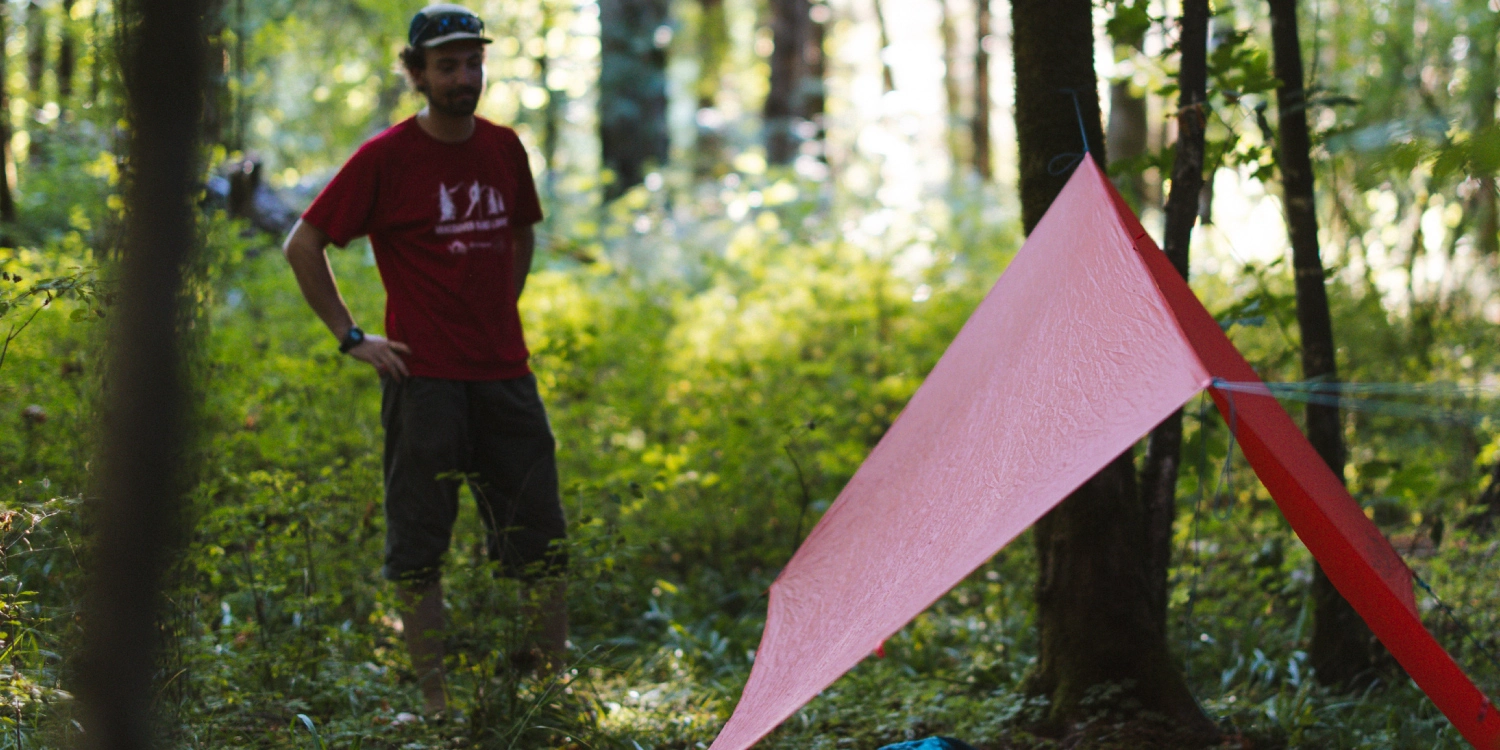
I spend a lot of time on the trails in Cape Scott Provincial Park, and I often camp without a tent, because it’s convenient and lightweight: I can carry a tarp anywhere and know that I’ll be dry. I probably wouldn’t do this anywhere else in Canada because of the bugs, but the Vancouver Island backcountry is a great place for tarp camping.
Why tarp over tent?
- A tarp is smaller and lighter.
- You should already be bringing a tarp, anyway. It’s an essential piece of backcountry first-aid equipment.
- You can camp literally anywhere with a tarp (a tent needs open space).
- A tarp can offer more headroom than many single-person tents. And you can rig it really low in windy situations.
- It’s less expensive. A tent offering similar space is probably $400 new—and you can’t cook under it if the weather’s bad!
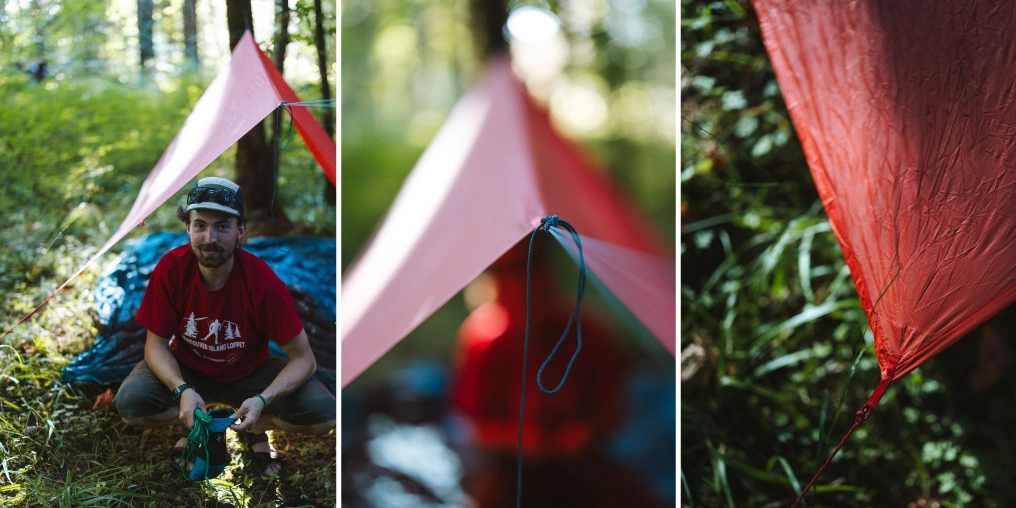
What type of tarp?
For above your head, the key word is siltarp—a lightweight tarp made of waterproofed/siliconized nylon. A top-end one is around $200. Look for one that’s longer than you are tall and twice as wide as you. You may want a slightly heavier-duty nylon tarp for a groundsheet; I bought one from Canadian Tire for about 40 bucks. It’s really taken a beating over the last couple years, and it’s still intact and waterproof.
How to set it up?
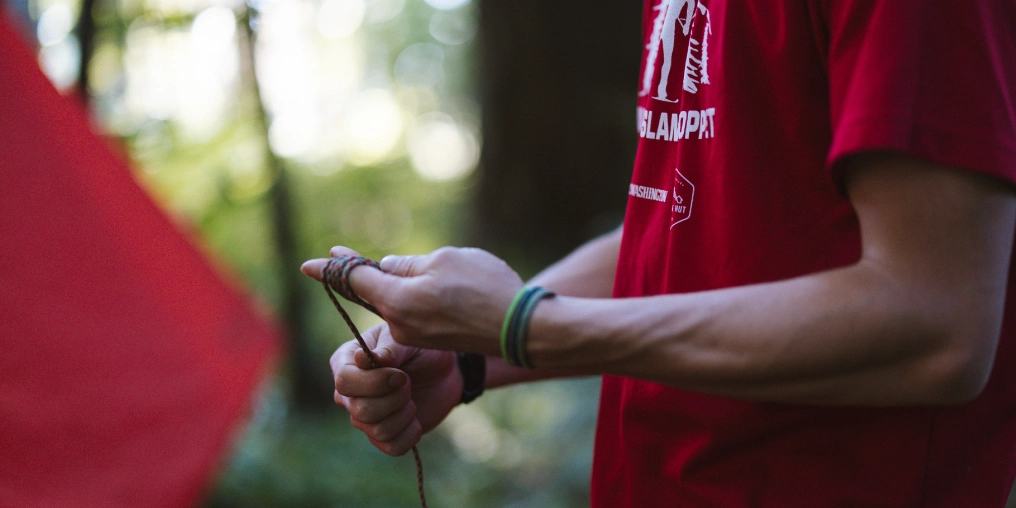
There are lots of ways to rig a tarp. Obviously, you need some cord (you wouldn’t be in the backcountry without cord!) and you also need some knowledge, confidence, and skill with ropes and knots.
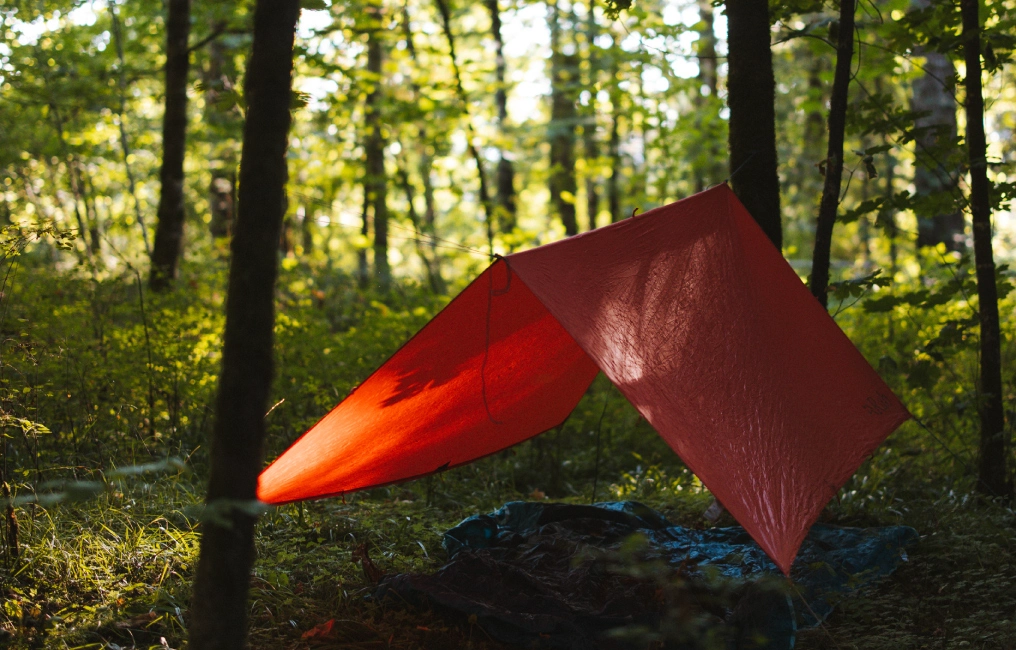
My go-to is to affix the cord/ridgeline between two trees, then drape the tarp in an A-frame shape so it looks a bit like an old canvas tent.
On the beach, I place a driftwood pole upright in the sand, ensuring it sticks out at least waist-high above the surface. My head goes at this end. I put a shorter pole past where my feet will be. Then I affix my line to the highest point of the pole and to the stake to make the ridgeline, and use heavier driftwood to secure the tarp’s sides.
What about rain?
The most important thing is choosing the right site: don’t set up your tarp in a hollow or a low point. Next, secure all four corners of the tarp at a 35° or steeper angle from the ridgeline to shed water efficiently. It’s important that the peak/ridgeline be the highest point by a good foot. And you need good knots! If you don’t tie your tarp well, it won’t matter how good the drainage or site selection is.
What about bugs?
Not really a problem on the Island, but a lightweight mesh bivy that covers your sleeping bag can help defeat every last critter.
How many people are doing this?
Honestly, there aren’t that many enthusiasts. But I kind of like being that weird dude on the beach who’s camping under a tarp.