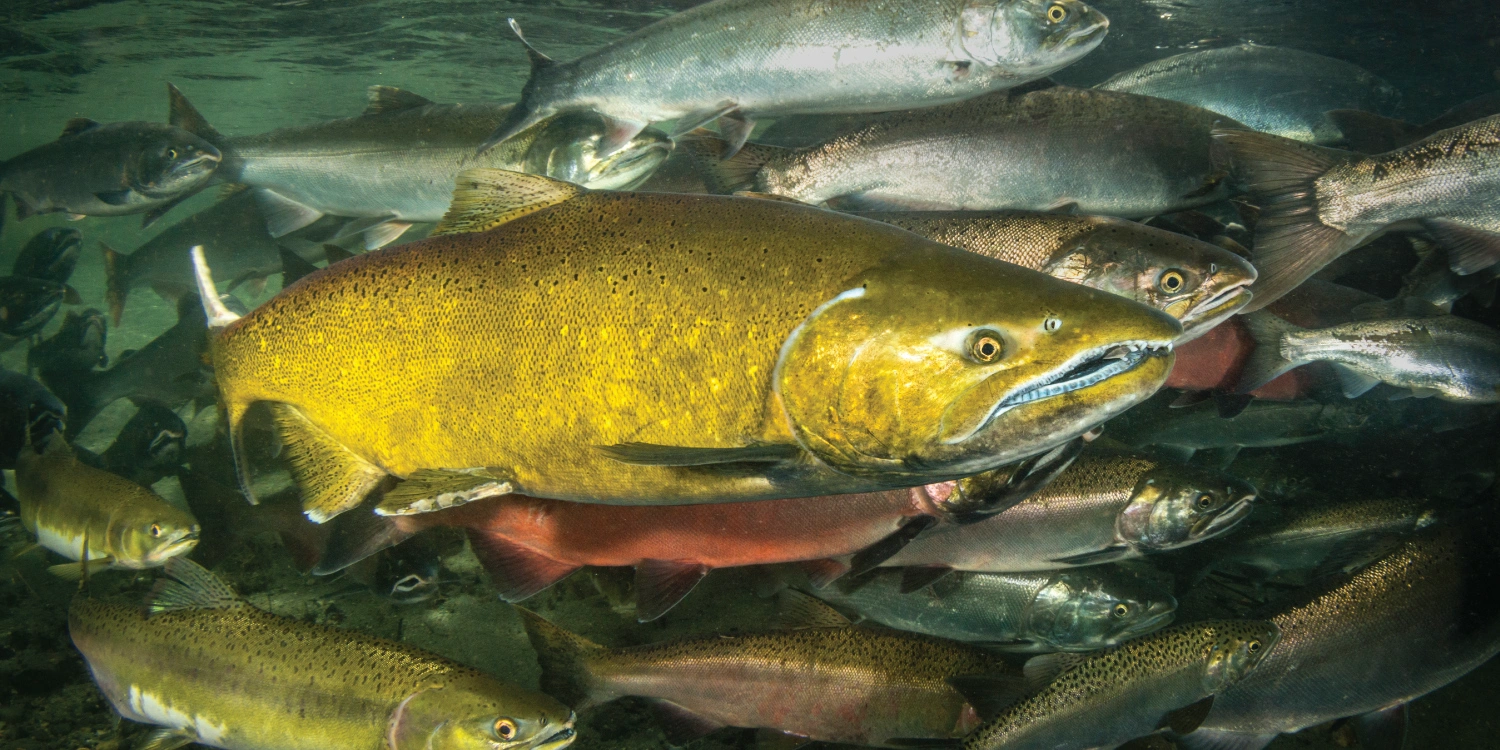
Every fall, one of nature’s most extraordinary migrations takes place right in our backyards. Across coastal British Columbia, millions of Pacific salmon return to the freshwater streams and rivers where they first hatched. Some travel incredible distances to reach their spawning grounds—up to 1,300 kilometres upstream, or roughly equivalent to the length of the United Kingdom.
Returning salmon feed predators like black bears, bald eagles, and marine mammals. After they die, their carcasses release ocean-derived nutrients like nitrogen and phosphorus vital to rainforest ecosystems.
For residents and visitors in the Comox Valley, experiencing this natural phenomenon requires no expensive charter or remote wilderness gear. In fact, it’s an accessible and fun activity for fish fans of all ages.
The Pacific Salmon Foundation (PSF) maintains an updated interactive map detailing publicly accessible viewing locations near you. Several urban and suburban streams within the Valley offer front-row seats to this remarkable journey.
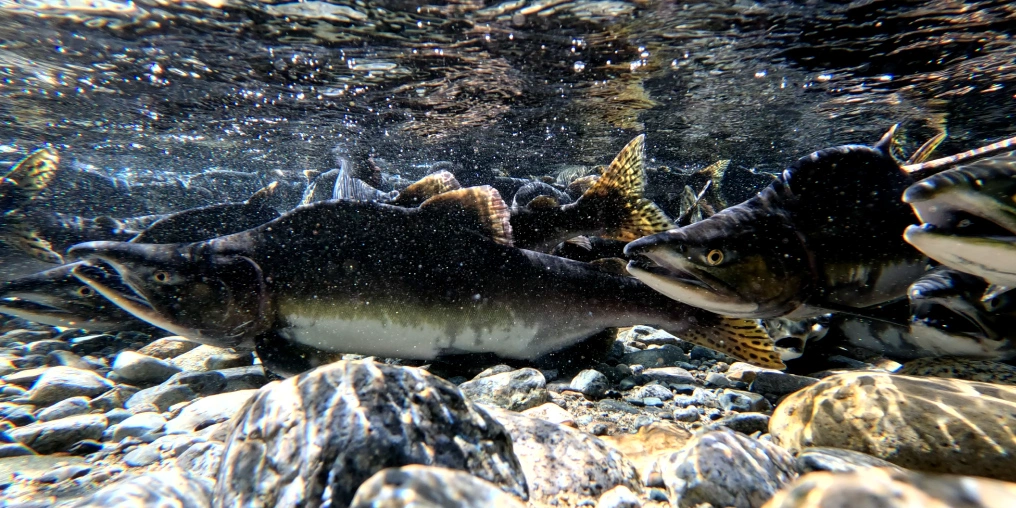
Where to watch the salmon run in Courtenay and Comox
Millard Creek
With its headwaters in the wetlands and underground springs fed by the Beaufort Mountain Range, Millard Creek winds through the Comox Valley before emptying into the estuary. In early autumn, you can see salmon in action roughly 100 metres north of the Millard Creek Nature Walk trailhead along the Courtenay Riverway, near the corner of Millard Road and Sandpiper Drive.
The lookout is easily accessible by foot and wheelchair. Chum and coho arrive in October, while pinks show up earlier in September—but only in even-numbered years. This quirk dates back thousands of years to when glaciers likely split pink salmon into genetically distinct groups, each locked into a strict two-year cycle.
Brooklyn Creek
In Comox, the trails in Mack Laing Nature Park and Brooklyn Creek Park offer a tranquil circuit with prime watching opportunities. From October onward, look for coho (and pinks in alternating years) valiantly surging up the fish ladder just south of Balmoral Avenue. With support from PSF, the Brooklyn Creek Watershed Society has restored the ladder, planted more native species, and added new educational signage in recent years.
Quick tip: hit the trails after periods of heavy rain, which raise water levels and push the fish along their migration journey.
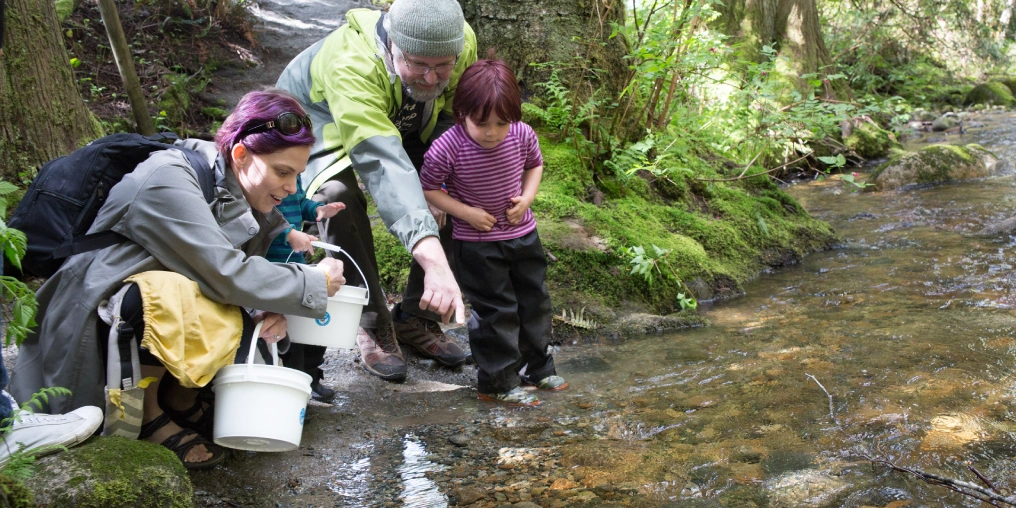
Puntledge River Park & Hatchery
The Puntledge River runs from Comox Lake west of the Inland Highway downstream to connect with the Tsolum River, where the two then form the Courtenay River flowing out to the sea. Hundreds of returning adult pink, coho, chum, and Chinook salmon can be seen from Puntledge Park from late summer through to December. The Puntledge River Hatchery, open from 8 a.m. to 3:30 p.m. daily, features self-guided educational displays.
Jack Hames Spawning Channel
Originally constructed by the Courtenay and District Fish and Game Protective Association and now preserved as part of Bear James Park, this side channel provides vital spawning habitat for returning adult pink salmon in September, followed by chum through November. A well-maintained walking trail spans the length of the channel, allowing visitors to observe spawning behaviours up close.
How to watch spawning salmon without disturbing them
Respect for the fish and the ecosystems they rely on is essential. Salmon can see us and are easily spooked. Approach stream banks slowly and quietly, avoid sudden movements, and never throw debris into the channel. Spawning salmon construct shallow nests in the gravel, called redds, to deposit their eggs, so stepping into the riverbed can crush hidden eggs. To minimize disturbance, keep pets on a leash and out of the water. Finally, keep in mind that stream banks can be slick or unstable, particularly during heavy fall rains.
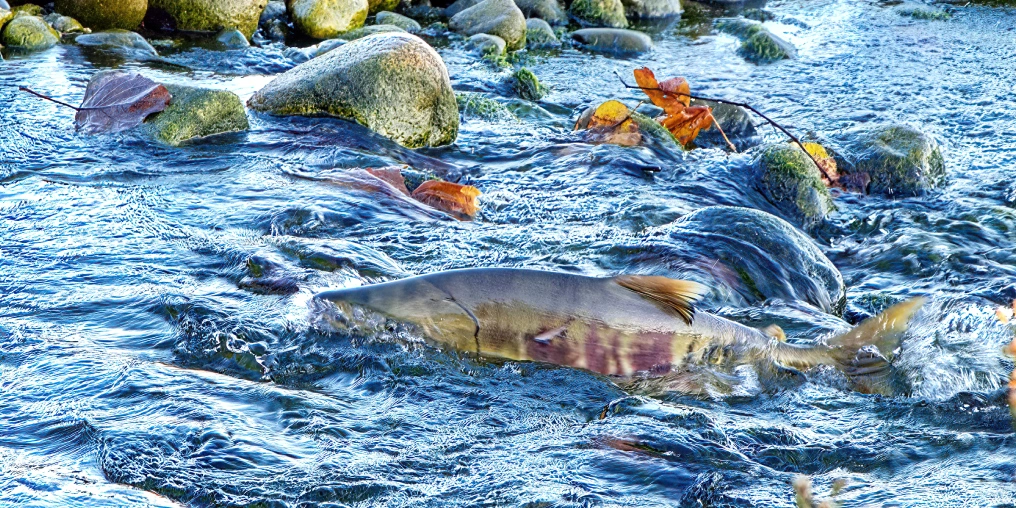
The PSF’s latest State of Salmon Report
The PSF’s latest State of Salmon Report highlights the current situation across the East Vancouver Island and Mainland Inlets region. As of 2025, coho, pink, and especially Chinook salmon are making a comeback. Good ocean conditions in the Strait of Georgia are benefiting some populations, and several are thriving.
However, chum, sockeye, and steelhead are still well below their long-term historical averages. Several partners, including local stewards in the Comox Valley, are hard at work to drive recovery efforts and ensure healthy salmon for future generations.
Plan your next fish-viewing adventure and learn more about this work at psf.ca/salmonspotting.