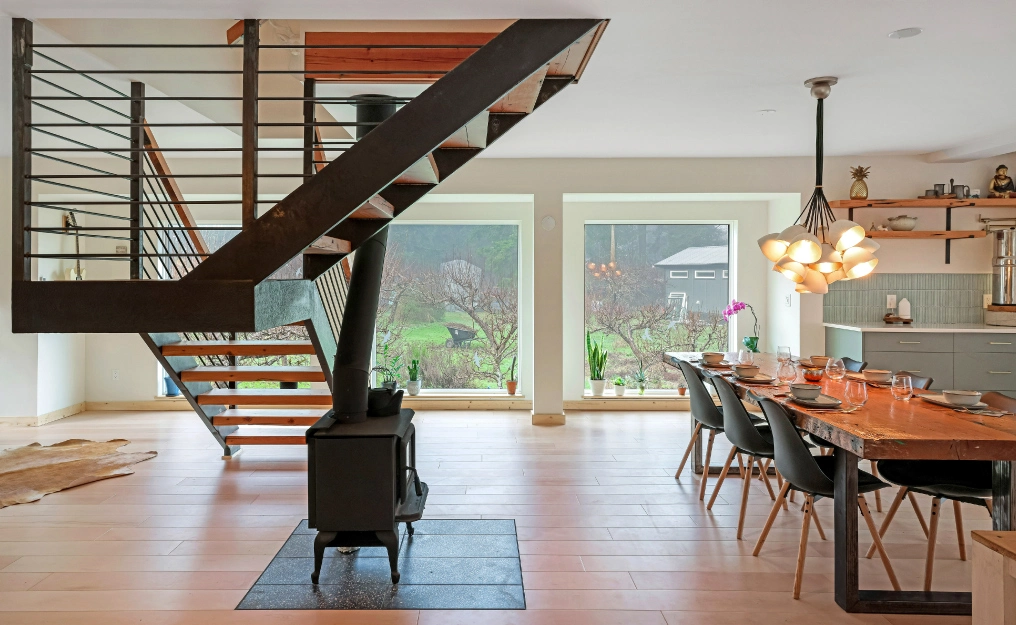
There is an amber glow in our wood-burning fireplace as I sip my morning tea and look out on the orchard crystalline with frost. It is a perfectly cozy morning in our renovated farmhouse, just over a year since we settled back into its walls.
My feelings around my lovely home and the Comox Valley weren’t always so rosy, as it took me quite a while to truly feel in my element after leaving our home and community in North Vancouver. It wasn’t that the Valley wasn’t welcoming; my husband, Jobie, and I would often comment on the genuine kindness of folks we had only just met while running errands or taking the kids to activities.
In those early days, I missed my mainland community, but I also felt a bit adrift, as we bought our farm after having fallen in love with what was possible, instead of what was current. When time, hard work, money and living out of boxes are involved during a wet and dreary Pacific Northwest winter, it can feel challenging to keep one’s heart afloat as it attempts to bob along to the destination.
Leaving North Vancouver for five acres in Seal Bay
Until 2022, our family lived in North Vancouver in a log home that Jobie had gutted and renovated in 2018. He was running his company, Little Star Renovations, and we spent our free time on an acre of land we’d bought on Gambier Island in Howe Sound. But after COVID came and went, we decided that the city wasn’t serving us anymore. If we were going to make a big move, it was now or never.
Jobie and I had a long-held dream of moving to a property with at least five acres. We discussed many places, but something drew us to the Comox Valley, even though we had only visited a handful of times (including for our wedding at Alders Beach Resort in 2016).
“We bought our farm after having fallen in love with what was possible, instead of what was current”
It all happened very quickly. After looking at only two properties, we made an offer on a farm in Seal Bay. The house was simple, sweet, and much smaller than our North Vancouver home, with just two bedrooms and very limited closet and storage space, but the land sealed the deal for us, as well as the close proximity to the beautiful park and ocean.
The five-acre lot included approximately two acres in forest, an established orchard, a barn, a very large greenhouse, and two goats named David and Patrick. We promptly put our North Vancouver home up for sale so we could afford the farm.
Building an addition onto a small kit home
The house was a kit home, clearly not designed for the kind of property it sat on. Working with Little Star Renovations’ in-house design team, we tried many different ways to convert the existing house, eventually landing on an addition that would plug onto the back. The beauty of this was that we could stay put while the addition was being framed, right up until it was time to break through into the existing house.
To complete the renovation and addition, we had to create another living space to move into. There was another house on the property that predated the one we were renovating: a 90-foot mobile home turned farm store and storage area that was full of rot, infested with rats, and needed an entire overhaul. During the many months while the addition was being built, we cleared out and cleaned up this “Ugly House.” We lived there for the eight more months it took Jobie and his labourer to demo, pour, frame, build, and finish our new home.
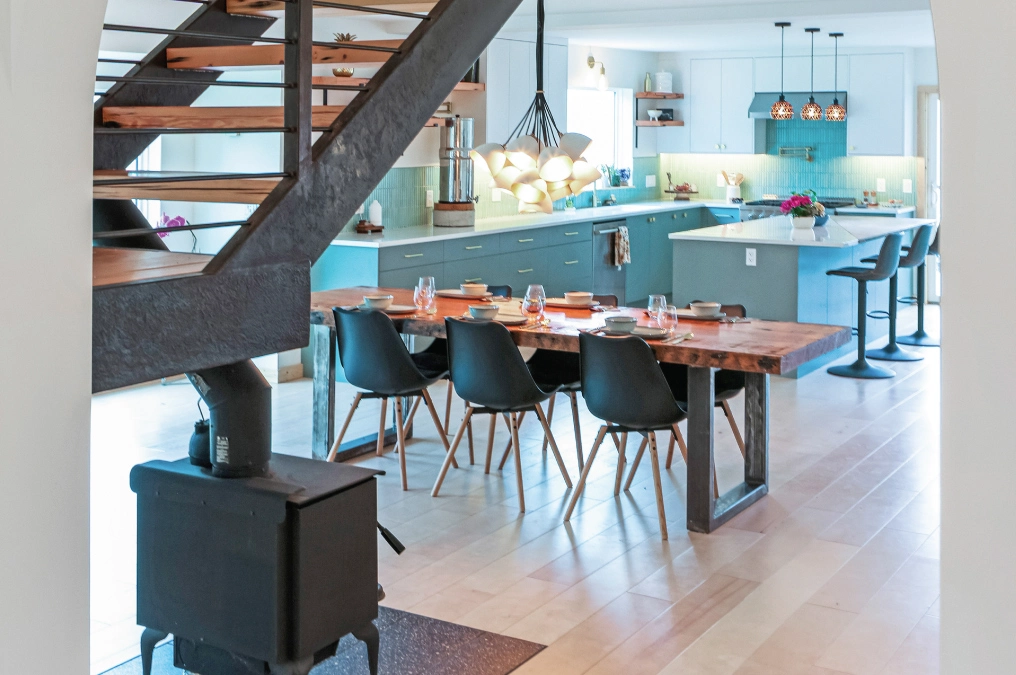
In the planning stages, we had worked hard to find the sweet spot where the dream and budget meet, balancing what we wanted to build against what we had to work with.
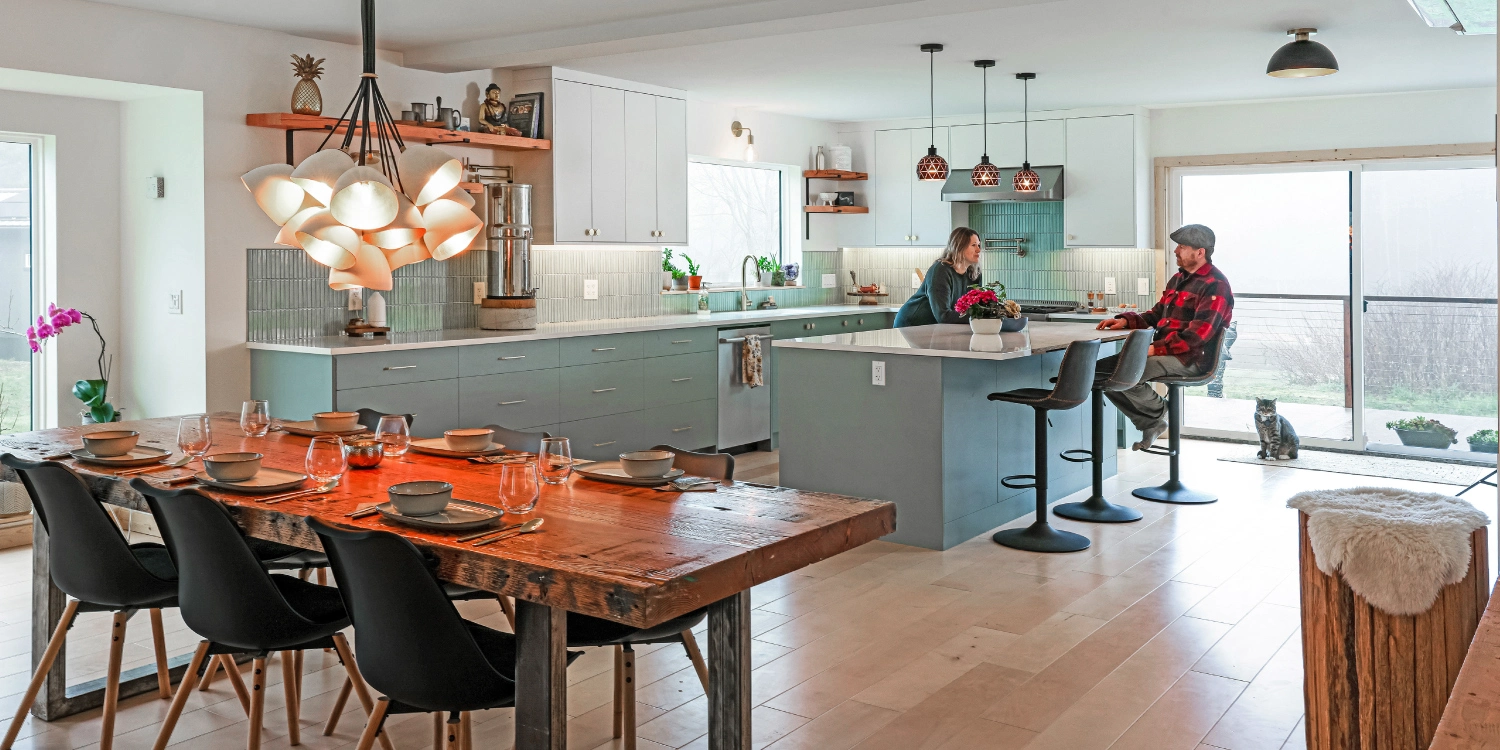
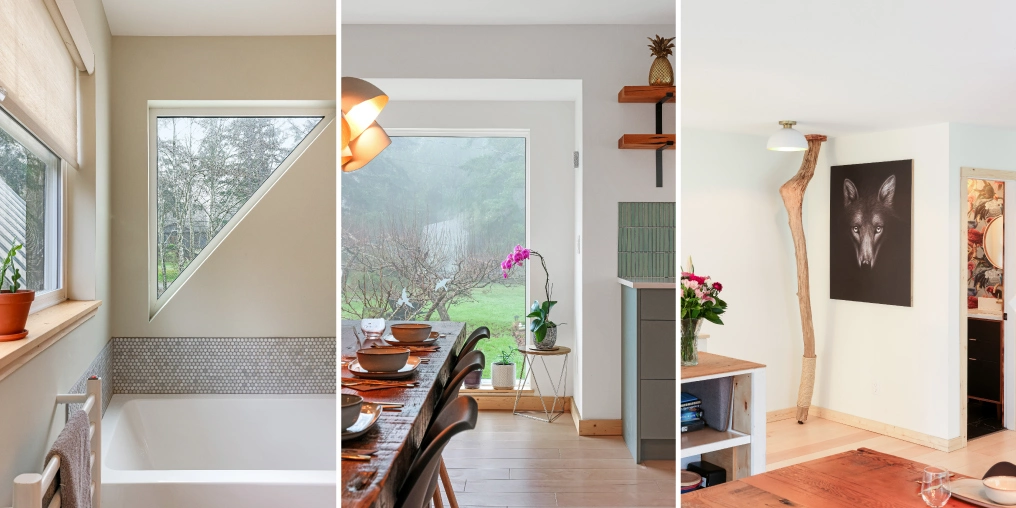
It was important for us to increase the size of the living space while maintaining a cozy feel. We loved the property and had bought the house for it, so we wanted to create a feeling of connection between the inside and outside worlds with large windows in the living room, patio doors off the kitchen, and a large deck.
A floating staircase made from reclaimed farm steel
Jobie and I both have an appreciation for time-worn items, and a desire to be resourceful and incorporate reclaimed materials into our projects.
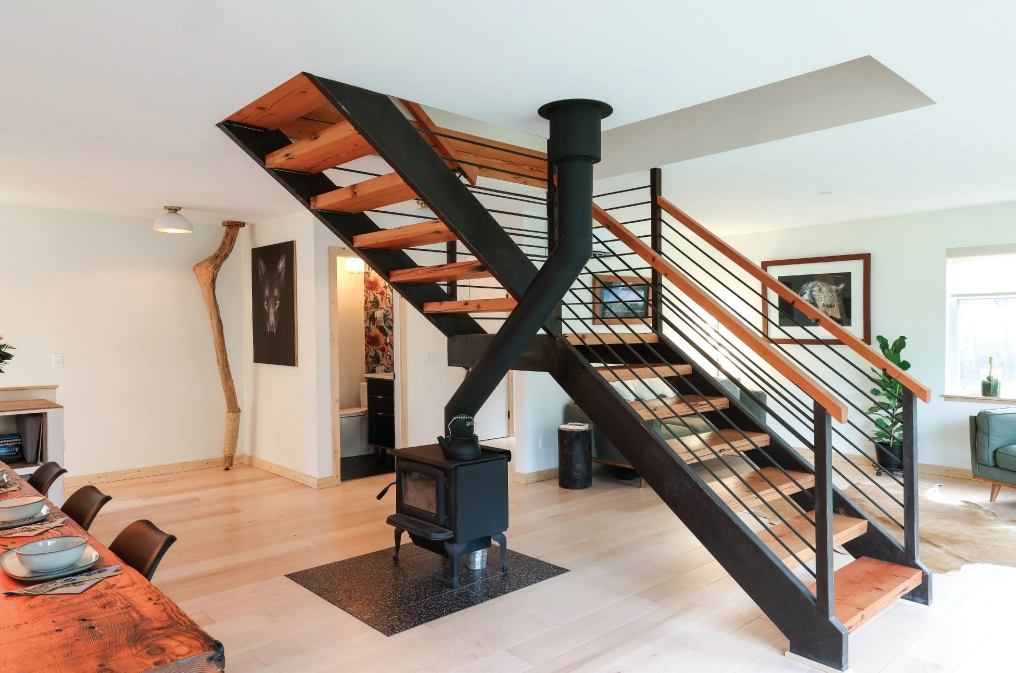
When he found some steel on the property, he decided to repurpose it. He and his friend (and creative extraordinaire) Adam Szoke co-designed a staircase that appears to float and engineered it to be hung from the top, instead of supported from the bottom. The heavy, sturdy frame is an architectural piece that we use every day, while its rusted, pitted texture is a visual connection to the history of the farm. The staircase has become one of the focal points of our home.
We are both highly creative and driven to create something on this land that is nourishing not only for our family, but also for our community. We grow fruits, vegetables, and flowers that we sell in our Giddy Up Farmstand on Bates Road, and we have plans to build a large space for community events, as well as increase the amount of flowers that we grow.
In our future here, we see more gatherings, more laughter, more connection, more flowers, bees and native plants. We see a place where our children can build homes if they desire, and envision grandchildren running in the wildflowers and playing with the goats. We remind ourselves that good things take time, and it’s the moments with each other—and memories of how this special place in Seal Bay stole our hearts—that we will truly cherish in the years to come.