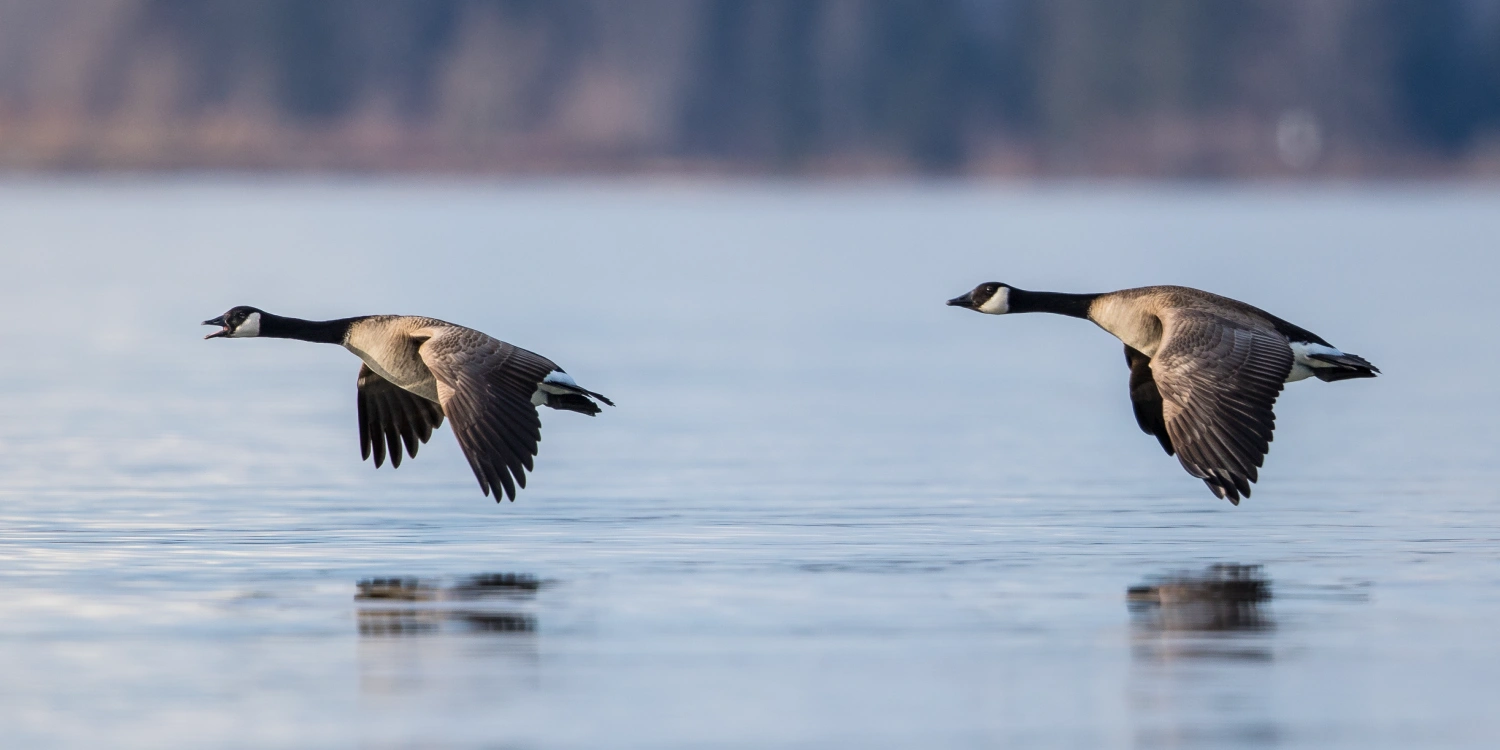
You hear them before you see them—those loud, distinctive calls overhead—and look skyward to see the iconic V shape of a flock of Canada geese. These powerful flyers are an impressive sight, with their long, black necks, white chinstrap markings, snowy white breasts, and grey backs and wings.
It used to be that these flocks were seen in the Comox Valley primarily when they passed through on their spring and fall migrations. Vancouver Island is part of the Pacific flyway—the route of migration for hundreds of bird species along the length of the West Coast from Alaska to Patagonia.
With its boggy wetlands, open fields, rivers, lakes, ponds, and riparian zones along the oceanfront, the Island offers ideal habitat for geese, ducks, and swans. Almost all waterfowl visit the Valley for only part of the year (many just during our mild Island winters). But after Canada geese were introduced in the 1970s, they became year-round Valley residents.
How Canada geese became permanent Comox Valley residents
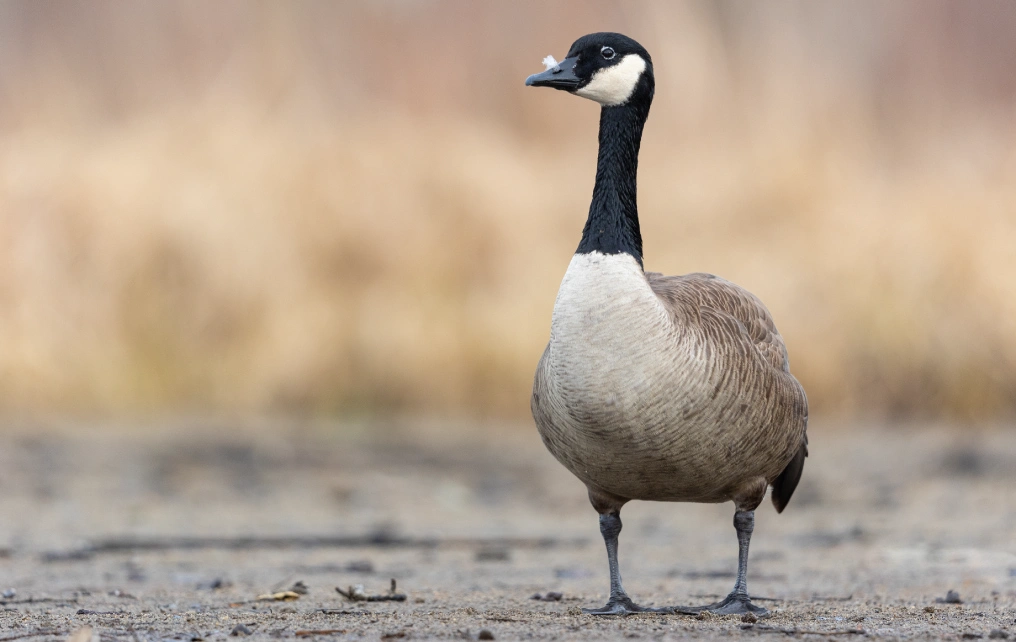
Wildlife biologist Garreth Ashley of the conservation organization Guardians of Our Salish Estuaries (GOOSE) explains that quantities of Canada geese were sent from Ontario to Vancouver Island and the Lower Mainland beginning in the 1950s and peaking in the 1970s. This project was coordinated by Ducks Unlimited, in partnership with the governments of Canada, Ontario, and British Columbia, to establish flocks in BC for enhanced hunting and wildlife viewing opportunities. However, when it comes to introducing species, no matter how well-intentioned the plan, the results can be unpredictable—and are almost always negative.
“The growth in Canada goose populations has led to a loss of 90 per cent of the vegetation in the K’ómoks and other Island estuaries”
With Vancouver Island’s mild climate, increasing urban sprawl, and many parks and golf courses, the introduced geese multiplied here. They quickly discovered that the Island’s estuaries, including the Courtenay River / K’ómoks estuary, were filled with one of their favourite foods, Lyngbye’s sedge (Carex lyngbyei).
The cost to Comox Valley estuaries
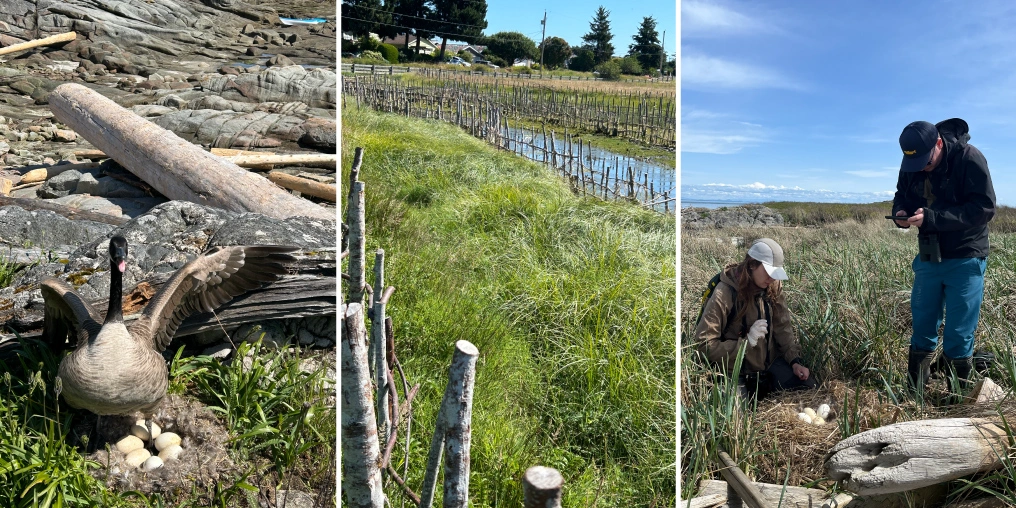
Lyngbye’s sedge is crucial in areas where rivers and rivulets meet the tidal zone, because its roots stabilize the banks and its foliage provides cover for fish hatchlings. The growth in Canada goose populations has led to a loss of 90 per cent of the vegetation in the K’ómoks and other Island estuaries, says Ashley, with disastrous consequences: “The banks collapse, creating wide, silty streams with no cover from the sun or from predators for salmon fry.” With the drastic increase in sedimentation from erosion of the banks, the estuary becomes a “moonscape,” he adds.
Canada goose management in action
GOOSE, which describes itself as “a science-based, non-profit conservation organization dedicated to healthy, productive estuaries,” and the K’ómoks First Nation Guardian Watchmen have been collaborating and making progress on goose management, mostly with on-the-ground, in-the-field efforts. The Watchmen’s traditional fish weir knowledge and weaving practices informed the building of alder and willow fencing to protect places where Lyngbye’s sedge has been reintroduced.
A limited hunt of Canada geese—currently open to First Nations hunters—may also eventually help reduce numbers. (The hunting opportunities envisaged by those who introduced the geese decades ago turned out to be quite limited, because the areas where the geese feed are adjacent to urban areas where firearms cannot be discharged.)
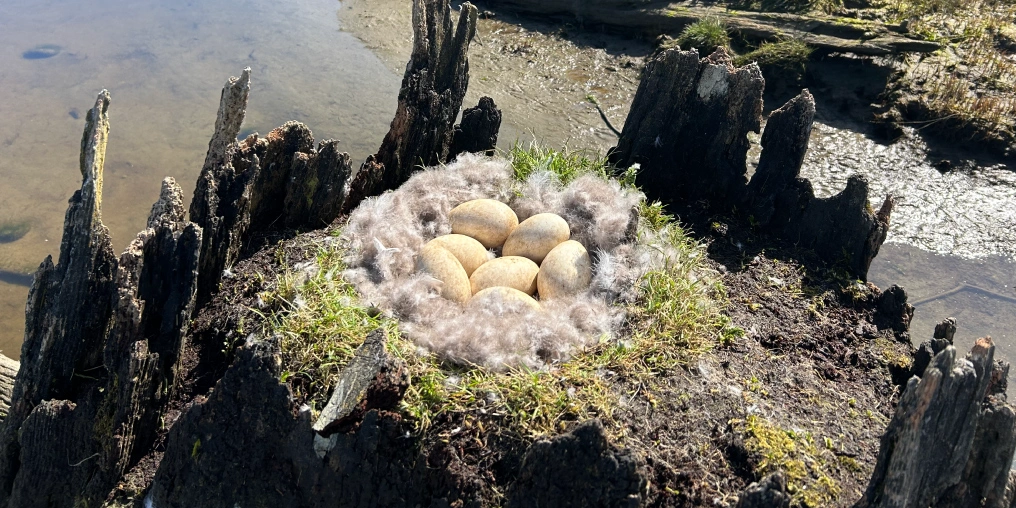
Preventing more geese from being born may be even more important than managing existing populations. The birds settle in large numbers in the estuaries (especially in the Tsable River / Fanny Bay area and the K’ómoks estuary) during moulting season, when they lose and regrow their flight feathers in early summer. Food is plentiful and nesting pairs can remain close to their nests.
“The ongoing efforts to keep the population small and manageable will protect the fragile estuary habitats, allowing native species of plants and animals to thrive once again”
This is when the K’ómoks Guardian Watchmen and members of GOOSE find goose nests, pick up the eggs, and rapidly shake them before replacing them in the nest. This practice—called addling—stops the eggs from developing, but the geese, none the wiser, don’t lay any more eggs. Addling has reduced the number of nests in the Tsable estuary from 45 to two in the last few years. And not even one nest was found in the K’ómoks estuary last year.
Ashley says the Canada goose has proved to be a resilient species capable of cohabiting with people in urban and agricultural settings. It’s not likely that it will disappear from Vancouver Island now that it’s here, but the ongoing efforts to keep the population small and manageable will protect the fragile estuary habitats, allowing native species of plants and animals to thrive once again.