
We admire rabbits’ gentle appeal, with their long, soft ears; silky fur; big, liquid eyes; and twitching noses. We are in awe of their fecundity, the source of ancient fertility rites and the inspiration for bawdy humour today.
So fecund are rabbits, in fact, that they appear to be everywhere on Vancouver Island. On the edges of woodlands and in fields and pockets of urban green spaces, there are so many cottontails and feral rabbits that it is surprising to learn that there were no rabbits in the ecosystem just 60 years ago.
“A small herd brought to Sooke in 1964 has spread throughout the Island and beyond Campbell River.”
That’s right—neither the bounding, darting cottontail nor the quietly grazing feral domestic rabbit is native to the Island. They have thrived because there is so much “edge ecosystem” here. This term refers to boundary areas next to forests and farms with wooded areas and shrubby lands that provide food and shelter. The introduction of rabbits to our rural and urban environments has allowed them to show their resilience and adaptability, to the point where they are now considered an invasive species.
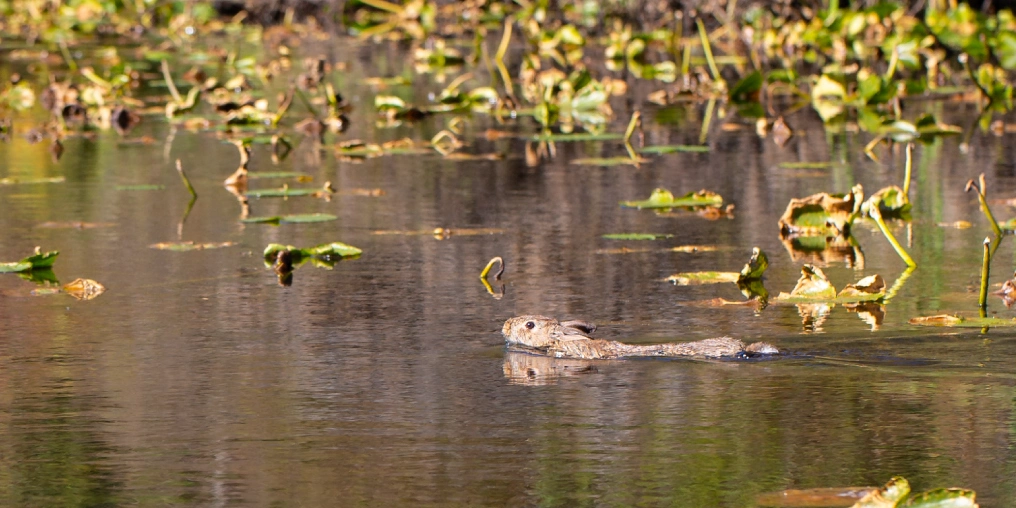
Eastern cottontails look native, but aren’t
A small herd of eastern cottontails (Sylvilagus floridanus), a species native to eastern and central North America, was brought to a property in Sooke in 1964. Inevitably, some escaped or were released. Cottontails have three or four litters of kits per year. Within six decades, they had multiplied and spread throughout the south and east of Vancouver Island, and can now be found beyond Campbell River.
“They have few predators to temper their explosive birth rate. Vehicles are a major source of mortality.”
The Invasive Species Council of BC notes that cottontails cause significant damage to agricultural crops, not to mention endangered Garry oak meadows and at-risk native plants, such as golden paintbrush and yellow montane violet.
Cottontail populations peak and trough about every ten years due to factors such as food scarcity or poor reproduction, and this year they are particularly abundant. They have few predators to temper their explosive birth rate. Cougars and a few of the bigger raptors will sometimes take them, and mink and domestic cats will prey on the kits. Vehicles are a major source of rabbit mortality—on roads and highways, it’s not uncommon to see bundles of mashed brown fur and red guts, topped with a puffball of a white tail, being picked at by ravens or crows.
A spokesperson for MARS Wildlife Rescue reported that people sometimes bring in an injured cottontail. However, provincial operating permits prohibit MARS from treating and releasing any invasive species. “We don’t want them to suffer,” the spokesperson said, “so we will take them in and euthanize them.”
Former pets, now feral
In urban areas with temperate climes, like the Comox Valley, abandoned pet rabbits (Oryctolagus cuniculus domesticus, or European domestic rabbits) and their many descendants abound. Locally, there is a growing population, particularly around places like the Rotary Airpark in Courtenay and the Comox Valley Exhibition Grounds. Like cottontails, they are considered an invasive species by the province of BC.
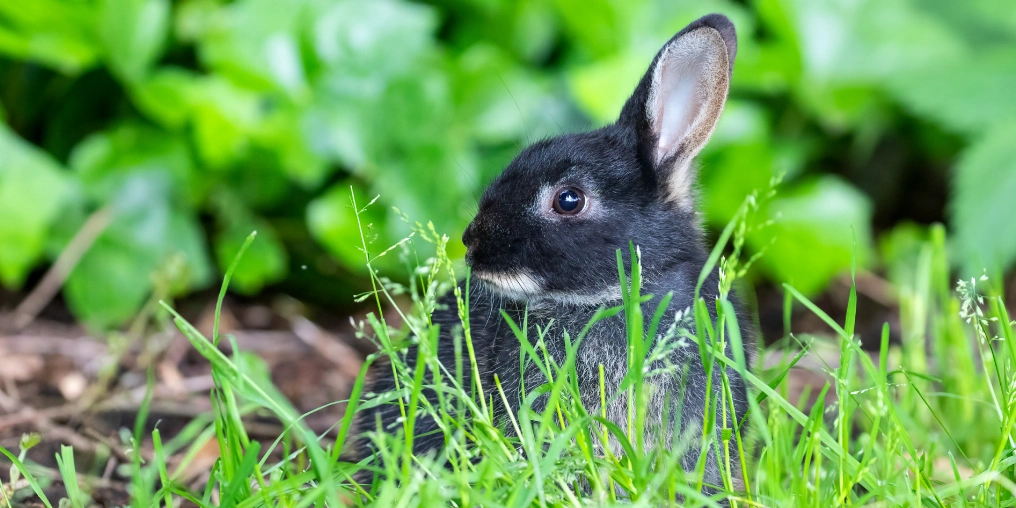
Abandoning a domestic rabbit into the wild is illegal under the Criminal Code of Canada and the Prevention of Cruelty to Animals Act. It leads to rapid breeding, which, in turn, leads to a whole lot of rabbits living feral in conditions of food scarcity, vulnerable to harsh weather, predators, traffic, and disease. In 2023, when rabbit hemorrhagic disease (RHD) caused mass mortality to the Comox Valley’s cottontails and feral rabbits, rabbit owners were advised to vaccinate their pets. The epidemic abated, but the disease remains present.
Hopping forward
Although the BCSPCA “strongly encourages local governments to adopt bylaws that recognize rabbits at large or abandoned as strays and prohibit the sale or adoption of unsterilized rabbits,” none of the local municipalities has any bylaw regarding feral rabbits.
Other municipalities have attempted feral rabbit control with culls and live-capture removal to sanctuaries, but even these concerted efforts have not successfully stopped the problem of feral rabbits. A public education campaign may encourage pet owners to re-home rather than abandon, and RHD will be an inevitable control in the population. But both kinds of bunnies will likely dot the Valley’s open spaces far into the future. They already seem at home here as naturally as the black-tailed deer—Thumpers and Bambis, together forever.
Bunny boom
On a chilly morning last winter, my neighbours down the street discovered a large lop-eared domestic rabbit in their yard. The couple made a shelter for it and put out root vegetables and greens for it to eat. Another neighbour, who had two lop-eared doe rabbits, offered to put the rabbit in the large hutch with his does. There was some apprehension about the sex of the new rabbit, and, of course, a one-month gestation period later, 15 kits were born in the hutch. Cute, but problematic. The new rabbit, now confirmed as a buck, had to go. Where it went, I don’t know, but I do know that, eventually, the 15 kits went to the abattoir.
Ideas are like rabbits. You get a couple and learn how to handle them, and pretty soon you have a dozen.
—John Steinbeck