



Glaciers. Fjords. Mountain peaks. Wild pumas. Rainforests. Deserts. Lakes.
The Pacific on one side, the Atlantic on the other, and the Drake Passage dividing South America from Antarctica to the south. The vast and diverse southern tip of South America—Patagonia—was calling my name in 2023, and I knew I had to take the opportunity to travel there. This trip would be my last send-off before the birth of my first-born. In January 2024, I, along with three friends, packed our bags and left for Chile.
“Flying down to Patagonia takes a while — it is in the opposite hemisphere, after all.”
My main objective for this trip was photography. Even before leaving, I scouted a few locations to shoot: Mount Fitz Roy on the way to the little town of El Chaltén, the Perito Moreno glacier near El Calafate, and the Salto Grande waterfall in Torres del Paine.

A quick stop in Santiago
Flying down to Patagonia takes a while. It is in the opposite hemisphere, after all. After a short flight to LA, there’s an overnight flight to Chile’s capital, Santiago, which is roughly in the middle of that long, narrow country. Another flight from Santiago takes you to Puerto Natales, often considered the gateway to Patagonia, and close to Torres del Paine National Park, the most well-known and popular park in the region.
We only spent one night in Santiago, which is not quite enough time to explore a city, but long enough for our true purpose, which was to see Patagonia. During the day, we hiked up San Cristobál Hill.
Already worn out by the hot summer sun when we got to the top (yes, it is summer in the southern hemisphere in January!), we decided to try a Chilean street drink called mote con huesillos. It is a mixture of caramelized juice, soaked wheat seeds, and dehydrated peaches (which soften up after being soaked overnight). The texture was strange, but oddly satisfying. A perfect treat for a hot day, reminiscent of a sweet iced tea.

Airport mishap and heading south
The next day, as we made our way through the airport, two of my friends decided to grab Starbucks. Andrew and I waited for them at the gate.
Before we knew it, the agents began loading passengers onto an airport bus. The gate area emptied quickly, but our friends were still nowhere in sight. We frantically tried to message them on Facebook Messenger using the spotty airport Wi-Fi, then decided to board with the rest of the travellers. The bus sat idling, clearly waiting for the last passengers.
Suddenly, we spotted them sprinting toward us, one of them dropping their coffee mid-run. Andrew and I yelled, “Hurry up! Run faster!” They climbed aboard from the opposite door, and a wave of relief washed over everyone. Next stop: Patagonia.
El Chaltén: hikes and sunrise at Mount Fitz Roy
We rented a car in Puerto Natales and drove to El Chaltén, on the Argentinian side of Patagonia. (Side note: for those considering making this trip, you must let the car rental agency know you’ll be crossing the border. We weren’t aware of this, so when we got to the border, we were told to go back and get the proper papers, adding about four hours to our trip.)

El Chaltén is a small town full of travellers from around the world, with great restaurants serving mouth-watering meat dishes and vino.
But perhaps the best part is the overnight outing to Mount Fitz Roy, the mountain prominently featured in the Patagonia apparel logo. We hiked to camp and woke at 3 a.m. to continue up to Laguna de los Tres, the lake at the base of Fitz Roy, to watch the sunrise.
We spent the entire morning there, mesmerized by the otherworldly scenery of the lake, the peak, and the surrounding mountains and glaciers.
Exploring Torres del Paine national park
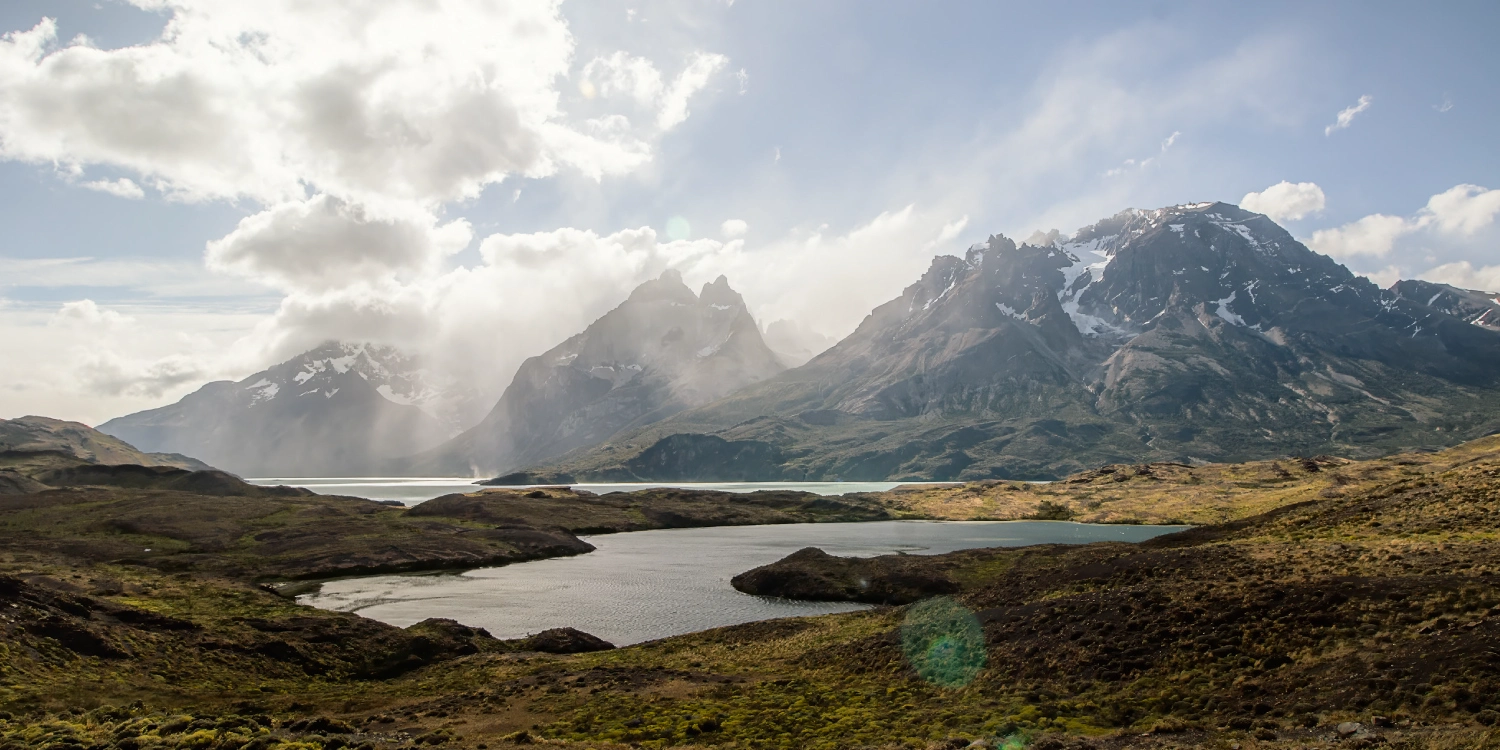
As I’ve mentioned, Torres del Paine on the Chilean side is among the most popular places in Patagonia. There is a five-day trek called the W-Trek or the longer, eight-day O-Circuit—both named after the shape of the trail. Since there were other areas of Patagonia we wanted to visit and we had only 10 days total, we opted out of those longer treks. Instead, we spent one night in the main Torres del Paine refugio (hostel), where we enjoyed an amazing dinner served in a giant dining room.
Hiking to Mirador Las Torres in the rain
The next day, we hiked to Mirador Las Torres (“The Towers Viewpoint”) in pouring rain, the whole time wondering whether we’d even see the famous peaks when we reached the top.
Halfway up, we stopped at a refugio to dry off, warm up, and drink hot chocolate. Inside, it was packed with others doing the same. The room was filled with long communal tables; we found seats at the end of one.
Moments later, our tablemates left, replaced by four men all in their late 60s or early 70s. I noticed them glancing our way before one asked, “Are you the guys who spilled your coffee and almost missed the flight in Santiago?” Shocked that someone recognized us thousands of kilometres away, we all laughed and instantly bonded with the group, who were on their last day of the eight-day O-Circuit.
“As sunlight broke through, I crouched to capture an impromptu shot of a field of grass and yellow flowers with a mountain peak in the background. That image became one of my favourites from the trip.”
The rain didn’t let up at the top, but to our surprise, the Torres peaks were visible. We stayed for snacks and photos, then headed back. Only in the last kilometre of the 22-kilometre hike did the rain stop, the clouds clear, and the sun emerge.
A memorable sunrise and a lasting photograph
As sunlight broke through, I crouched to capture an impromptu shot of a field of grass and yellow flowers with a mountain peak in the background. That image became one of my favourites from the trip, and is now framed in my dining room. It is such a significant photograph that when I ask my one-year-old daughter where Patagonia is, she points to that photograph.

Perhaps one day, 20 years from now, I’ll take my daughter—Clara—to Patagonia and we can experience its beauty in person.