



Along British Columbia’s coast, we are fortunate to share our home with a spectacular array of wildlife. Many of us take images as a way of celebrating their presence and beauty. This can influence the attitudes and expectations of others. By sharing imagery that reflects respect and care, we contribute to a culture that respects our wild neighbours.
Wildlife imagery is often valued by how large animals appear in the frame, with narratives that emphasize proximity. These visuals and messages can feed the desire or expectation of others to get close, which can have significant negative impacts on both animals and people.
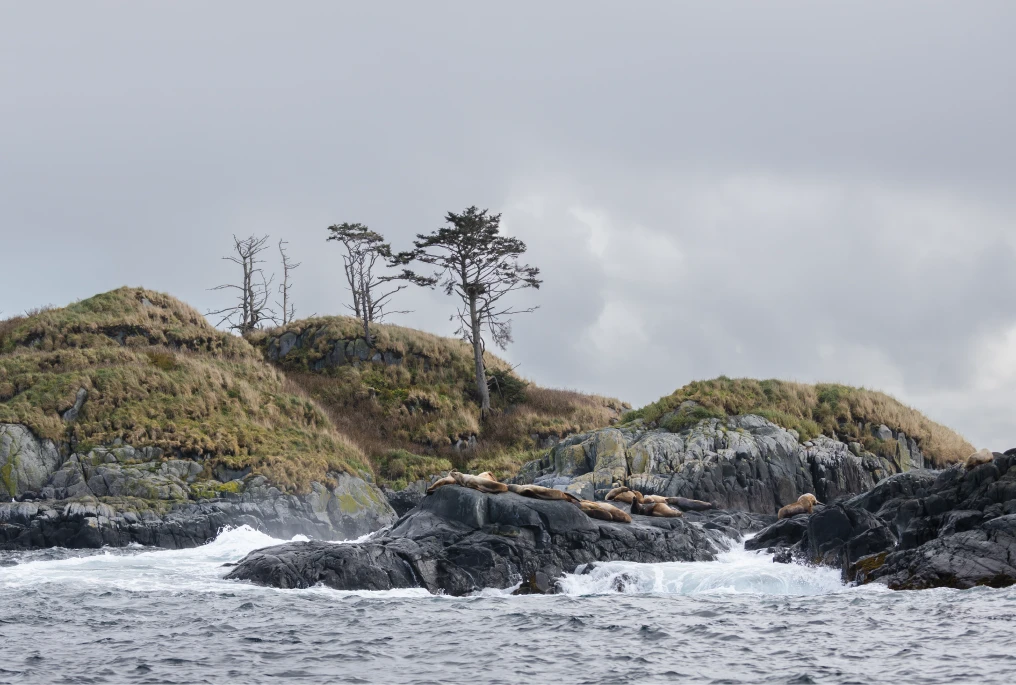
In the case of marine mammals, close approaches contribute to increased underwater noise, vessel collisions, and the loss of natural behaviours due to habituation to human activities. They also create confusion about regulations and best practices for wildlife watchers and other photographers. Vessel disturbance can further compound other threats, such as reduced prey availability and chemical pollution.
To help shift this culture, the Marine Education and Research Society (MERS) partnered with the Canadian Conservation Photography Collective (CCPC) to launch the How Wild contest.
The goal: to reframe the culture, language, and imagery of marine mammal viewing and photography—from “how close?” to “how wild!”
Contest criteria included:
- Images must be taken legally in British Columbia, outside minimum approach distances, and without the use of drones.
- Marine mammals must make up less than 20% of
the frame. - mages must not suggest interaction with the photographer (e.g., eye contact or visible stress behaviour).
- Submissions must include the name of the First Nations Territory where the image was taken and details about the equipment used (e.g., lens focal length).
MERS and the CCPC are deeply grateful to everyone who entered the contest and helped promote its message. The response was extremely positive, with more than 140 photo and video submissions.
Beyond the winners, many of the entries will serve as valuable educational tools to support conservation efforts and reduce threats to marine mammals.
The How Wild contest builds on the messaging of the For the Whales responsible whale-watching campaign, a collaboration between MERS, 4VI/Tourism Vancouver Island, and the North Island Marine Mammal Stewardship Association.
The messaging is also reflected in the recently launched, free online course: Whale-Safe Boating at www.WhaleSafeBoating.org.
Photo from land: Claire Guillaume
Photo from vessel: Kristiana Bardsnes
Video from land: Stan Novotny
Video from vessel: Sophie Ward
Photo from land: Laura Lefurgey-Smith
Photo from vessel: Nate Small
Video from land: Jake Tinkler-Josephi
Video from vessel: Justine Charollais


