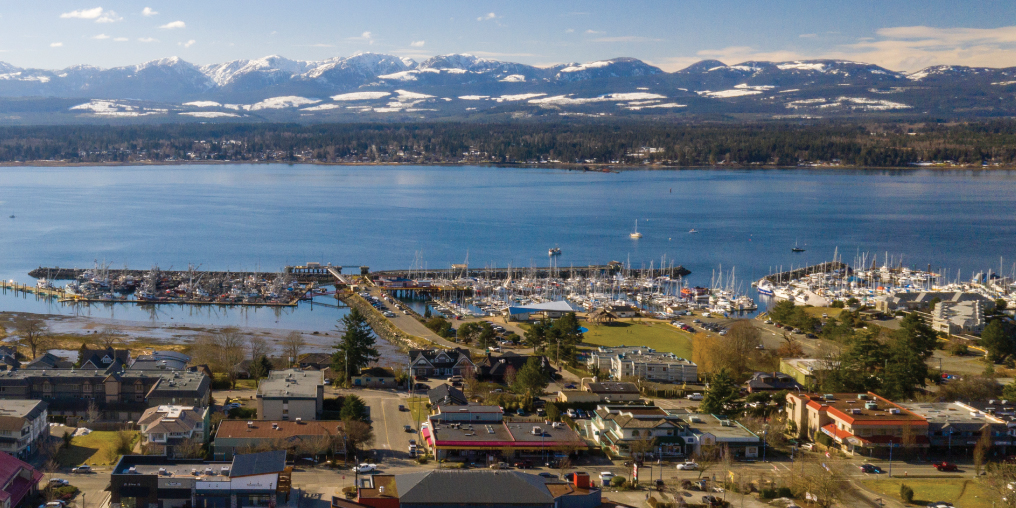
It’s low tide. Bikers, joggers, and walkers pass each other on the Courtenay Riverway Heritage Walk. The muddy flats of Comox Harbour glisten in the morning sun. A juvenile bald eagle soars above shoreline black cottonwoods that sway rhythmically in the breeze. On the periphery, the lush evergreen treetops of Millard Nature Park poke above the city’s suburban fringe. Macy—self-taught forester, author, and man of faith—has spent the better part of 50 years looking at trees and forests.
“Every time I look at a forest I’m reminded of how much I still don’t know,” he says.
He reaches with his shaky right hand for a cup of water to soothe a throat rendered perpetually dry from cancer treatment years ago.
Quaker roots and a long road to Merville
Macy was born in 1946 into a Quaker farming family on the treeless plains of Kansas, a landscape that couldn’t be more different from the salty air, rainforests, and mountains of Vancouver Island. He lived and worked on the family farm until he was 18, conscription age for the Vietnam War. However, rather than shipping off to this bloody conflict in Southeast Asia, as a member of a faith community grounded in peace and pacifism, he enlisted for a year of volunteer service with VISTA (Volunteers in Service to America), a United States government organization dedicated to alleviating poverty.
His service took him to the Appalachian Mountains, where he says he witnessed capitalism gone rotten. Coal companies offered poor farmers a few thousand dollars to get at the rocks under their land, then left behind environmental destruction and poisoned streams. The experience shaped his views about community and land stewardship.
In his twenties, he emigrated to Canada. After a few stops along the way, including Salt Spring Island, he landed in Merville.
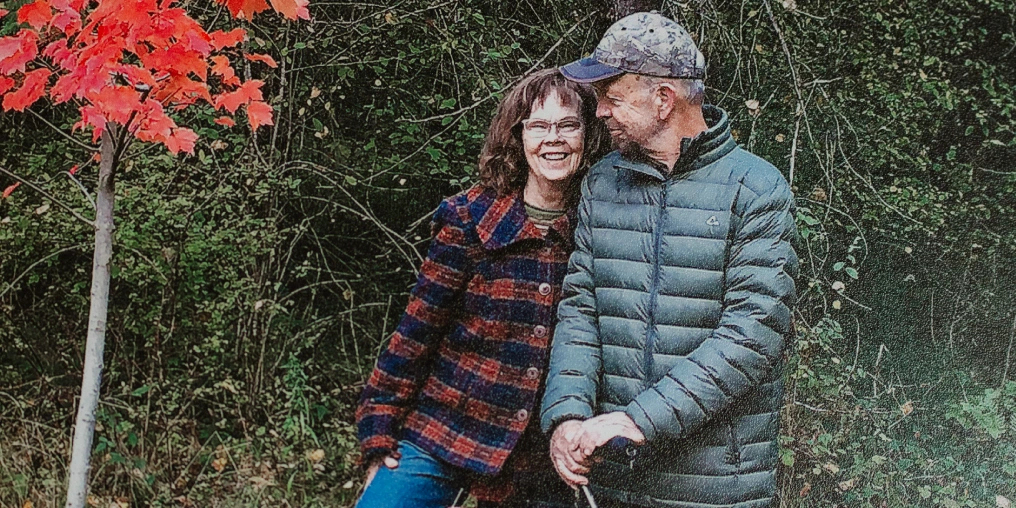
There was work, land, forest and a faith community among the Black Creek Mennonites that resonated strongly with Macy’s Quaker roots. He and his partner, Judy, bought property that had been mostly clearcut logged. Salal had grown back so thick that planting a single seedling could take an hour. This chunk of land was a living laboratory for forestry, and the place in which he and Judy raised their family.
A demonstration woodlot for small-scale forestry
Among his numerous pursuits, he taught a course on non-timber forest products at the University of British Columbia Oyster River Research Farm. In 1998, a year before UBC closed the research farm, Macy acquired a 250-hectare Crown woodlot tenure at the foot of the Strathcona Parkway with a mandate from the provincial government to showcase small-scale forestry. He called it Headquarters Creek Woodlot Ltd.
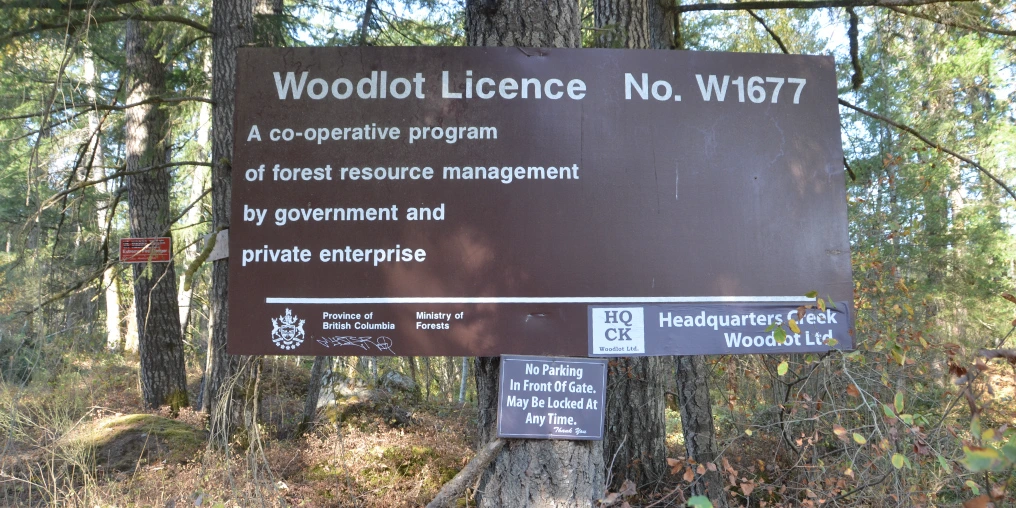
Managing this demonstration woodlot was a dream come true for Macy. It combined his love of hands-on work in the forest, running chainsaws and machinery, and developing a deep understanding of the ecosystem, with the opportunity to leverage the forest for public education. He wrote about his family’s experiences in his first book, The Four Storey Forest.
Looking back, he believes he was able to do with the woodlot what he set out to do: support a family and practice a type of forestry that looks at trees as a living and breathing ecosystem rather than a commodity to be exploited. In other words, a bright contrast to the destructive industrial clearcut logging that dominates the landscape of British Columbia outside of parks and protected areas.
“I told our boys that they can do anything they want in life as long as it’s forestry”
Can small woodlots change BC forestry?
When asked whether he thinks his little patch of managed Vancouver Island trees has made a difference in the big picture of BC’s troubled forest sector, his answer is more nuanced. He’s a big believer in what he calls the “ripple effect” in forestry: like a pebble tossed into a pond, a more enlightened and planet-friendly way of making a living from trees will slowly ripple outwards, one woodlot at a time.
But it might take more than a ripple to change BC’s tenure system that rules public forestland (96 per cent of the province is Crown or public land) and places control largely in the hands of large extractive corporations. Still, Macy’s an optimist. Forestry is part of his family’s DNA.
“I told our boys that they can do anything they want in life as long as it’s forestry,” he says with a smile.
It has the feeling of a well-used joke in the Macy household. Three out of four sons took the bait and became foresters. One of them now manages the Macy family woodlot. Another works full-time for an industrial forestry company, which has made for some interesting father-and-son dinner-table dialogue.
Living with Parkinson’s, and still writing
Macy is in a reflective mood these days. Fifteen years ago, he experienced the first tremors of Parkinson’s disease. This degenerative neurological condition attacks cells that produce dopamine, a neurotransmitter that is the brain’s reward centre and controller of movement. Subconscious actions like holding a cup of coffee or putting one foot in front of another become monumental tasks, and ultimately impossible. Though there is no cure for Parkinson’s disease, medical therapies can mute the symptoms and prolong a patient’s quality of life.
So it was for Macy. At first he carried on with life more or less as normal, walking through and working on the woodlot. But one by one, his physical abilities tumbled like dominoes.
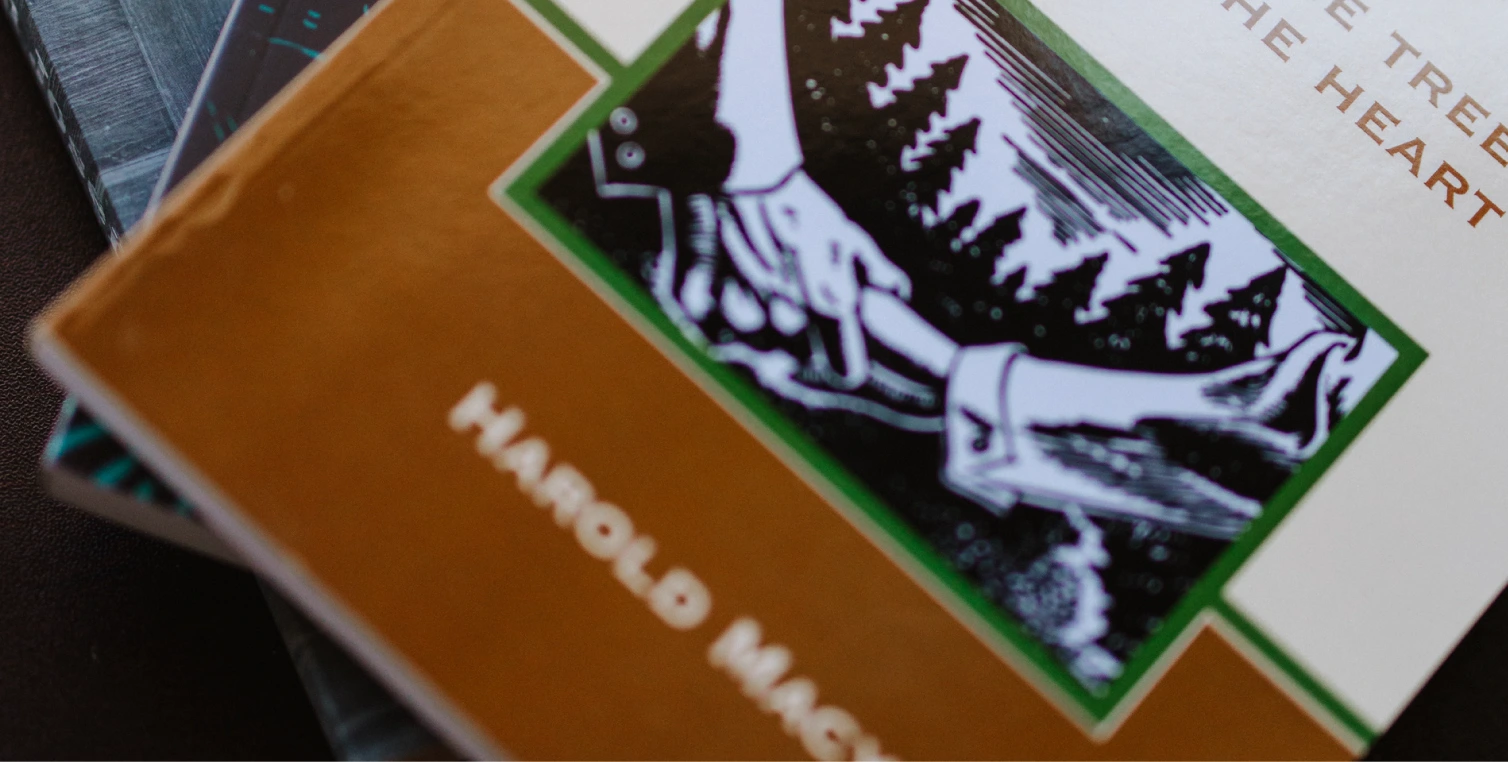
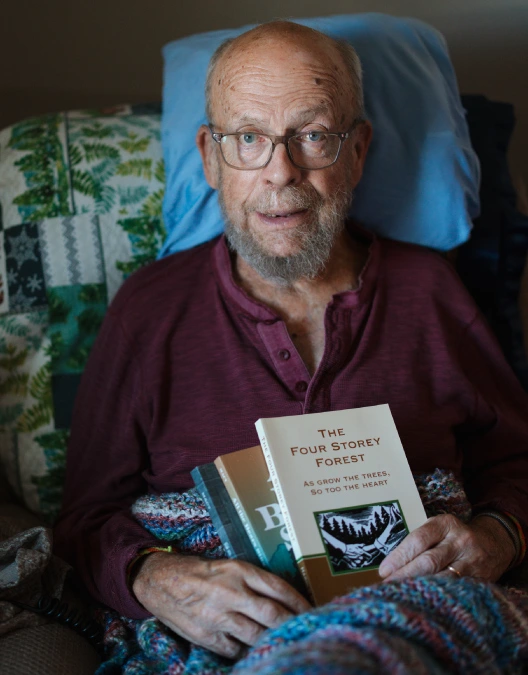 In 2024, Macy moved onto the third floor at Ocean Front Village, a private facility overlooking Comox Harbour that provides assisted living care. His room is decorated with black-and-white photos from the Macy farmstead in Kansas and colour portraits of Judy, their sons, and grandkids. A small bookshelf is evidence of a still very active and sharp mind. Alongside the New Testament and field guides for plants and wildlife are texts on Buddhism and forestry, along with copies of The Four Storey Forest, Macy’s 2020 novel, San Josef, and his 2022 short story collection, All the Bears Sing. On his desk is a working manuscript for his latest writing project, an autobiographical exploration of living with Parkinson’s and his community of friends and residents in the care home.
“There’s a Quaker expression that I love, ‘Follow the way, and the way will open’”
Macy has lost much in recent years. He deeply misses spending time in the woods—sitting, watching, listening, and learning. But Macy can still write, and he has a lot to say.
He turned 80 this year. He reached that milestone full of gratitude for family and what life has given him. “I’m still pretty healthy,” he says. “There’s a Quaker expression that I love, ‘Follow the way, and the way will open.’”
Lunch is about to be served in the dining room. With a shuffle of his feet, he spins the wheelchair slowly away from his favourite view over Comox Harbour, the tidal flats, the soaring eagles, and the trees that bend and sway to the breeze.