In a cottage by the woods there lived a girl, and while she was by no means small, she had the heart of a hobbit.
I am sure I’m not the only one who has longed to escape to the Shire. Lush green hills, damp woodland groves, sparkling clear streams, and at last, the perfect spot for elevensies. Opening my pack, I find a wee tartan blanket and spread it beneath a branching oak or a weeping willow. After a few sips of cool water from my pack, I lay out a spread of oat cakes, berries I foraged along the trail—my fingers still stained pink—and a fresh-baked sourdough bun filled with forest mushrooms, soft cheese, and wild greens.
Sitting in stillness, I recognize the song of the sparrows, the call of the ravens. I say hello to the spruce, the maple, the fir, for I know these plants and animals like I know my dearest friends. The natural world is part of my community, offering support, guidance, nourishment, and inspiration.
Getting to know the natural world around us is both wondrous and overwhelming. Entering the forest intent on introducing yourself is akin to being invited to a wedding where you only know the bride and groom. The potential for connection seems limitless and yet you kind of just want to sit down for a moment. Take it all in.
Guided foraging tours with Forest for Dinner
Your journey as a hobbit, or perhaps you’d prefer nature enthusiast, could begin with a local foraging tour. While it may not be the Shire, Oceanside hosts a bounty of flora just waiting to be noticed, appreciated, cared-for, and even harvested.
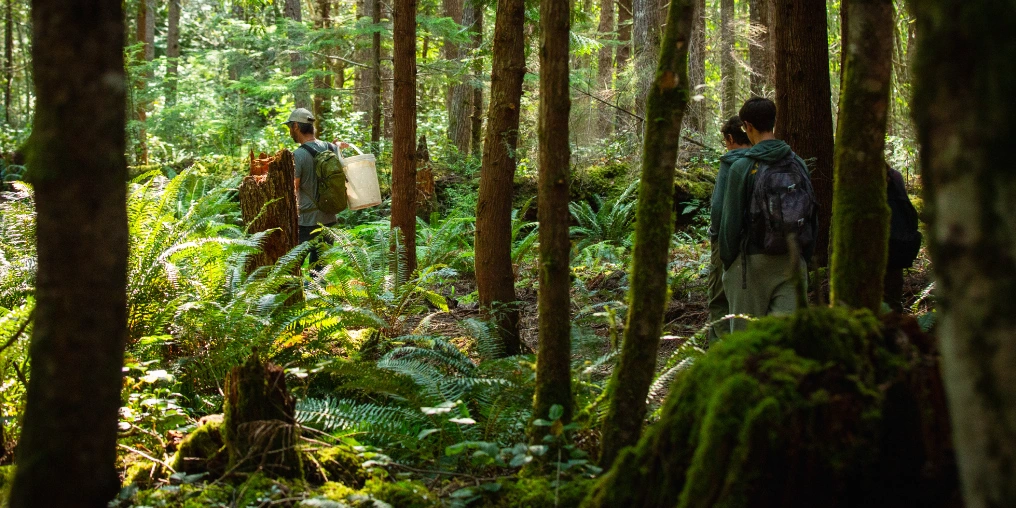
Forest for Dinner is one such group, helping newbies find their way into the woods. Benjamin Patarin and Célia Auclair are expert wild foragers, supplying ingredients to breweries and restaurants all over the Island and the mainland.
They have recently opened a storefront in Qualicum Beach, offering a variety of wild-foraged goods. Lucky for us, they also host small-group and private foraging tours on an acreage near Spider Lake.
While our forests can be appreciated and enjoyed through more intense physical exercise like mountain biking, hiking, and trail running, an identification or foraging walk is wilderness recreation for the academic, the artist, or the adrenaline-averse.
“Focus on a few species at a time instead of trying to identify and harvest everything”
What to know before foraging solo
Before heading out on the tour, Patarin provides a few solid tips for those of us venturing into the woods alone with just some water, a sketchbook, and a pocket-sized plant identification guide. “Tell someone where you are going and how long you will likely be,” he says, adding that a small GPS is a good investment. Solo trips into the woods can be a wonderful chance to connect inwards, but when you are venturing into unknown territory, Patarin encourages you to bring along a friend or two.
Other considerations for a wild foraging walk or identification adventure include investing in a first aid kit, water filtration system, bear spray, and a reliable guidebook to plants in your local area. Particularly if you are planning to forage, it’s essential you know what you are harvesting to protect yourself from toxins. Patarin shares some advice on this as well.

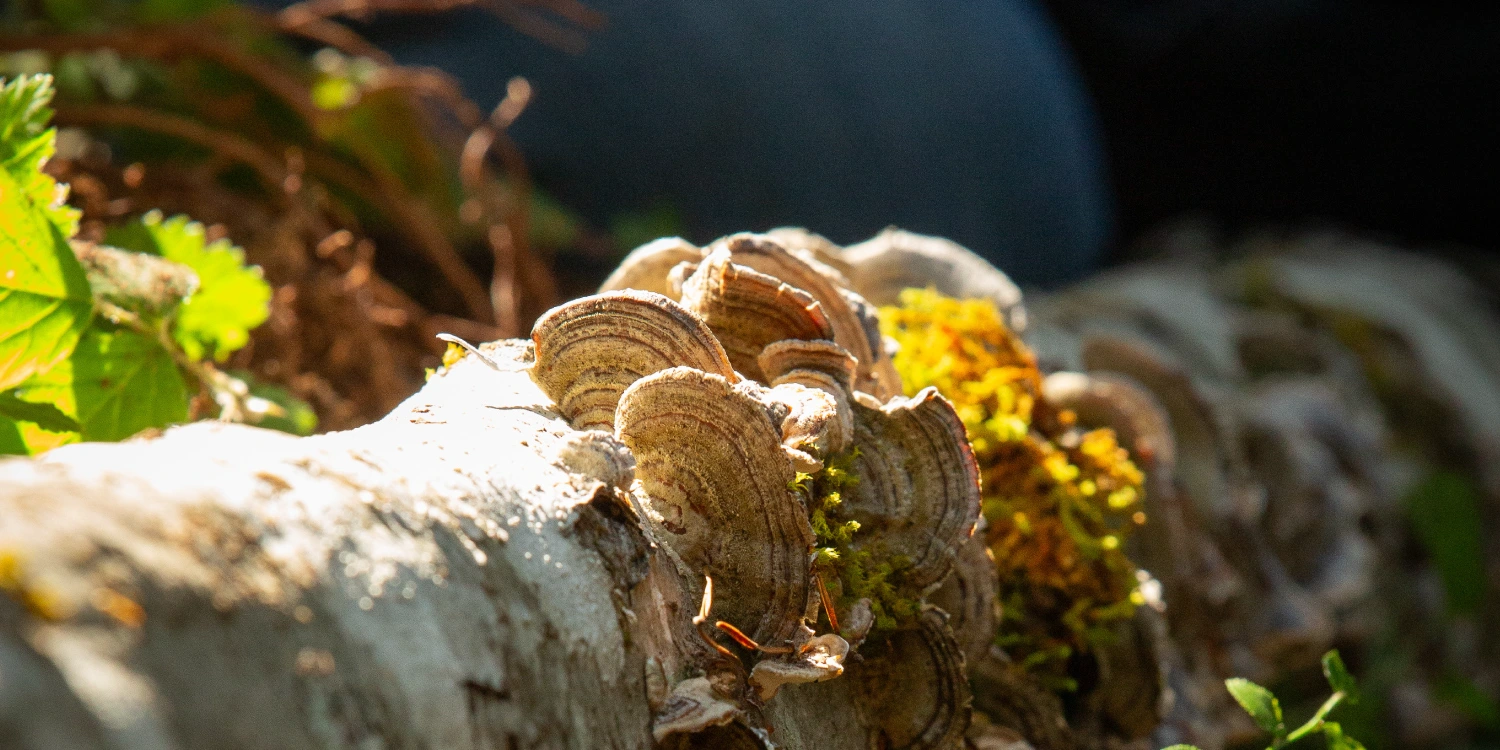
“Focus on a few species at a time instead of trying to identify and harvest everything.” For mushroom season, he recommends learning to identify a common and edible variety like lobster, porcini, chanterelle, or chicken of the woods. He adds it’s also helpful to familiarize yourself with common poisonous mushrooms in your local area so you know what to avoid.
Reading the forest to find mushrooms
So you’re out in the woods, bear spray hanging from your belt, snacks tucked away for later, but where are all the mushrooms? How do you even find a porcini mushroom? Well, you first must get to know the trees.
“Once you know your pine from your fir, you will learn that different mushrooms prefer different trees, and different trees thrive in different environments”
Along the foraging tour with Forest for Dinner, Patarin shares tips for identifying our native trees by looking at their bark, needles, and cones. Nature leaves little clues everywhere if we know what to look for. Reach out to touch the needles of a grand fir and you’ll find soft bristles whose new growth at the tips smell of grapefruit. Try to do the same on a Sitka spruce and you will wish you were wearing gloves!
Once you know your pine from your fir, you will learn that different mushrooms prefer different trees, and different trees thrive in different environments. A grove of Douglas fir likely indicates a drier environment, and if those trees appear to be roughly 40-60 years old, you have found yourself in chanterelle territory.
The more you learn about our woods, the more you realize just how interconnected everything is. These plants and mushrooms rely on each other, cohabitating to create a thriving ecosystem that not only nourishes itself, but can nourish the wildlife and humans sharing it with them too.
Bringing the forest home to your kitchen
In their new storefront, Forest For Dinner has shelves filled with products you’ve likely never seen anywhere else, even though they are made from plants and mushrooms foraged just outside your back door.
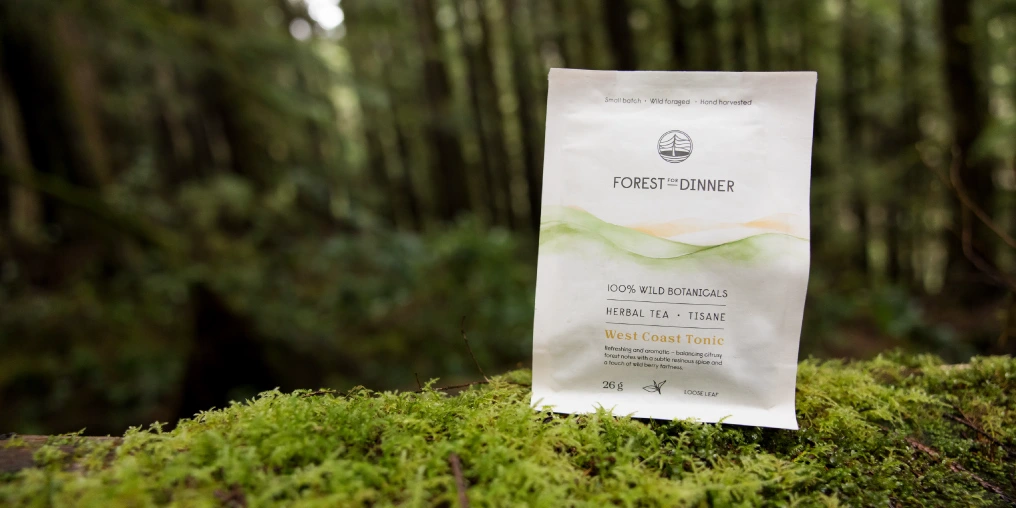
From morel mushroom powder to salal berry jelly, boreal infused salts to preserved spruce tips, this dynamic, nature-loving duo offers us a chance to connect with the land we live on, infusing our home cooking with the flavours of the forest.
A part of me longs to live off the earth, to run into the woods barefoot and begin a big adventure. But for now, I will quench my thirst with wild botanical tea, red huckleberry jelly on toast, and a deeper connection to the land I live on.
To learn more about local wild foraging, check out www.forestfordinner.ca.