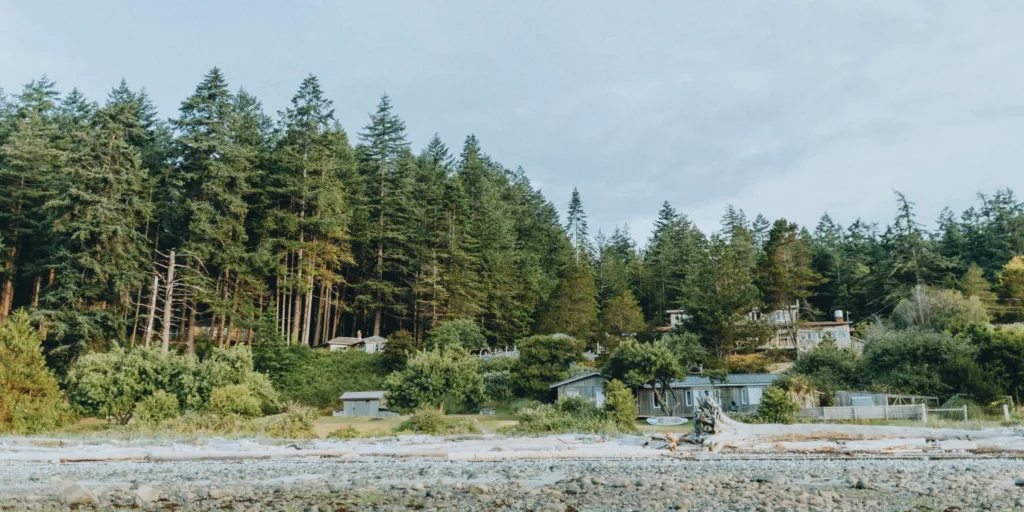
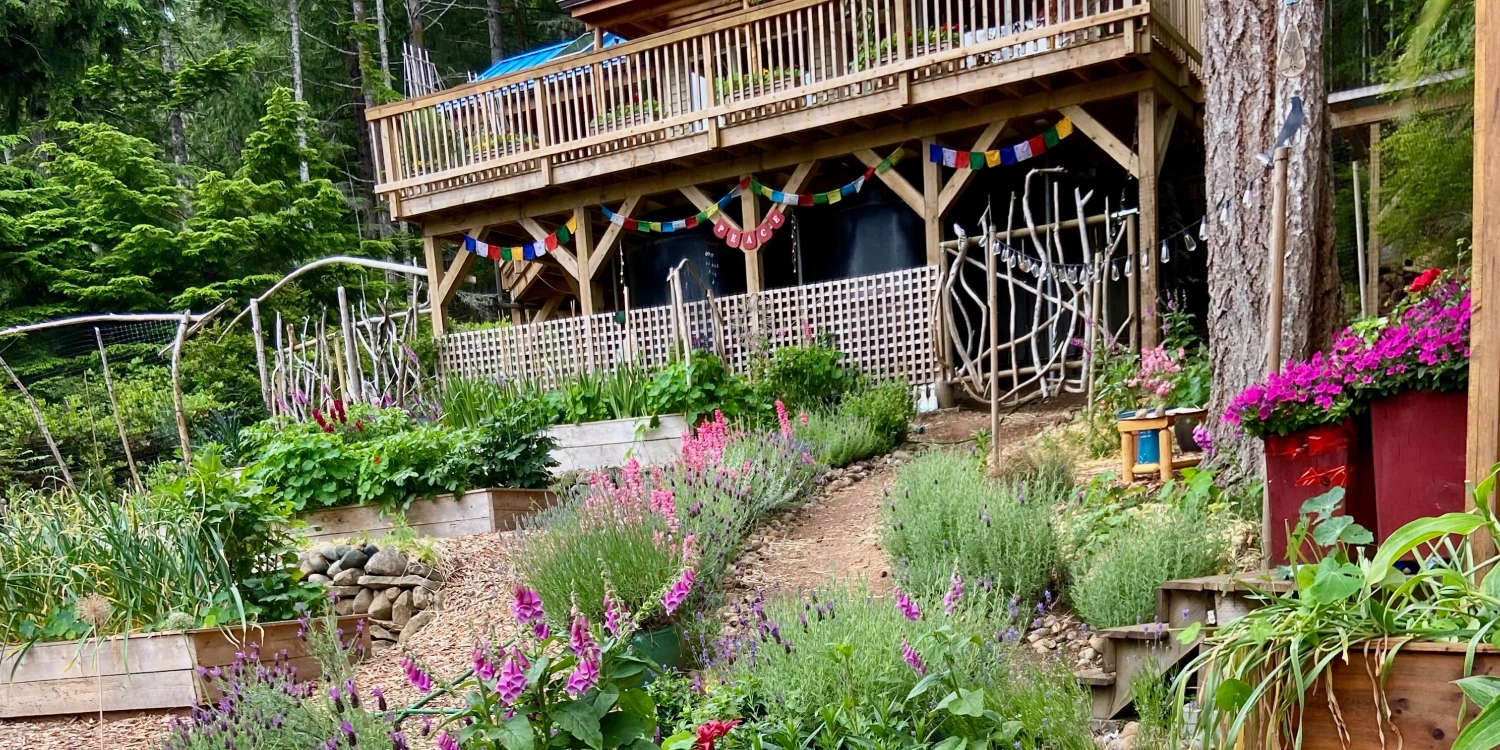
Back in 1992, when Denman Island (pop. 1400) was even quieter and less populated than it is today, an island couple named Sandy and Des Kennedy had a novel idea: invite strangers into people’s homes and gardens, charge them money, and use the proceeds to protect land.
At that time, tours like this were almost non-existent on Vancouver Island, and there was no reason to believe people would travel to a remote island to attend one.
But Sandy and Des, inspired by garden tours they’d experienced while visiting England, believed in their vision. They saw that Denman’s old-time farmers, back-to-the-landers, artists, craftspeople, hippies, anarchists, environmentalists, and recent retirees—a lively mix—all seemed to share one desire: to create their own unique piece of paradise. As a result, the island was full of gorgeous and intriguing homes, productive farms and orchards, and extraordinary gardens.
The Denman Conservancy Association (DCA), founded the previous year, needed funds to protect land and promote conservation. And so, the first Denman Island Home and Garden Tour was born.
“There is a handmade quality about the Denman Garden Tour that makes it unique and mirrors the heart-hewn quality of many of the tour’s homes—hand-built, hand-planted, and stitched from the hillsides and valleys where they sit”
Three decades of impact
The tour was an immediate success, bringing 890 visitors the first year, 1300 the next, and eventually over 1500 per tour. Gardening journalists took note—the Globe and Mail once called it “one of Western Canada’s top five horticultural events.” People now return again and again, some from across Canada or even further afield.
“There is a handmade quality about the Denman Garden Tour that makes it unique and mirrors the heart-hewn quality of many of the tour’s homes—hand-built, hand-planted, and stitched from the hillsides and valleys where they sit,” says Erika Bland, a former DCA lands manager and now the tour’s coordinator.
“The tour is a celebration of islanders coming together to support conservation, while highlighting the sweet and special places nestled between forest stands and wetlands”
Each tour raises $20,000 to $30,000. Over the decades, these funds have provided much-needed unrestricted funds to kick-start land purchase campaigns. To date, DCA and its dedicated board, members, and volunteers have helped protect over 25 per cent of the island—thanks in no small part to this flagship event.
A whole island pitches in
Bland says, “The tour is a celebration of islanders coming together to support conservation, while highlighting the sweet and special places nestled between forest stands and wetlands. On some properties, you feel a big hug from the surrounding natural areas DCA has worked hard to protect.”
Beyond raising funds, the tour raises spirits. “More than 100 volunteers make it happen. Homeowners open up their private spaces. Neighbours pitch in to help spruce things up, spread mulch, turn compost heaps, and scrub windows,” explains Bland.
“Another brigade helps put up signage around the island. People create raffle baskets for cyclists. Artists paint beautiful name tags and signage. Local eateries offer specials for the big weekend. The Denman bus provides extra service. Volunteers collect tickets, direct traffic, and answer a stream of questions. And someone always hosts the after-party, where everyone involved can finally rest and raise a glass to what they’ve accomplished.”
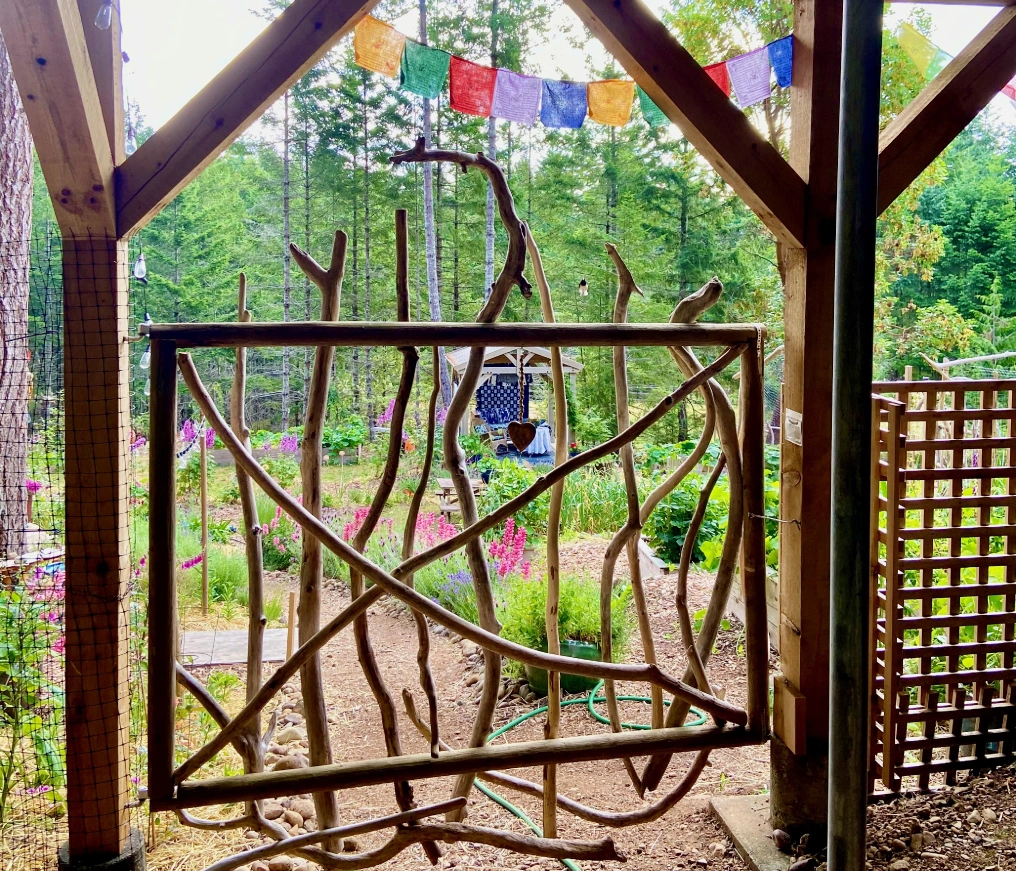
The tour experience
Tour-goers drive, walk, or bike around the island, map in hand, searching for the hand-painted number signs indicating a stop. The journey often includes a pleasant meander along the forested lanes and long driveways that normally preserve islanders’ treasured privacy. Accessible options are always available for those who need them.
Homeowners greet visitors with smiles and answer questions about their wonderfully unique—and sometimes quirky—abodes. Some offer art, crafts, or food for sale. The abundance of artwork in the homes and gardens shows off the island’s creativity.
By Sunday afternoon, visitors are tired and inspired, heading home with notebooks full of plant names and phones brimming with photos of intriguing details. And the hosts? Happily exhausted. Some have lost their voices; others have sore cheeks from smiling.
Everyone has that wide-open look of wonderment in their eyes that comes from being part of something that uplifts the beauty of the world and shows humankind at its best.