
ELDER VALLEY: REFLECTIONS FROM AN OLDER RESIDENT
“Dig it!” For you younger folks, this senior expression means “to truly enjoy.” Maynard G. Krebs, a TV character from the early 1960s, was the original source of this pre-hippie beatnik talk for me and many of my generation.
I have dug the Comox Valley ever since I arrived in 1960 at the age of ten. I was born in what was then called Malaya (now Malaysia); during its civil war, my parents moved to Canada with my two brothers and me. Our home was the original Cliffe family farmhouse overlooking the Comox Harbour, next to Bob Filberg and his saltwater swimming pool.
“My crew’s job was cutting trees to create the ski runs we love playing on today.”
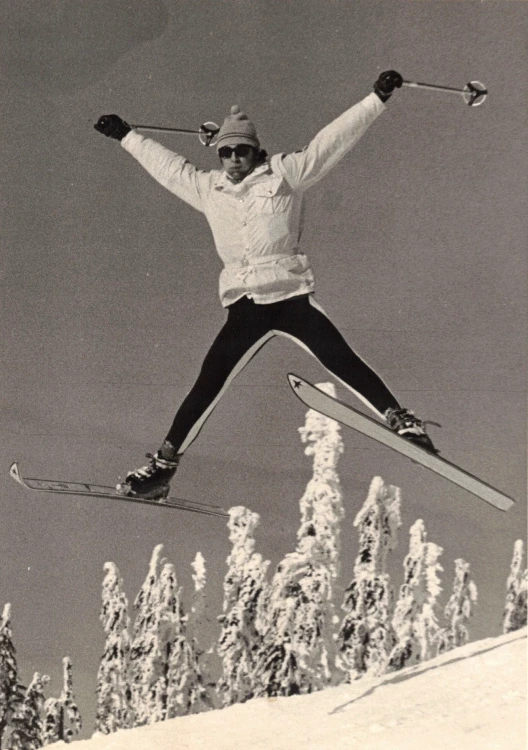
After graduating from high school, I spent five years at the University of British Columbia, and several years on Grouse Mountain and in Whistler, before the promise of a new snow mountain brought me home. I began working on Mount Washington two years before it opened in 1979—my crew’s job was cutting trees to create the ski runs we love playing on today. I ended up spending 41 years on Mount Washington in many roles, including Director of Skiing, General Manager, and President.
Then and now: six decades of Comox Valley history
This Valley has changed a lot during the years I’ve lived here. In the early 1960s, there were fewer than 8,000 residents. Now the Comox Valley Regional District’s population is closer to 75,000.
Memories, smiles, sounds, tastes, and smells come to mind as I think about places I loved: Bud’s (the precursor to George’s—oh, those combo burgers!), Jan’s Drive-In near the Lewis Centre, the Waikiki Restaurant on Comox Avenue, and, in downtown Courtenay, Hobby’s Snack Bar, the Elks Club, and the E.W. Theatre (nicknamed for its owner E.W. Bickle). There were many hotels, a.k.a drinking establishments: the King George, the Waverley, the Cumberland, the Courtenay, the Arbutus, the Lorne, the Elk, the Riverside, and more.
Everyone loved reading The Green Sheet, the local paper with the green front page, that covered the heartbeat of the Valley under the watchful eye of Queneesh—the Comox Glacier—and beside the Salish Sea.
When I first got here, Ryan Road, the 17th Street Bridge, the Comox airport terminal, the Courtenay Airpark, and the Inland Highway didn’t exist. The Comox Wharf was several hundred feet long, with a fairly large landing, warehouse, and marina at the end. In the 1960s, work began on dredging and filling in the area to create the marina we know today.
There used to be only one high school, Courtenay High on Harmston Avenue. Now we have three conventional high schools—and three alternative ones. The old St. Joseph’s Hospital has been replaced with the North Island Hospital Comox Valley.
“The Comox Valley became home for me in 1960, and it’s still my home. I loved it then, and I love it now.”
When I was a kid, skiing meant Forbidden Plateau. This was the home of the Fanny Dunkers Ski Club, and it’s where Herb Bradley taught many kids (including me) to ski. He started the Vancouver Island Skiing for the Disabled Society there, and eventually brought it over to Mount Washington. Skiing now means Mount Washington, Raven Lodge, the Vancouver Island Society for Adaptive Snowsports, and the Vancouver Island Indigenous Snowboard Team. In 2029, it will be the 50th year for Mount Washington—and we plan to celebrate.
It used to take four hours to get to Vancouver on the ferry. The line was owned by Canadian Pacific Railways, the boats had “Princess” in their names, and the onboard restaurants had white tablecloths and full service. You can now fly on WestJet to Calgary in half the time it took to get to Vancouver by boat in 1960. I have done both!
The Comox Valley became home for me in 1960, and it’s still my home. I loved it then, and I love it now. Yes, that’s right: I still dig it!