What is a job? The place you clock in, clock out, collect a paycheque, and maybe use as a rung on the ephemeral career ladder. But something different happened when I began working with LUSH Valley Food Action Society in 2020. The work rippled into my worldview, became part of my identity, and permanently altered my perspective. In short, the job crossed over into a vocation.
I come from an agricultural background. My Dutch immigrant grandfather had a small dairy farm in rural Manitoba. Although the cows were sold before I was born, I retain strong memories of that place: the scent of the musty barn where he kept his hobby birds, the thrill of holding freshly hatched chicks.
Years later, I earned a B.Sc. in agriculture, specializing in agroecology, which examines the intersection of ecosystem health, productivity, and social justice within food systems. Whether we think about it or not, food systems shape our economy, environment, health, and social connections. Farming changed humans from nomadic hunter-gatherers into sedentary taxpayers. Food is inherently political.
LUSH aligned with both my education and my personal values. I had just left a job in commercial canola seed production at Bayer, the multinational biotechnology company that would later acquire Monsanto. As much as I appreciated the learning opportunities and experience within Bayer, spraying crops with glyphosate and seeing soil devoid of microbial life didn’t sit right with me. I didn’t want to be a person farming in a hazmat suit and respirator. I wanted to be part of a team working toward a just, resilient local food system. Enter LUSH.
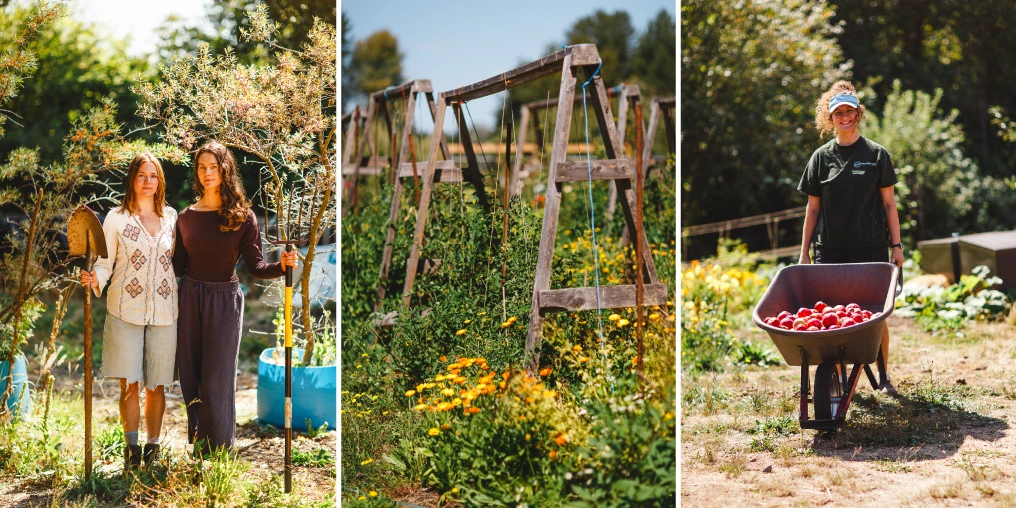
I began as an Urban Agriculture Coordinator, helping build food-growing skills in community, school, social housing, and K’ómoks First Nation gardens. LUSH had just taken over stewardship of the Georges P. Vanier Secondary School garden, now known as the Tsolum Educational Garden, which, aside from a few beds tended by local food legend Barb Whyte, was largely a blackberry and tansy field.
The then-manager, Bo Del Valle Garcia, cried from overwhelm the first time they saw it. That first season was basically an excavation project: we hacked through blackberry thickets, uncovering fruit trees nearly three metres tall in the process. Bo and I were both going through breakups that summer; we often joke that the land was cleared using the power of angst.
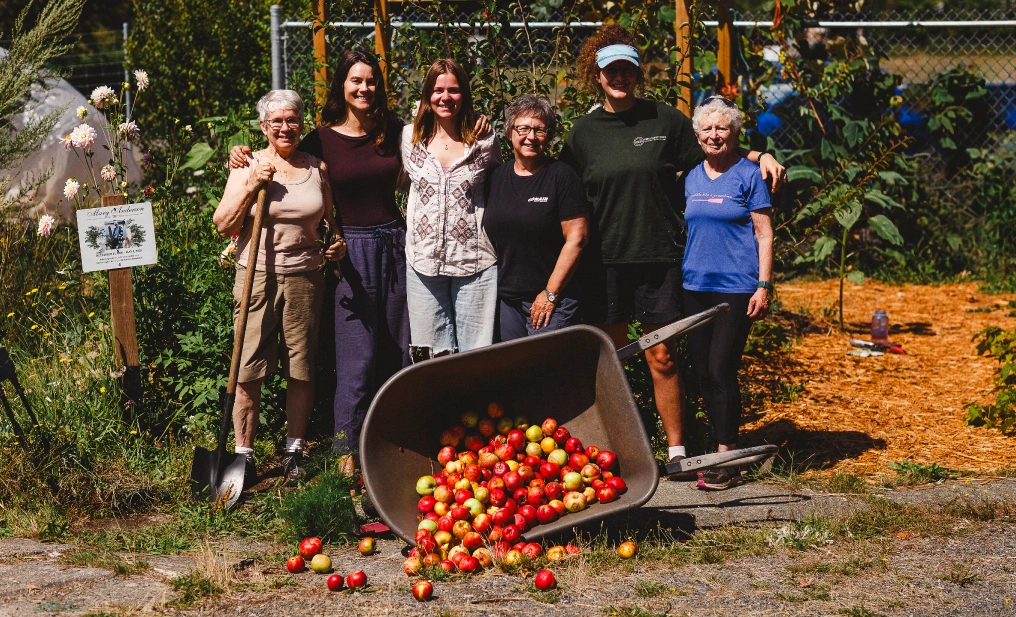
As we restored the garden, a group of volunteers began to build, some of whom still show up every week, six years later. The community gardens LUSH manages are cultivated almost entirely by volunteer labour—428 volunteer hours in the Tsolum garden alone each year. The produce is used to stretch LUSH’s meals further, bolstering the grant income that would otherwise fund these low- and no-cost food access programs.
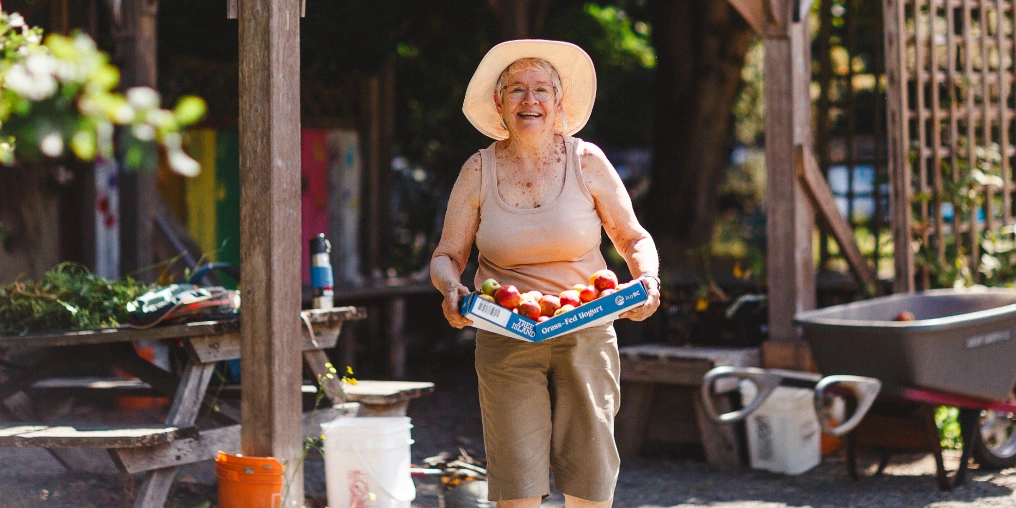
LUSH volunteers crawl through dirt, haul wheelbarrows through rain and heat, plant seeds, tend crops, and weed beds—all to grow food for someone they may never meet. Their generosity of spirit is the ripple that altered my worldview and turned my role from job into something more deeply tied to my identity and sense of self.
“Compassion is our greatest currency, and we can afford to spend it freely”
Today the Tsolum Garden is a thriving micro-farm. There are fruit and nut trees and a hoop house; the fence line has been expanded; additional water lines have been installed. We collect rainwater, cultivate edible and medicinal plants, and grow massive garlic.
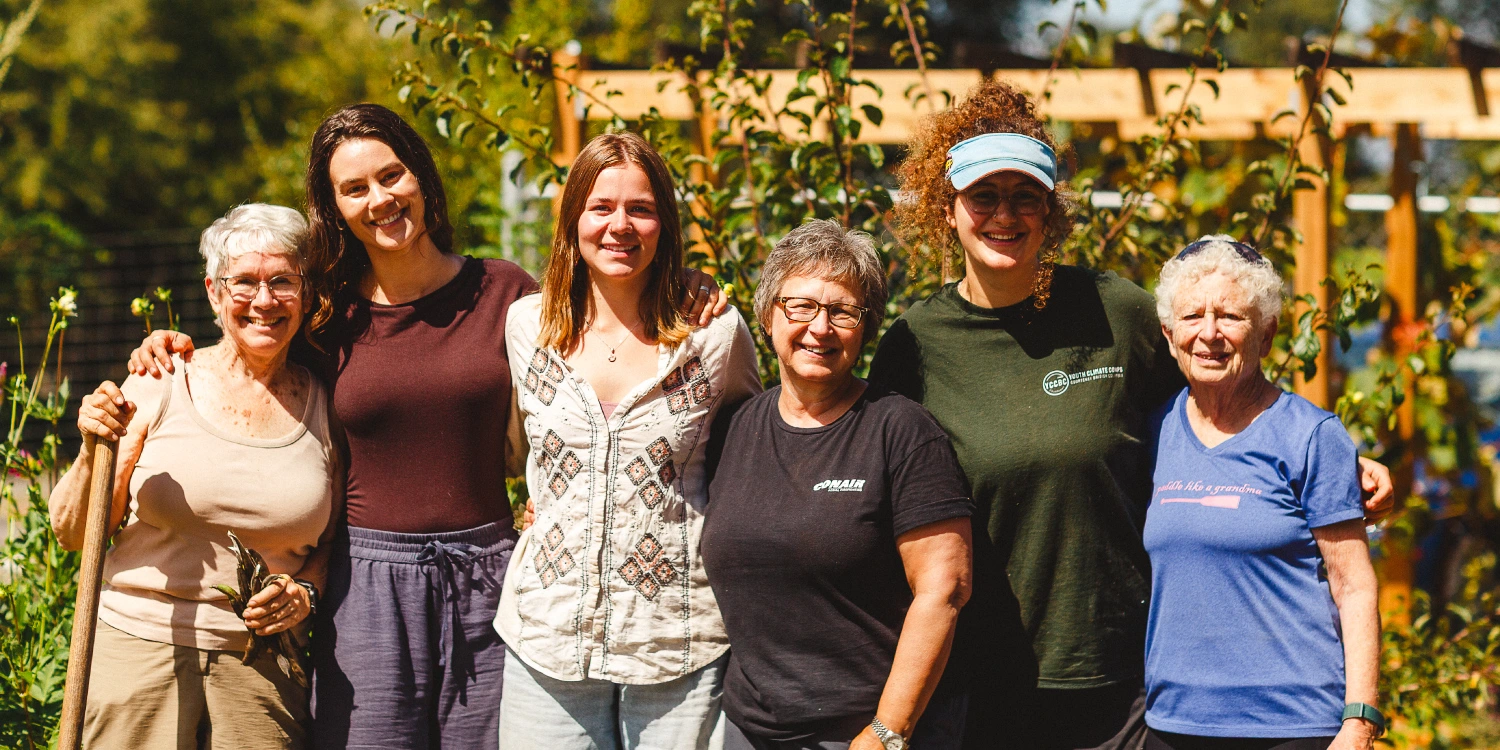
Our volunteer base is thriving, too. We collaborate with the Youth Climate Corps and other partner organizations. We have a dedicated group of Elders who show up every Monday. On some Saturdays during the Farmers’ Market, people may visit the garden. The space is alive and vibrant—and mostly blackberry-free.
LUSH’s mission of building a just, resilient food system has rippled through my life into an understanding that change takes place when people show up, day in and day out, to work towards a common goal, even (and especially) when it’s hard. Change comes from sharing time, knowledge, experience, and empathy. Humans need to be fed and they need to connect. LUSH does both.
Career-wise, I’m now pivoting from food systems to counselling. The past six years have given me appreciation for the diversity of human experience—all the individual origins and perspectives that make up LUSH’s rich tapestry. There were days I couldn’t see the forest through the weeds, days I was tired, cranky, overwhelmed, distracted. But still the community gathered—led by me, but larger than me. Experiencing that kind of unwavering commitment taught me to slow down, listen more deeply, and offer care. Compassion is our greatest currency, and we can afford to spend it freely.
I am deeply grateful to all the staff, board, collaborators, and volunteers I’ve worked with at LUSH. Your time and energy mean someone gets the helping hand they need to access essential resources with dignity. A child heads to school with fruit in their lunch kit. A senior gets a ten-minute chat with the volunteer who delivers a meal to their door. These small acts make a profound difference. Community care matters.
I am passing the torch (shovel) into excellent, capable hands. I know the job will continue on without me—and within me.