
On a bright morning in April 2026 at the Courtenay and District Fish and Game Protective Association’s property beside Comox Lake, a steady flow of cool water gushes from a black corrugated conduit. Most people would pay no attention to the unassuming tube, perhaps focusing instead on the surface ripples made by fish feeding in the lake.
But to Wayne White, a volunteer with the Fish and Game, the pipe—and more importantly, its cold water—are top of mind. White is leading one of the most ambitious salmon enhancement programs in the organization’s 90-year history: creating a human-made stream that flows year-round. The chilly water will provide crucial coho salmon habitat in an era when summer droughts and high temperatures threaten the coho’s survival.
These cold-water loving fish “will find this whole system just by the temperature,” White says. That’s right, if you build it, they will come—even through countless perils along the way.
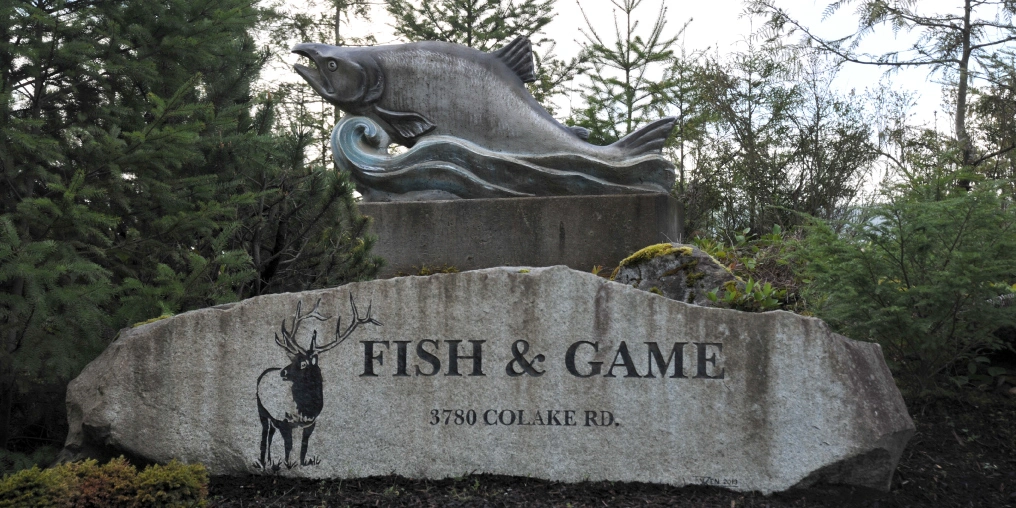
What are coho salmon?
Anglers can tell cohos from the other five Pacific salmon species by their white gums, black tongues, and small black spots on the upper part of the tail, not to mention their feisty play on the rod.
According to Fishes of the Strait of Georgia by Dick Beamish and Jeff Marliave, the coho’s range extends from California, up to Alaska, across the Bering Strait, and down to North Korea.
British Columbia is home to 2,600 spawning populations of coho, including those who return to Comox Lake after having spent much of their lives in the Strait of Georgia.
Prior to the 1970s, coho were abundant in the strait, and about 15 per cent of juveniles survived into adulthood. But beginning in the 1980s, that abundance decreased, it was thought, due to habitat loss and overfishing. By the ’90s, only about one or two percent of juveniles were reaching maturity.
In 1998, the BC government began restricting commercial and recreational coho fisheries. A decade later, populations rebounded, and, in 2026, numbers are near the levels seen in the early 1990s.
Part of that increase comes from work done by the Fish and Game.
The hatchery at the Fish and Game
The organization has partnered with conservation groups on various initiatives to enhance salmon stocks for decades. In 2022, its volunteers began raising fry for restocking the Trent River at its newly built on-site hatchery.
The hatchery was a long-time wish that became a reality when the Comox Valley Regional District needed a deep-water intake for a water main upgrade project.
“Warm water is deadly to salmon because it holds less oxygen and increases the cold-blooded fish’s metabolism”
The CVRD purchased a small piece of the Fish and Game’s sprawling lakefront property, and the deal included water rights from the intake for the organization. This allowed Fish and Game volunteers to start the hatchery and begin a new venture which will mimic a cold-water spring fed creek.
Spring-fed creeks exist naturally—Morrison Creek in Courtenay is one example—and are crucial salmon habitat. But creeks are warming up. “Now, with the summertime heat and those heat domes that we tend to experience each summer,” salmon conservationists are battling increased salmon mortality, White says.
Warm water is deadly to salmon because it holds less oxygen and increases the cold-blooded fish’s metabolism, sapping its energy supply. And that’s where the unassuming corrugated pipe comes in.

Coho salmon habitat enhancement
Except for some precocious males, known as jacks, which return in their first year, most coho return to their natal streams in their second year.
In late summer, when they swim up towards Comox Lake, coho salmon make it as far as the Puntledge River Hatchery off Powerhouse Road.
From here, about 2,500 coho hitch a ride in a pickup truck to be released in Comox Lake, where they spawn up the Cruickshank and Upper Puntledge rivers on the lake’s far end. Perseverance Creek is “really the only spawning area at this end of the lake,” White notes.
The project will provide more habitat: the water spilling from the black pipe will be diverted underground to upwell through a gravel bed, mimicking a natural spring. White says the coho will find the spring because the water is cooler relative to the surface temperature. After the salmon spawn and die here, their eggs will overwinter in the gravel, and, according to White, around 200,000 fry will emerge in March.
The volunteers have constructed a stream which features a rearing habitat—pools with vegetation and woody debris—where the fry can hide safely from predators.
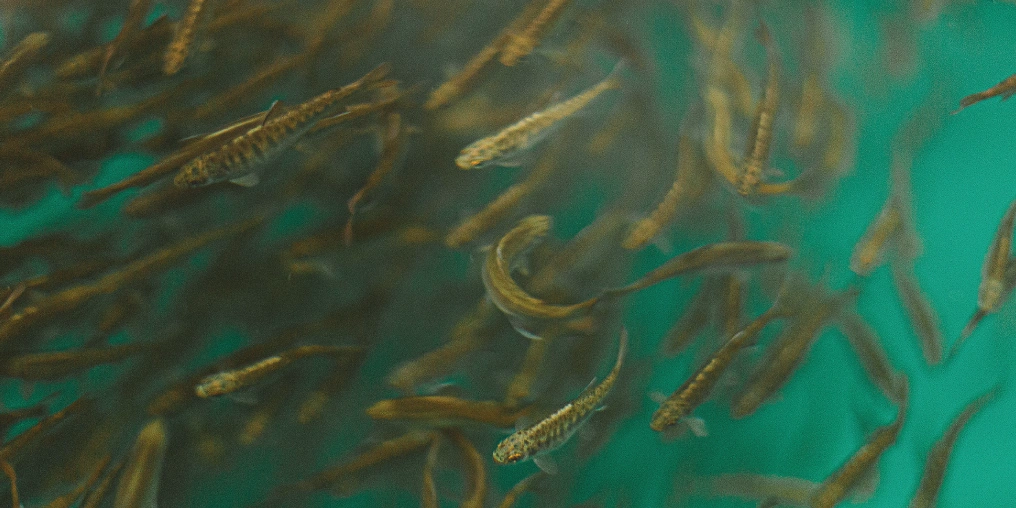
Over the summer, fall, and winter, they’ll grow into smolts three to four inches long. Come springtime, the smolts will get over the dam at the spillway to eventually reach the ocean and begin the cycle all over again.
The initiative has taken countless volunteer hours and several key grants from the Pacific Salmon Foundation and the BC Hydro Fish and Wildlife Compensation Program, where the utility must “compensate for their effect on the natural runs by the dams,” White says.
As work gets underway in summer 2026, the black pipe will no longer be visible, and, with any luck, coho will soon be using the system successfully.
“You don’t know what the future brings, but you plan for the worst and hope for the best,” White says.