I have always been a spontaneous traveller. Pick a country, choose a city to fly into, and let the rest unfold upon arrival. So when Selena, my girlfriend, told me we were flying to Austria for her best friend’s wedding in the spring of 2023, we decided to turn it into a road trip. The idea was simple: drive from Austria to Portugal and let curiosity take the wheel the rest of the way.
It wasn’t until we were in our local bookstore flipping through magazines that the plan began to take shape. Between the glossy covers of a magazine that featured architecturally unique structures, an article caught my attention with images of mountain huts in the Val d’Aosta, Italy, right along our path between Austria and Portugal. These humble huts, known as bivaccos (bivacchi in Italian), are built in rugged terrain, surrounded by mountains and glaciers, many in high altitude. Originally serving as survival shelters for soldiers in World War I, they later evolved to be used for mountaineering. Unlike rifugi, traditional staffed mountain huts, bivaccos are unstaffed and free to use on a first-come, first-served basis.
“You want to be able to keep up with traffic in Italy as much as you want to keep up with your caffeine intake”
In Austria, the sound of music filled the air, and pilsner flowed like water. After the beautiful mountaintop wedding and a night of dancing, we were free to hit the road. Selena and I borrowed her sister’s white BMW wagon and pointed it south. It may not have looked like the most ideal adventure vehicle, but it was free, and fast enough for those small, winding Italian roads. You want to be able to keep up with traffic in Italy as much as you want to keep up with your caffeine intake. Otherwise, you’re guaranteed some not-so-nice Italian hand gestures in your rear-view mirror.
Into the Valle d’Aosta
We set our sights on the Valle d’Aosta, steeped in mountaineering history and, I feel, a little overshadowed by its French neighbour, Chamonix. A tunnel connects the two places, a main artery between France and Italy. You can drive right through Mont Blanc for only 35 euros (better not to convert that into CAD). We arrived in the town of Aosta in the evening and headed straight to the supermarket to stock up. Selena and I are fairly lavish when we treat ourselves to hut trips, and even more so in Italy. Our bivacco menu consisted of wine under three euros, cheese, coffee, and spaghetti, olive oil, and garlic for aglio e olio.

The trail to Bivacco Brédy
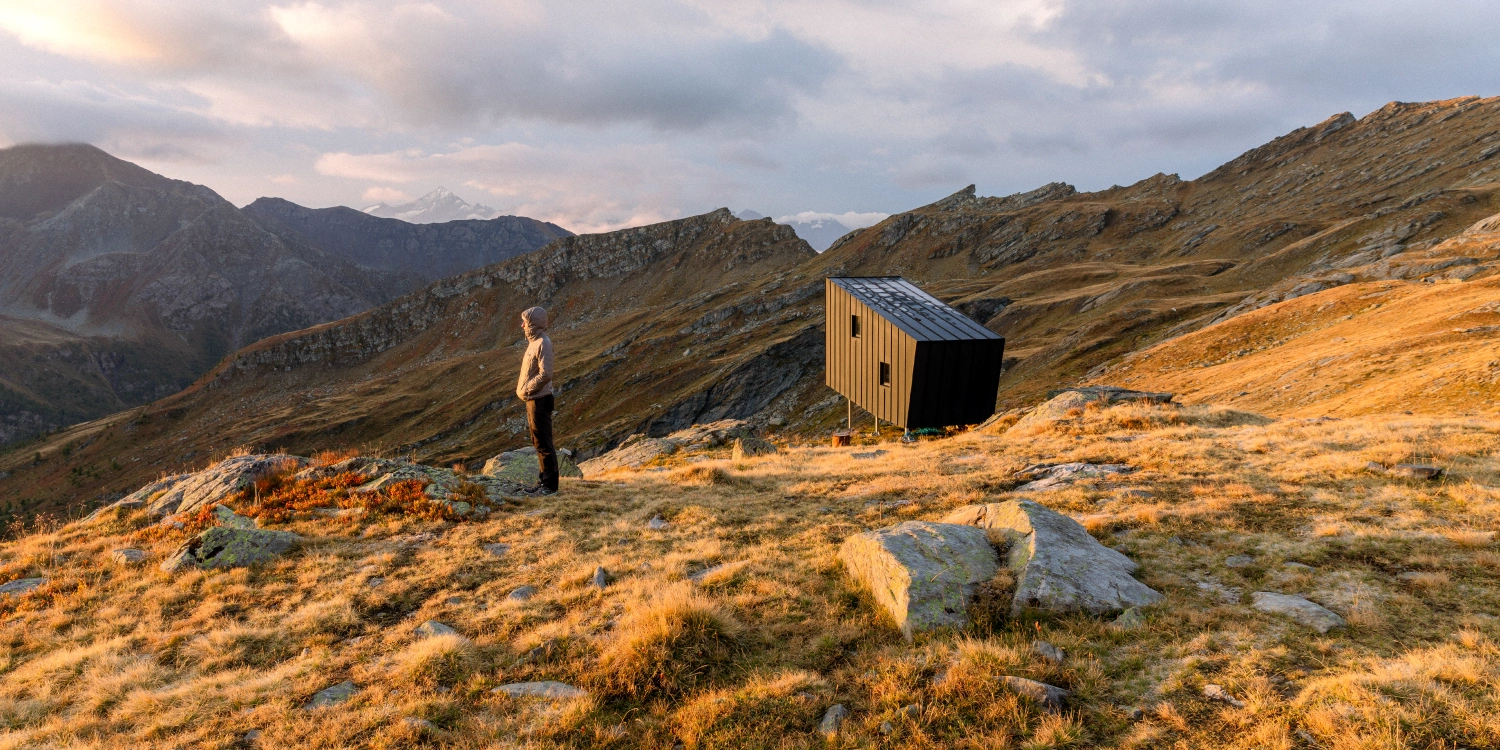
We headed out early the next morning to a very small village by the name of Vens. When we arrived, not a person stirred; it was a quiet, bluebird day. A church bell broke the silence, hinting at the presence of life. This was the trailhead for Bivacco Brédy. Ahead lay 11.7 kilometres of trail, the majority of it on a gravel road meandering through farms. Cows and sheep basked in the sunlight, watching us from high up on their grassy hills. The trail was almost silent, only punctuated by crickets and flies. As we neared the 10-kilometre mark, we spotted a shadow-like structure, barely distinguishable from the surrounding area. Perched there upon the hill was Bivacco Brédy, a memorial built in 2021 for Claudio Brédy, a well-known alpinist and politician from the Valle d’Aosta.
Bivacco Brédy
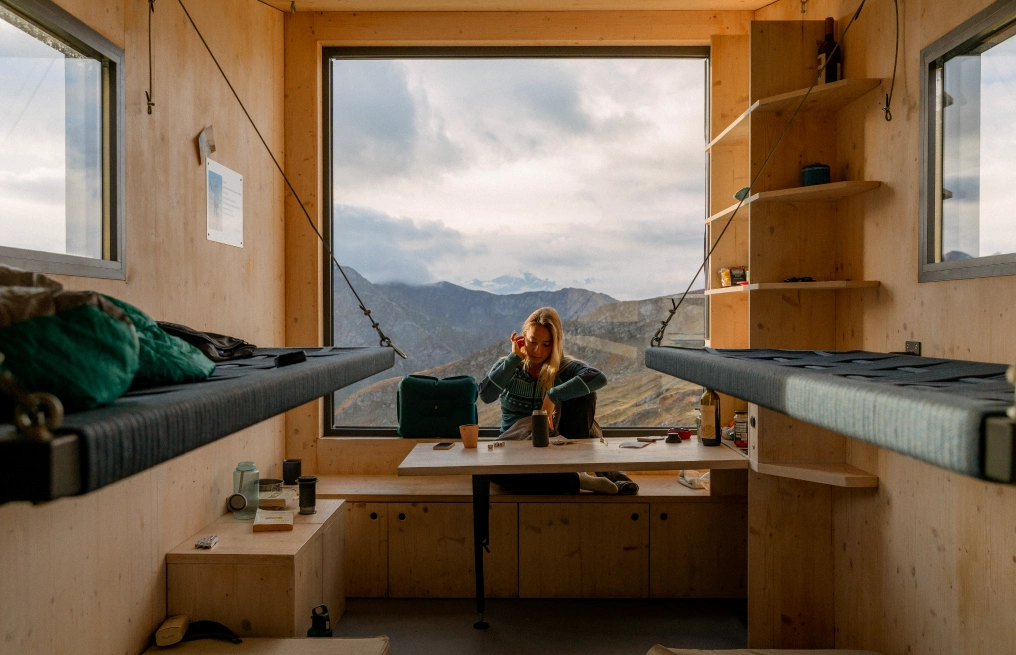
At first glance, it looks akin to a seacan, but this bivacco has a bit more spice to it. The south-facing orientation maximizes the potential for solar exposure. Combine that with the insulation, raised foundation, massive window, and telescopic design, and it stays fairly warm throughout the year. It’s elegant and minimal, but more than the physical, it’s the feeling.

We stepped inside and instantly felt at peace. The bright wood, in conjunction with the large window, brought a sense of airiness, as if we were floating above the landscape, which constantly shifted over the hours, from clear blue skies to overcast to striking orange and pink. We were spectators of the outside world,safe inside a structure built for basic shelter.
But instead of merely surviving, we were enjoying a generous helping of aglio e olio accompanied by a bottle of wine.
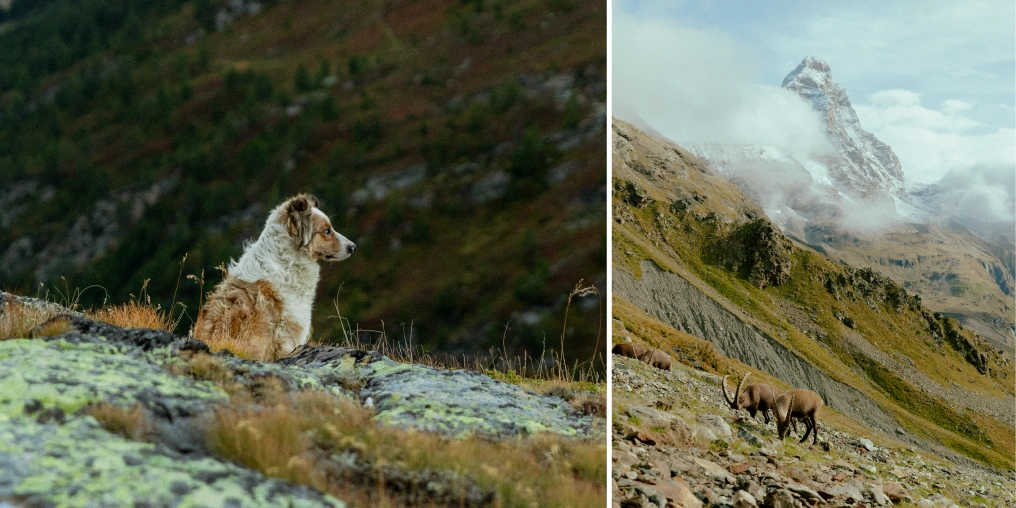
A sudden howl cut through the metal siding. We sprang from our seats, peering through the windows. An Australian shepherd glowed in the sunset light. It sat there, seemingly watching the last glimpses of alpenglow, before scurrying back down to the valley. There was something ethereal about that moment—a dog coming up the mountain by itself after a long day of herding sheep? Whichever way you cut it, nature’s beauty is admired by all.
Morning drifted in with the fog; our viewing window was now uniformly grey. It was time to pack up and head back down. Within the quiet moments we had at the bivacco, we’d had time to reflect on how we ended up there. A spark of inspiration that began as a 2D ink-and-paper image turned into reality. There is something to be said about physical media and its ability to turn dreams into action.
Through a paper map or old photo book, you can get lost in the details and possibilities. If we hadn’t picked up that magazine, our trip—and maybe our lives—would have been entirely different. After all, it was at our second bivacco on that trip that I proposed to my wife, Selena.