For the previous three months I had been suffering through a very restricted eating plan. The shock of breaking my hip while skiing (at barely 50) and the humblingly slow healing process had convinced me to try the one thing I have rebelled against my entire life. That thing was a DIET. An anti-inflammatory diet.
I became a professional chef because I love to create and share food, but at heart, I’m an eater—someone who plans future meals while currently eating a meal.
I had been running a very busy café and catering company inside The National Ballet of Canada for 17 years. Dancers, like other high-performance athletes, are well versed in every new diet/hack/trend, and over the years, I had adjusted my menus many times to suit the buzzword diet du jour.
I had recently developed an anti-inflammatory meal plan to help injured dancers with recovery, but I didn’t think I would ever follow it, not in a million years. Not because the foods on it weren’t good, but because my philosophy is that food is life: we’re meant to enjoy every bite, never pass up an experience, and leave no crumbs behind.
“I had to remind myself that I was ‘the man’ here, and I couldn’t rebel”
But the pain had started eating away at that philosophy. Could food really help heal me? I realized I’d never know if I didn’t try. I told myself I could be—forced myself to be—compliant for three months.
In my first week on the anti-inflammatory diet that I myself had engineered, I was irritable, a little tired, and very sad without my regular toast and peanut butter, or a nice piece of cheese. In fact, I remained largely crabby for three months, but I had learned one very important lesson from the elite athletes of the ballet, and that was consistency.
Dancers are uber-compliant and unbelievably consistent with diet. They would longingly look at warm, gooey, fresh-baked chocolate-chip cookies—and order a yogurt pot or egg bite. The administrative staff would say, “I really shouldn’t,” or “I’m having a day, so I deserve it,” and order the bacon grilled-cheese special.
My initial discomfort and irritability at going without sugar and alcohol passed within the first week. After that, the only major hiccups came when I was navigating other people’s feelings about diet, or when I felt the strong urge to rebel against “the man.” I had to remind myself that I was “the man” here, and I couldn’t rebel.
Almost exactly three months into the diet, I climbed those stairs without pain. The realization that my food choices impact my daily life and my lifespan was profound. Soon, I became evangelical about the anti-inflammatory diet—and yes, I was no fun at parties.
What Anti-Inflammatory Diets Actually Do
What is inflammation and why does everyone talk about it like it’s bad? Well, you could call acute inflammation, which is a short-term response to injury or infection in the body, “good.” It’s a natural part of the healing process. But chronic, or systemic, inflammation—when the body’s natural acute response gets stuck in a loop and starts feeding on itself—is not good.
It causes persistent damage that is linked to many diseases like cancer, diabetes, and cardiovascular disease.
Some common symptoms of chronic inflammation are pain, stiffness, brain fog, unexplained fatigue, a spare tire, digestive complaints . . . Yeah, it kind of sounds like aging, or just living.
The good news is that a diet rich in antioxidants, omega-3 fatty acids, and fibre actively reduces inflammatory compounds by neutralizing free radicals to protect cells. A high-fibre diet feeds good gut flora, which helps control inflammation throughout the body.
From strict rules to real moderation
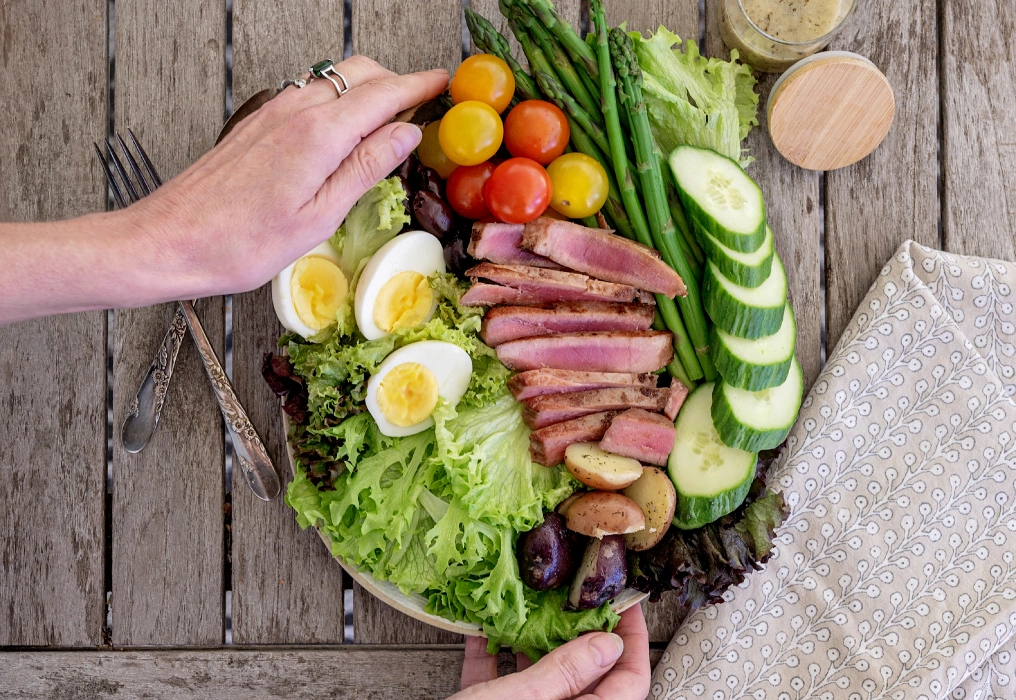
There are many versions of anti-inflammatory eating, with various levels of food restrictions. I chose to jump right into the deep end. I went beyond the basic plan (no gluten, dairy, sugar, or alcohol) and stopped consuming all lectins (the carbohydrate-binding proteins found in beans, pulses, and legumes). I ate only whole foods—nothing highly processed. Happily, after six months I slowly added legumes, beans, pulses, and nightshades back and found they had no deleterious effect.
“Living without chronic pain is so much better than a grilled cheese any day”
Despite having created a diet plan for others to follow, before I tried anti-inflammatory eating, in my heart I really didn’t believe it would make a difference to me, because I already ate well: all home cooked meals, minimally processed foods, mostly vegetarian.
However, when forced to really examine what I was putting in my body, I realized that I wasn’t following my professed belief in the adage “Everything in moderation.” I was having sugar, dairy, gluten, and wine daily. Now, I’ve found great substitutions, and I practice true moderation, so of course I have the occasional piece of pizza, but I know my body so much better now and I truly understand the power of food to change our health. Living without chronic pain is so much better than a grilled cheese any day.