



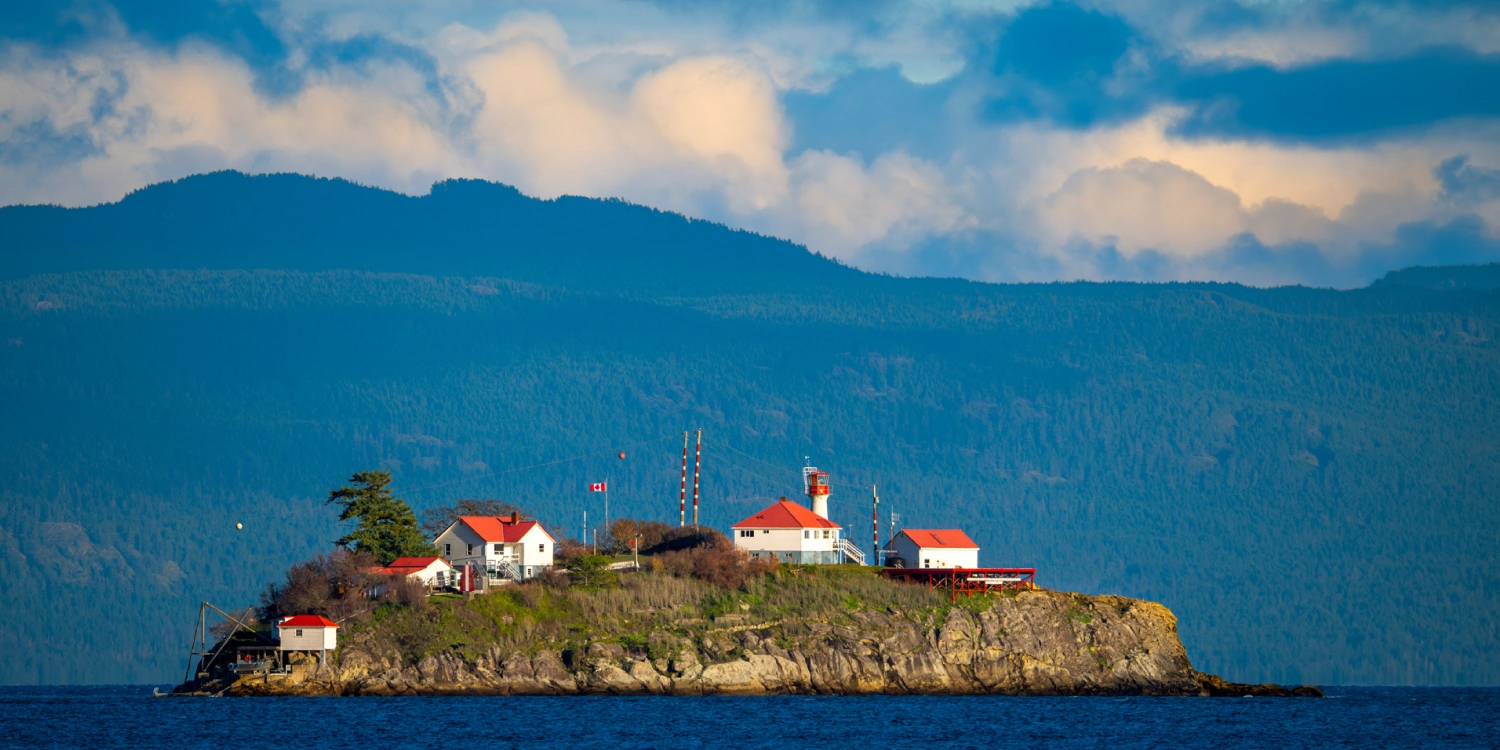
I remember March 2025 so clearly. It was early in the month, before spring had officially begun. The air was cold and damp, the sky a steady grey, but the ocean smelled fresh, and the forest pulsed with life after the winter rains. My husband and I had relocated to the Island, but hadn’t decided where we would put down roots yet. We packed up our new travel trailer and headed to the Oceanside area, ready to explore the coast to see where we might belong.
We had just released our first book, Vancouver Island: The Art of the Landscape, and had scheduled book signings from Parksville to Campbell River. Staying at the Cedar Grove RV Park and Campground in Qualicum Beach, we stepped into the misty forest and wandered along the quiet shoreline every morning. I felt a gentle tug I could not yet name.
Between work events, we explored the coastline and surrounding communities. It felt as if we had stepped back in time. People were welcoming, offering a quiet friendliness that left a lasting impression. Driving along the Old Island Highway between Qualicum Bay and Deep Bay, a peaceful feeling washed over me—a sense that lingers today.
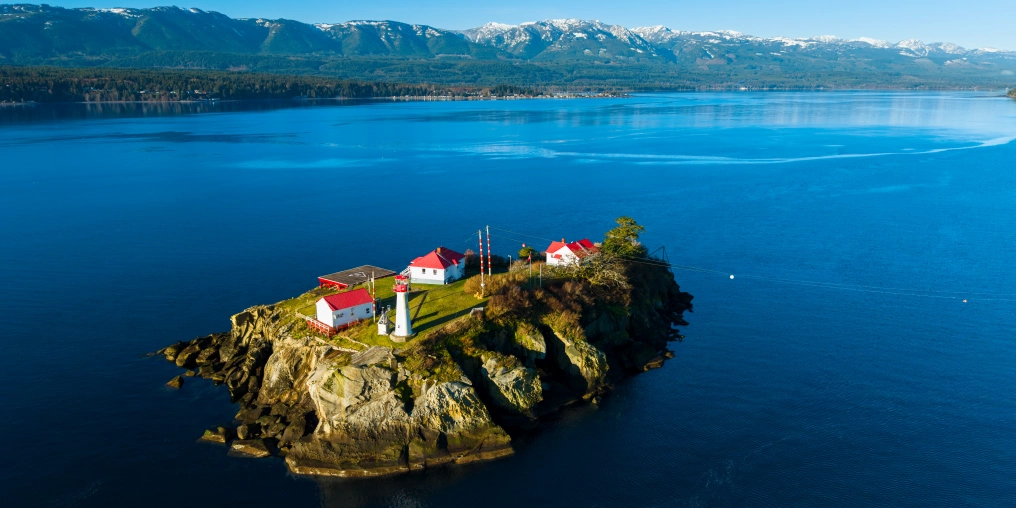
This stretch of beaches, forests, and homes felt timeless, shaped by both the ocean and the generations who had lived here before. Lighthouse Country—named by the local business association in the 1980s for its proximity to offshore lighthouses on Sisters Islets and Chrome Island—spans roughly 300 square kilometres and includes the communities of Deep Bay, Bowser, Qualicum Bay, Horne Lake, and Spider Lake. Seen from the coast, these lighthouses are quiet sentinels, safely guiding travellers through waters and protecting them from treacherous storms since the 1890s.
While standing at the edge of Deep Bay, we watched the wildlife unfold before us: seals and sea lions gliding through the water in search of food, long-tailed ducks that breed in the Arctic but overwinter here, and a variety of shorebirds soaring over the surface. For a nature lover, it felt magical. I found myself wondering what history this place holds.
A History Written by the Sea
Nearly a year later, I found my answer through images and oral histories collected by Rita Levitz and Leah Willott. Together, they authored Images & Voices of Lighthouse Country: A Pictorial/Oral History of Deep Bay, Bowser, Qualicum Bay & Horne Lake (1997/2002).
I had the chance to chat with Levitz and Willott and discovered they were long-time Bowser residents who met at Sunnybeach in the early 1980s. They shared a vision of creating a local newspaper, and this dream eventually evolved into a much larger project. “I had always been interested in writing,” Levitz told me. “I have a degree in English Literature.” In 1994, the project began, which took over three and a half years of writing, researching, interviewing, and gathering old photographs.
“In 1935, BC Packers bought the Deep Bay cannery, bringing electricity and water to homes, and by the 1930s and ‘40s, the area hummed with activity”
Through reading their book, I learned the First Peoples had made this area home for several thousand years. They wrote, they “found life in abundance in the sea, between the tides, and on land. Everything needed was here—food, materials for clothing and shelter, and a climate that was welcoming to human habitation.”
The waters were rich with life—herring, salmon, oysters, clams, and more—drawing people from near and far. The first European settlers arrived in the late 1800s, called to this land by logging, fishing, and the promise of homesteads. In the 1920s, immigrants from China, Japan, and Europe, along with First Nations and local women, worked in the thriving canneries that supported the population. “Both men and women fished. Some women fished with their husbands; others owned their own fishboats,” Levitz and Willott wrote. In 1935, BC Packers bought the Deep Bay cannery, bringing electricity and water to homes, and by the 1930s and ‘40s, the area hummed with activity.
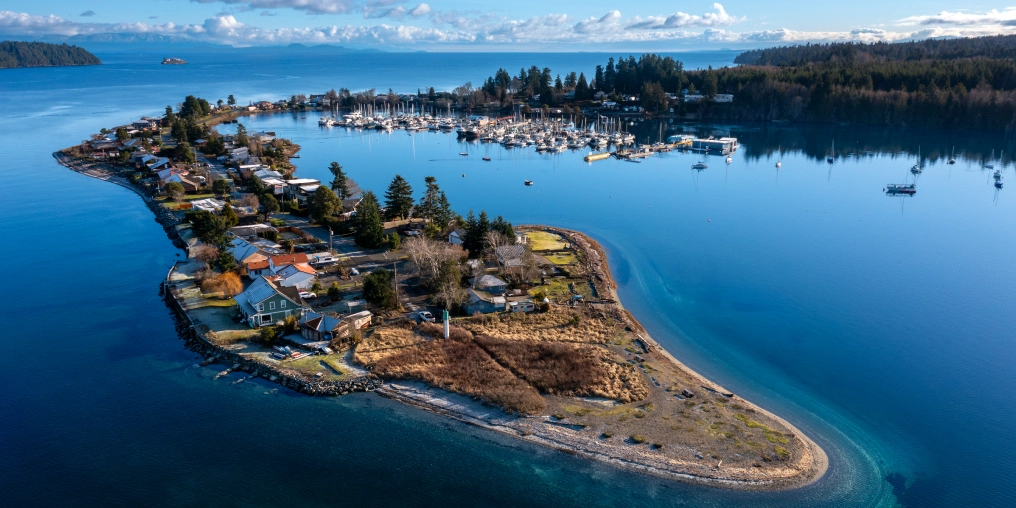
Nature, however, had other plans. In June 1946, a large earthquake reshaped the spit, turning the gentle sloping beach into a steep, 30-metre drop into the ocean. Just five years later, BC Packers boarded up the cannery, removed many houses, closed the school, and cut off electricity. What had once been a bustling community faded, leaving only traces of its former life. Today, this area is occupied by the Deep Bay Marine Field Station, Deep Bay Marina, and a number of homes which dot the shoreline.
“Bowser has always had a strong community … We have people who step up to make needed things happen. People are willing to share their time to keep this a vibrant community”
Bowser: The Commercial Heart of Lighthouse Country
A few kilometres south of Deep Bay lies Bowser, long considered the commercial heart of Lighthouse Country. In the early 1900s, only a handful of residents lived here, but by the 1920s, the population had grown due to both the fishing and logging industries. The Island Highway between Nanaimo and Comox was completed in the late 1890s. It ran straight through Bowser’s centre, making it a natural stopping point where locals gathered, connected, and picked up essential supplies. In the summer of 1914, the railway passed through, and by the 1920s, Bowser’s downtown included a hotel, post office, gas station, and general store. Today, Magnolia Court, supported by the Lighthouse Business Association, remains a central hub for shops and amenities in the area.
Over the past 45 years, both Levitz and Willott have seen many changes within Lighthouse Country, but one thing has not changed: “Bowser has always had a strong community … We have people who step up to make needed things happen. People are willing to share their time to keep this a vibrant community. I feel that we are so fortunate. We have a library, a pharmacy, a coffee shop, the legion, tennis courts and more,” says Levitz. “I think it has deep roots and it is still flowering.”
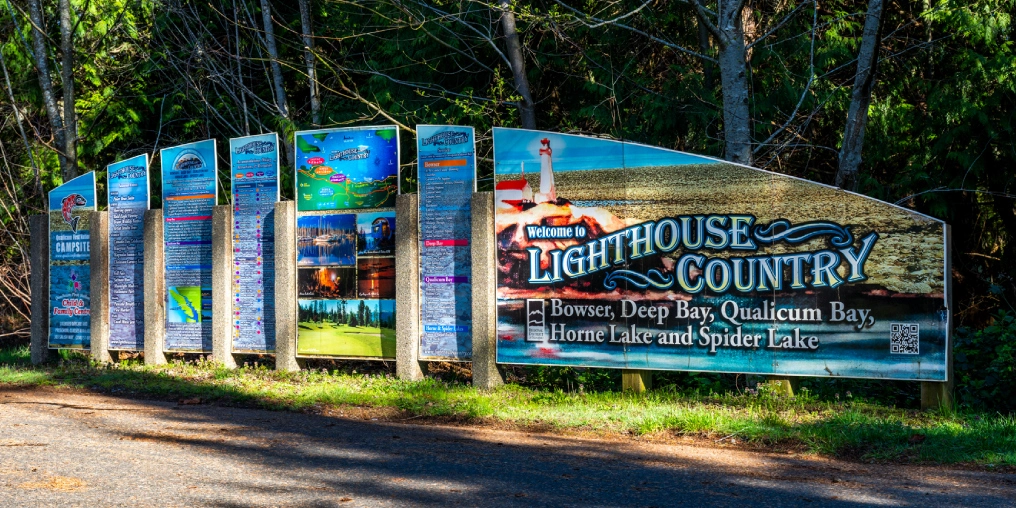
I could relate to what she said, as this part of the island and its people have softly pulled at my heartstrings. Our trip last March was more than a working vacation—it was a new chapter in our lives. Two months later we moved to the area, finally finding where we belonged.
Today, when I walk these beaches or step into the forest, I think about the original caretakers of this land and the generations drawn by the same waters, the same quiet, and the same sense of belonging. The blend of community, coastline, and forest continues to shape Lighthouse Country, drawing people here, time after time.