However, stewardship of this home required a lot of TLC. The deck was rotting and the stucco facade was cracked and crumbling. After decades of interventions rendering it far from its original state, care and attention were sorely needed to refurbish the house and its surroundings.
I’ve always been interested in home design, so discussions about restoring this old farmhouse piqued my curiosity and creativity, despite its shabby first impression and woeful disrepair.
The home’s lore cautioned us about what might await within its walls. I’d heard about how one might see their breath inside on particularly cold days, and how morning glory once grew into the kitchen through a floor vent.
One rainy day, we discovered a leak in the roof. Another time, while sitting in our living room with our first baby, I noticed movement outside the window and turned to see a rat ascend an overgrown tree beside the house, and leap onto our leaky roof with ease. This was not the first, nor the last, unsavoury rodent visitor.
Stripping it back
After serious planning, we learned that we needed to strip much of the house back before we could create a safe, cohesive, and practical family home. I got busy sketching out rough plans and plotting the placement of our future windows with measurements and tape. I went down Pinterest rabbit holes, listened to countless interior design podcasts, and gleaned inspiration for historical details from any charming old houses I happened upon.
The original house is thought to have been built around the 1920s, and we wanted to include architectural and stylistic elements which harkened back to that era.
I had a long list of other aspirations, too: make the upper staircase less steep; add skylights and windows; improve symmetry and historic proportions; incorporate a playroom; install a Heat-Recovery Ventilator (HRV) for better air quality and ventilation; reduce thermal loss with better insulation; use eco-friendly materials and building principles where practical; add an upper bathroom; and include a mudroom/laundry room on the main floor (the laundry room was previously in the deep, dark basement).
Early on, we completed various minor renovations ourselves, and my partner could handle much of any necessary demolition, but we needed help to tackle a rebuild. We hired Thyssen De Goede as our builder; both he and home designer Darin Bell—who drew up our architectural plans—helped us establish the final layout and design details. What began as daydreams and doodles soon became real, actionable plans.
“Peeling back layers of past renovations revealed floral wallpapers, decades-old linoleum, and window frames inexplicably boarded over”
What the walls revealed
The demolition process uncovered artifacts from the home’s past, including personal items, receipts from the 1920s, and a postcard dated 1916. It also unearthed unwelcome—but unsurprising—discoveries of rot, rodent life, and precarious leaning in the walls, and that the timeworn brick chimney was unsafe. (After its removal, we installed a heat pump, which allowed us to retain the floor space for living.)
Peeling back layers of past renovations revealed floral wallpapers, decades-old linoleum, window frames inexplicably boarded over, and clues as to the home’s original layout and usage. Unfortunately, we found few original elements to preserve. Luckily, however, the original fir floors were intact beneath the layered flooring. Some very damaged areas were replaced with similarly aged fir floors sourced from another home. My partner then sanded them and sealed them with a hard-wax oil.
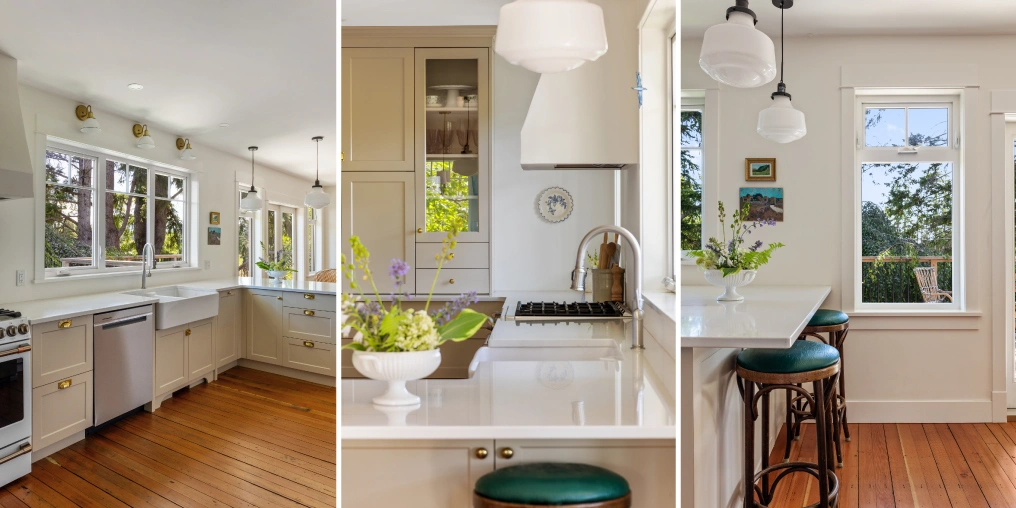
He also installed much of the tile throughout and completed the finish-work on our upper staircase. We both took on some of the painting.
This experience taught us that it takes a village to rebuild and restore a home. We are so grateful to everyone, including family and the skilled tradespeople, who helped bring our new old home to fruition.
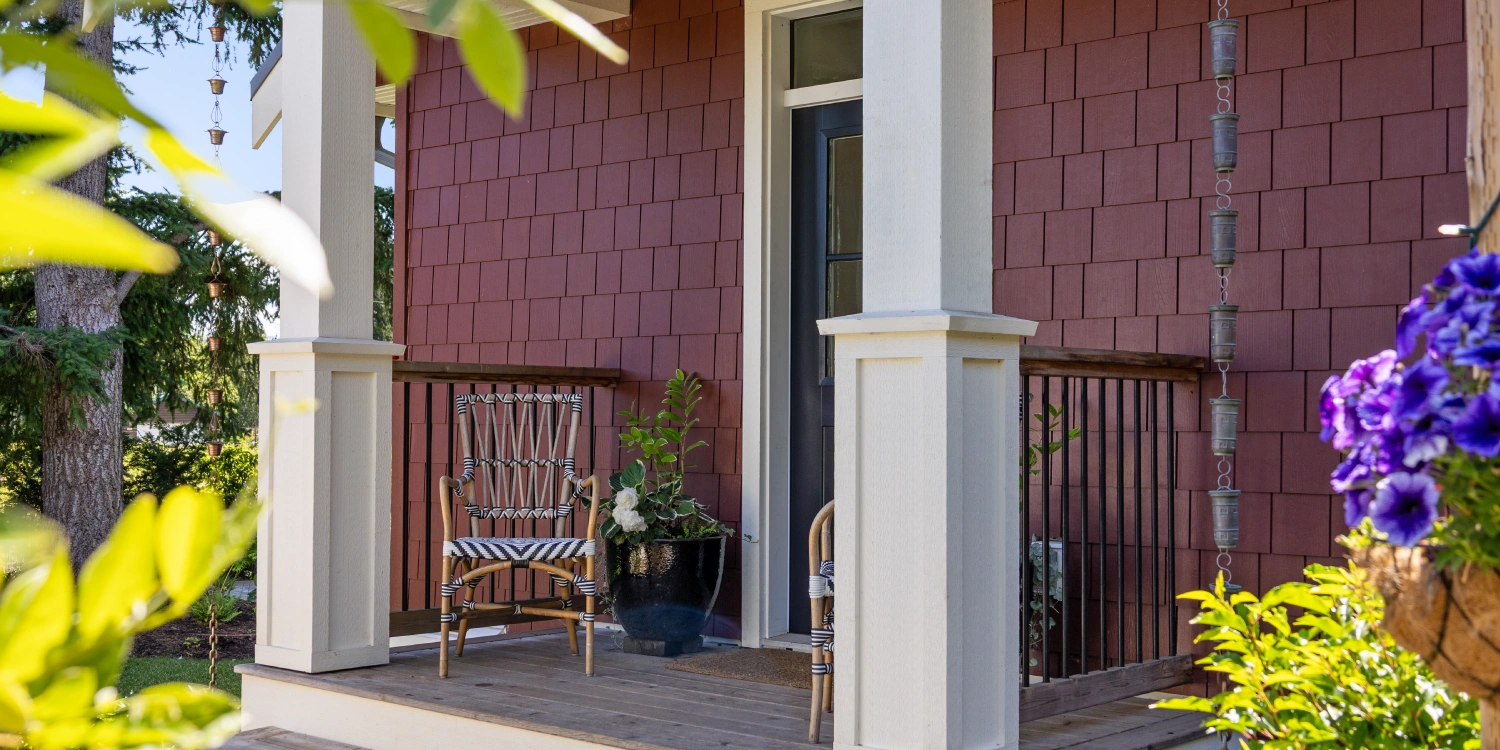
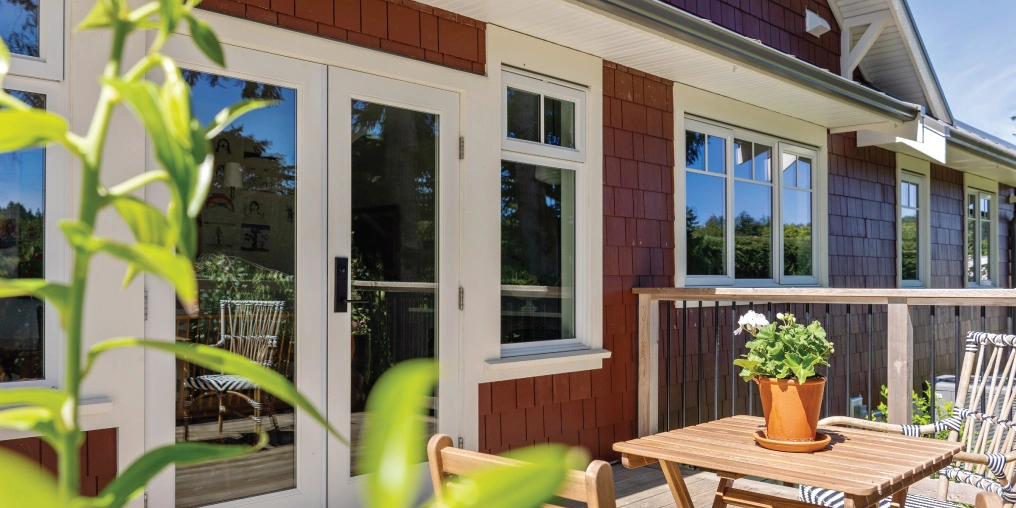
The house now feels like a lovely space to enjoy the bustle of family life. It nods to history—though not strictly the 1920s—while functioning as a modern home with materials made to endure. Details like the trim work, the french doors into the playroom, and changes to the exterior give the overall impression of an old farmhouse, as we’d hoped.
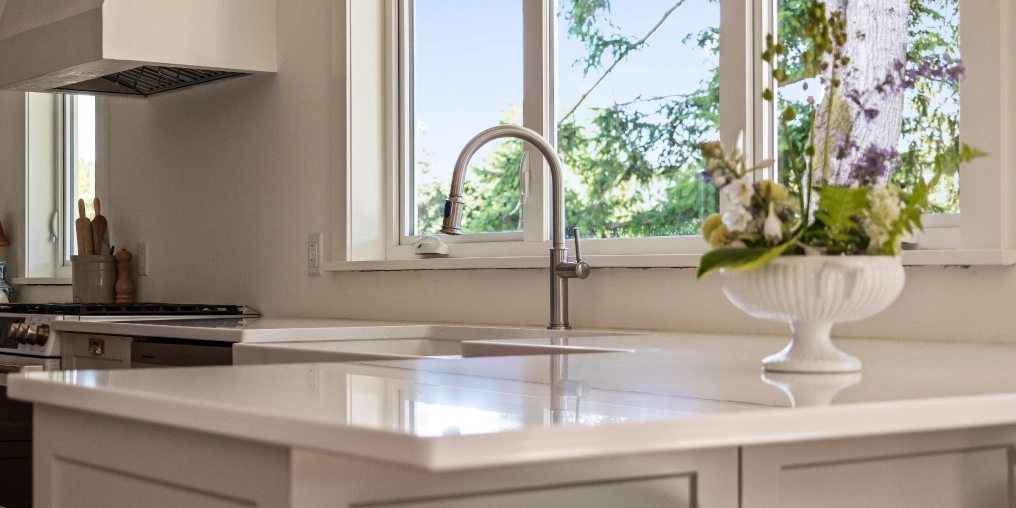
We love how the fir floors tell of the home’s past with their blackened nail holes, marks, and rough edges. Thanks to our new windows, we get to appreciate morning sunshine in the kitchen, ample daylight in the playroom, and sunset glow in the living room.
I’m still filled with inspiration, imagining ways we can continue to add character to this home, and I look forward to its ongoing evolution. Our home remains a work in progress as our family adds to its history.
Advice when considering a similar restoration
- Expect to be surprised (and perhaps exhausted) along the way.
- Give yourselves plenty of time.
- Maintain an open mind to meet issues with flexibility.
- Know that vision boards can help you stay on track.
- Be aware that a restored house will have more quirks than a new build.
- It will be a journey. Patience and perseverance go a long way