
This includes the lands of the Ligʷiłdaxʷ people, the Ehattesaht / Chinehkint, Homalco, Ka:’yu:’k’t’h’ / Che: k’tles7et’h’, Klahoose, K’ómoks, Mowachaht / Muchalaht, Nuchatlaht, Tla’amin, and Tlowitsis. The traditional unceded territories we call home provide us with abundance and the ability to grow and harvest food all year long.
“The more we understand what is living around us, the more we can live in a positive symbiotic relationship.”
What’s on the Strathcona Food Map
Where can one easily find information about local food sources and suppliers? The Strathcona Food Map is the answer. It was developed and is maintained in partnership with the Strathcona Community Food Hub (SCFH), the Strathcona Regional District, and inspiring community members.
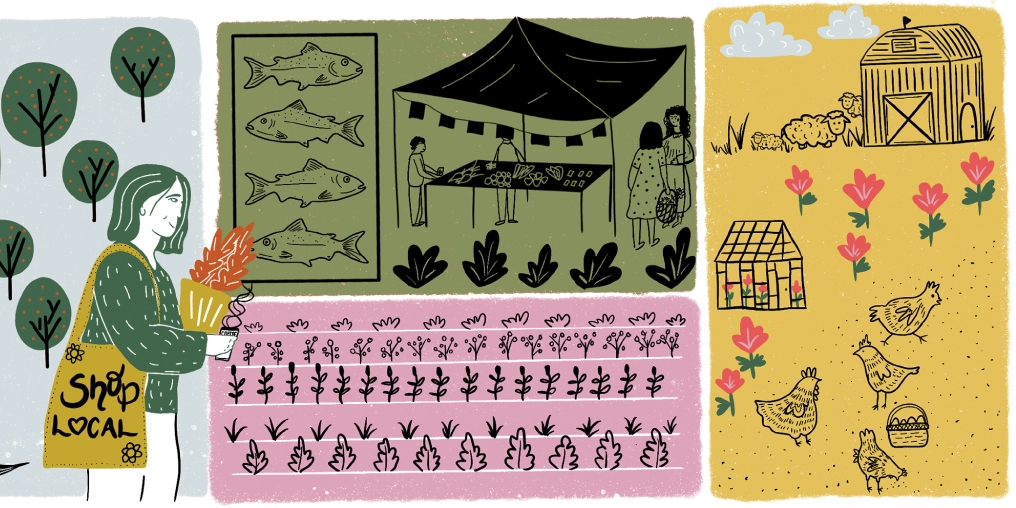
Both a Google Map and a printable PDF document are succinctly organized and frequently updated to show fresh foods, spaces to learn, and places to receive a warm meal. Users can directly discover farms and farm stands, seafood suppliers, kitchens, native plant nurseries, community gardens and food forests, school gardens, seed libraries, markets, mushrooms, and food banks.
Why a food map matters
The Strathcona Food Map encompasses the Strathcona region and beyond. Improving local resiliency, caring for the planet, and supporting the local economy are some of the main reasons that this map is important. The more we understand what is living around us, the more we can live in a positive symbiotic relationship.
Furthermore, for those visiting the area, it provides another way to explore. Food tends to be one of the most exciting discoveries of a new place. Knowing where to eat enhances the experience. What flavours are typical of a region and why? How does eating shape a society?
Our region has many islands to explore during a weekend trip. Maybe you are on a bike tour with friends and need a power-up; the Food Map can guide you to freshly grown and nutritious treats while providing an opportunity to meet the locals.
How the Food Map came to be
The Strathcona Community Food Hub (SCFH) is a network of food security collaborators from across the region who have been meeting since 2020. With funding from United Way BC and the support of on-the-ground regional community champions, we have established unique and successful projects over the last few years. The Strathcona Food Map was developed out of a passion for local food and supporting local producers, initiated by Irene Huntley and Morgan Ostler.
Huntley and Ostler admired the work being done in nearby communities that matched community members to local fresh produce and other goods. They wanted to create a similar resource for Campbell River. Using Google Maps, Boulanger developed the original farm-only digital PDF document into an expansive list of food security resources. Her previous experience in cultural mapping taught her the importance of people connecting to the lands with which they live.
Strengthening food sovereignty
We have heard the adage “If you give a man a fish he will eat for the day, but if you teach a man to fish he will be able to feed himself for a lifetime.” The Strathcona Food Map provides listings that develop people’s relationship to food to strengthen their food sovereignty. Identified spaces like commercial kitchens can host food workshops that teach people culinary, harvesting, and processing skills to feed themselves at home. Some community kitchens also provide a place to enjoy a free hot meal.
The goal of the Food Map is to meet people where they are at, whether that is shopping for the best local tomato, learning to grow and process vegetables themselves, or accessing food services when families are struggling to make ends meet. All of these factors are a part of the food security spectrum which assesses food availability, accessibility, affordability, and nutritional adequacy.
“With the challenges of climate change becoming more severe, supporting local is one impactful action we can choose in creating a stronger Strathcona.”
Growing interest in local food systems
The SCFH and Ostler participated at Seedy Saturday in 2024, where many attendees were delighted to learn of this helpful resource, and the map has had over 12,000 views since then. The public’s appetite to understand food systems is growing, ultimately creating a more food-secure region.
With the challenges of climate change becoming more severe, supporting local is one impactful action we can choose in creating a stronger Strathcona. The 2025 landscape of unpredictable foreign policy resulted in many Canadians paying more attention to our local suppliers. Food maps are the most localized version of this. From reducing emissions caused by transporting imported goods to creating stronger relationships with our neighbours, we hope our map serves you well.
Know someone who should be on the map? Connect with the SCFH to include them.
E-mail strathconafoodhub@gmail.com or visit the Strathcona Community Food Hub Facebook page.
Explore the Strathcona Food Map today by visiting:
Strathcona Regional District’s Community Health Network Food Security webpage
Strathcona Community Food Hub’s pinned links facebook.com/StrathconaCommunityFoodHub