




Billy Proctor wrote in Tide Rips and Back Eddies that a frequent question he heard from visitors to his museum at Echo Bay on the Broughton Archipelago’s Gilford Island was: “How often do you go out into the real world?” He would reply, “I think this is the real world.”
For those fortunate enough to live on the British Columbia coast in such havens as the Broughtons, perhaps the only thing that could be considered unreal is the perpetual and outstanding beauty that is part of daily life. To be able to witness spectacular sunsets, unfettered shorelines, and especially the abundant sea life and wildlife that form part of this quiet landscape is a blessing that Billy Proctor enjoyed for his entire lifetime.
Life of Billy Proctor in the Broughton Archipelago
Although long associated with the Broughtons, Billy, with his wife, Yvonne, didn’t move there until 1959. Born in Port Neville in 1934, he was just a baby when his family moved further up the coast to Swanson Island on Blackfish Sound, where he grew up at Freshwater Bay. Billy didn’t go to school; instead, he learned his lessons from the surrounding ocean and forest. He could read, having taught himself, and enjoyed books that gave names to the trees and plants, fish, and sea life he observed daily. Fortunately, Billy decided later in life that he should learn to write, and his books provide a valuable record of the times he lived through and a portrait of independent living.
In an era when it wasn’t unusual for coastal or rural-dwelling children to work, Billy was nine years old when he began commercial fishing.
There were no roads north of Sayward on Vancouver Island until the 1970s, and for everyone who lived in the region, travel was by boat only. For the Proctors, the nearest place to pick up mail, fuel, and supplies was the bustling community of Alert Bay on Cormorant Island, the hub of the region, boasting hotels, shops, and bars. When Billy was growing up, the federal Department of Fisheries (DFO) had an office there, the coast guard was stationed in Alert Bay, and commercial fishing was a thriving business.
In an era when it wasn’t unusual for coastal or rural-dwelling children to work, Billy was nine years old when he began commercial fishing. His father had died in a fishing accident when he was barely eight, so he learned from “old-timers” on their equally old and sometimes leaky boats. His mother took over the family fish-buying business.

Fishing and coastal living on the BC coast
Although sockeye salmon are abundant today, they had been diminished as early as the 1920s by the excessive fishing that supplied the many canneries along the coast, and still hadn’t rebounded in numbers by the time Billy started in the 1940s. He said that instead, fishermen in Blackfish Sound were catching coho and spring (Chinook) salmon. Over the years, he developed not only the skill to catch them, but a sense of where the fish would be and when to go after them.
Much later in 2010, when there was a mammoth sockeye run, Billy predicted there would be; other fisherfolk were amazed. He said it was a matter of simple math. He knew that the cycle of sockeye was such that every 60 years, the shorter life cycles would converge to bring the sockeye through the area in huge numbers.
Fishing provided a good living for many for several decades, and a large number of boats descended on the areas where Billy fished to take advantage as word travelled that fishing could be lucrative. By the 1970s, Billy saw a noticeable decline in the number of fish in Blackfish Sound. The DFO tried various strategies to make commercial fishing feasible, but none of them worked. The day came when the area was closed to fishing. He said it was simply a matter of too many boats and not enough fish.
Billy was generous with his knowledge, and after artist Yvonne Maximchuk became his neighbour in Echo Bay in 1986, he taught her how to fish. She said the eight years she commercially fished with him were among her most memorable, and she thought of Billy as both a friend and supporter.
One of the things that most impressed Maximchuk about Billy was his willingness, at the age of 60, to learn to write.
For his first book, Heart of the Raincoast, published by Touchwood Editions in 1998, he was assisted and interviewed by wild salmon advocate Alexandra Morton. Maximchuk said Billy wrote the book with the help of his wife, Yvonne Proctor.
Inside Billy Proctor’s museum at Echo Bay
One of the things that most impressed Maximchuk about Billy was his willingness, at the age of 60, to learn to write; he asked her to teach him as they began working together on Full Moon, Flood Tide, published in 2003. Their next book was Tide Rips and Back Eddies (2015). Both were published by Harbour Publishing.
One of Billy’s great loves was collecting, and the result is his now-famous museum at Echo Bay, filled with Indigenous and domestic artifacts, old tools, unusual rocks, photos, and bottles. The museum sees numerous visitors every year, either on tour with such companies as Marine Link on their Aurora Explorer, or as individual boaters and kayakers.
Billy particularly liked bottles of all kinds, shapes, and sizes. Marilyn Roberts, who knew Billy from her years with the DFO, said he knew exactly where to find them. He asked her husband, Wayne and their friend, Gary Grant, to go diving in a spot where Billy knew there had been a float camp that was now well below the waterline. He believed there would be numerous glass bottles there, as he had found many at similar abandoned camps.
Sure enough, the divers brought up about 750 coloured bottles. Roberts said they sorted and grouped the many coloured bottles, which ranged from small medicine bottles that usually once belonged to Chinese workers, to various BC brewery, Vancouver Island Brewing, and Champagne bottles, and canning bottles, some of which were quite rare. They kept 250, and the rest went back into the drink.

Celebrating the lasting legacy of Billy Proctor
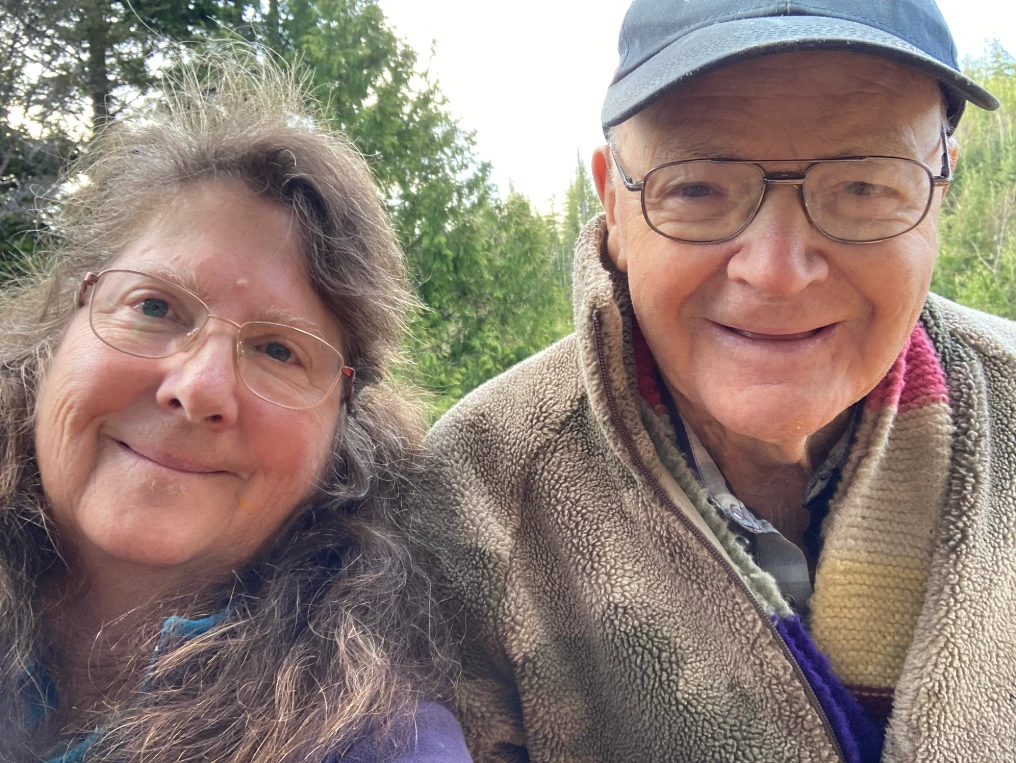
Billy’s 90th birthday was celebrated in October 2024. Various old friends and acquaintances converged on Echo Bay to celebrate with him, although he said he wasn’t in favour of being made a fuss of. That same year, he was awarded the Lieutenant Governor’s Award for Maritime Achievement.
Billy passed away on May 13, 2025. He will be remembered by many for his extensive knowledge of the coast and its life, his generosity of spirit, and for sharing his beloved historical objects and his own history with others.


