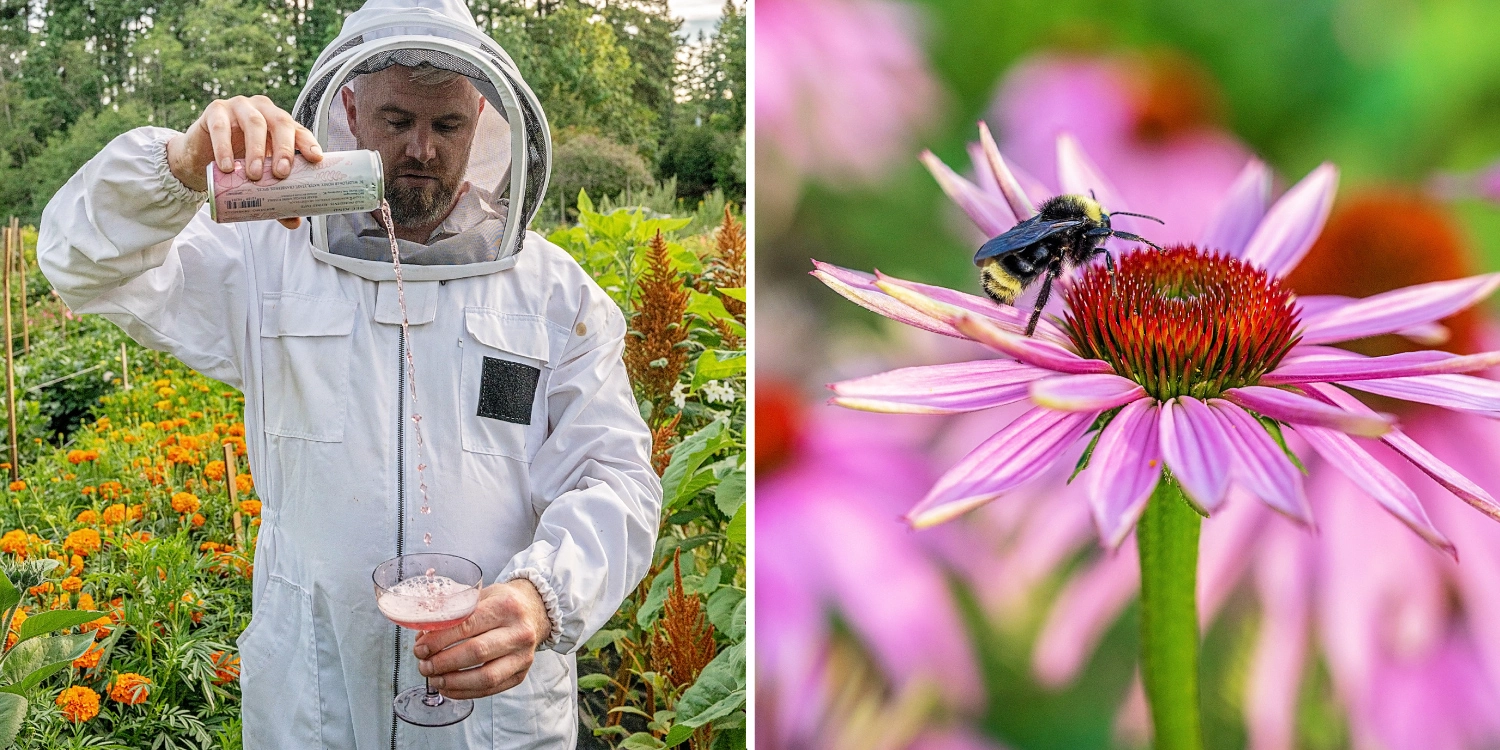
I first got into bees at my grandparents’ cottage, where I spent sunny days running through the bush, catching frogs in the swamp, and playing in the lake.
During dreaded rainy days, we would go to the local library and rent DVDs (yes, I know I am dating myself here—I remember the time where endless digital entertainment was not merely a click away).
One DVD we rented was a PBS documentary about bees—an in-depth look at their life cycle, agricultural significance, and, of course, honey production. At the time, I didn’t fully appreciate how important these mighty pollinators are to our food system, but they fascinated me. I rented the bee documentary on rainy DVD days for the next three summers.
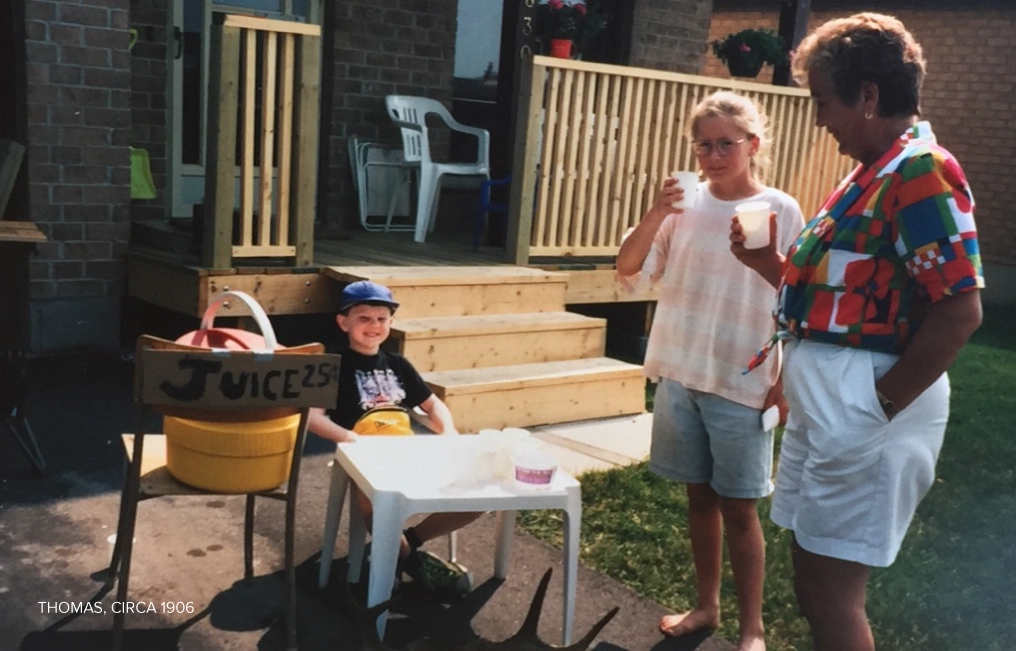
I first got into the beverage business when I was about five years old. I started a lemonade stand on the corner of the property. I’m not sure if it was my brilliant product placement, my super-cute face, or if my parents were just feeding the neighbours quarters, but I cleaned up. And the margins were nearly 100 per cent! (Take lemon juice concentrate, water, and sugar from Mom’s kitchen. Mix it all together in Mom’s dispensing cooler, add ice cubes from Mom’s ice tray, and serve in Mom’s cups. I made a killing!)
“When I learned you can make alcohol—called mead or honey wine—from honey, everything just clicked”
Twenty years later, I tended bar in some of the biggest craft beer bars and nightclubs in Toronto. I knew I wanted to start my own thing, so I enrolled in an Advanced Business Management post-grad that specialized in alcoholic beverages. Originally I considered launching a brewery, but how would I differentiate myself from every other brewery? It felt like every other day saw the release of another super-hoppy IPA, and my palate was fatigued.
When I learned you can make alcohol—called mead or honey wine—from honey, everything just clicked. It was a combination of three of my passions: nature, entrepreneurship, and craft beverages.
I was preparing to open my own business, a honey-based brewery, in Ontario when COVID happened. During lockdown, one of Canada’s major spirit companies paid for 1,000 bartenders, including me, across the country to take an introductory course in spirits. During the rum lecture, I learned about a unique BC-based distillery called Wayward that makes spirits from honey. They first make a mead or honey wine, and then they distil it. This immediately piqued my interest. I hadn’t heard of anyone working with honey on a commercially viable scale before.
Six months into the pandemic, I packed up my entire life in Ontario and drove across the country to Courtenay, where I joined Wayward Distillery to learn how to ferment and work with honey in the production of alcoholic beverages.
What really drew me into using honey is its sustainability relative to other forms of traditional alcohol production. It uses 80 per cent less water than beer or grain-based spirits like vodka or gin (something I think is going to become more important with climate change), takes up no crop space, and helps support food security and sovereignty—something I’ve also become passionate about since joining the Comox Valley Farmers’ Market board of directors; I now sit as its chair.
About 30 per cent of what we eat is a direct result of pollination, from the obvious like berries, fruit, and vegetables to alfalfa that becomes hay for cattle. It’s in our best interests to support bees.
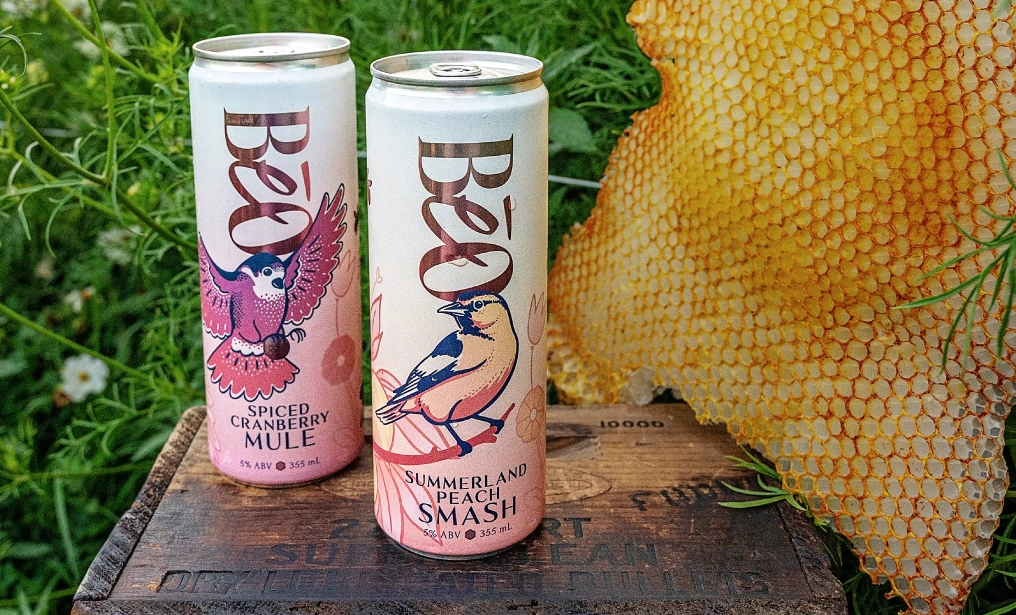
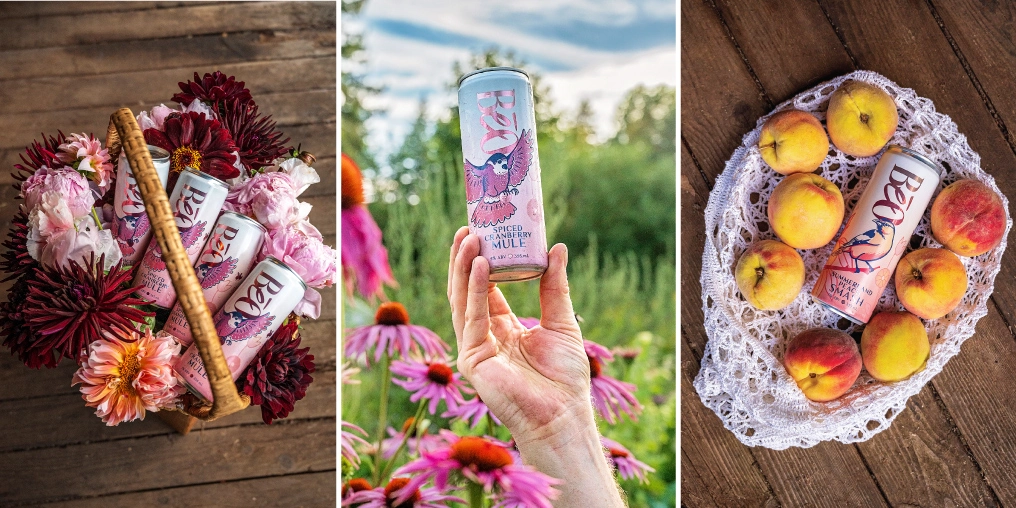
And so, after many years of delay, invention, and re-invention, I have created several light, bubbly, and refreshing fruit-forward honey wines that drink like cocktails. My beverages are called BéO (pronounced BAY-OH), which means bee in old English. They are bright, easy to drink, and versatile—perfect for the beach, backyard BBQs, a hike, or chilling at home bingeing Stranger Things (again).
These beverages incorporate everything I’ve learned from my early bartending days right through to working at Wayward. And my process supports BC-based agriculture and businesses. The honey comes from a single source in BC, the cranberries from the Fraser Valley. BéO’s cans are designed by a local graphic designer, printed in Burnaby, and filled in Victoria.
The margins are not nearly as good as they were in my early lemonade-stand days, but my love for bees, nature, and making a great drink has never been stronger.