
Why shear sheep in fall?
As a first-time volunteer, I was curious. Don’t sheep need their coats for winter? Why shave them now?
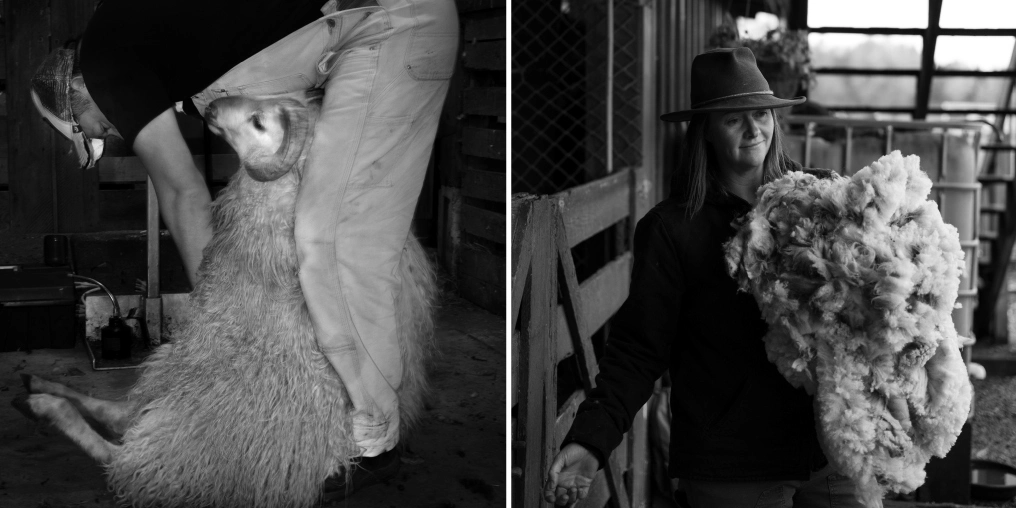
It turns out that some primitive breeds, like Icelandic, have fleece with a double coat. Without shearing every six months, their coats become bulky and matted, which affects animal health and results in low-to-no market value for the wool. Spring lambs that will soon be going to slaughter are also shorn in fall.
“About 89% of Vancouver Island’s high-quality wool ends up in landfills.”
When we arrived, there were 42 animals placidly waiting to lose their coats. Garrett Jolicoeur of Garrett’s Shearing Services—the current president of the Inter Island Sheep Breeders Association (IISBA)—was preparing to get to work. Our Comox Valley crew was part of VIF’s shearing-assist initiative designed to keep wool out of landfills.
The wool waste problem
Although we have high quality wool on Vancouver Island, about 89 per cent is wasted because of a lack of processing capacity, marketing challenges, and consumer dependence on fast fashion and synthetic fabric.
How Fibreshed works
VIF has four regional volunteer shearing support teams: Gabriola Island Fibreshed Working Group, Alberni Valley Fibre Guild, Victoria Handweavers and Spinners Guild, and Black Creek Spinners (Comox Valley & North). Each pod works with sheep farmers in its area during shearing to help clean the raw fleeces, plus weigh and price them for market.

During 2025, Comox Valley volunteers provided shearing support at three farms in Merville and Black Creek. This collaborative initiative supports Island sheep farmers to learn best practices, creating a larger market for locally grown organic wool.
And who wouldn’t want to get their hands on one of these fleeces? It’s a sensuous experience, handling a warm, newly shorn fleece. The rich lanolin soothes the skin better than any hand cream, the visual effects of textures and colour variation within the fleece generate oohs and aahs, and cleaning the fibres is meditative, great for nervous system regulation.
Like other farmers affiliated with Fibreshed, Angela Clarke of Willow Row Farm is dedicated to regenerative practices, creating minimal waste and recycling nutrients back into the land. The sheep she raises are mainly a cross between two breeds, Icelandic and Blue-Faced Leicester (BFL), that yield refined meat, full hides for tanning, and wool desired by textile workers.
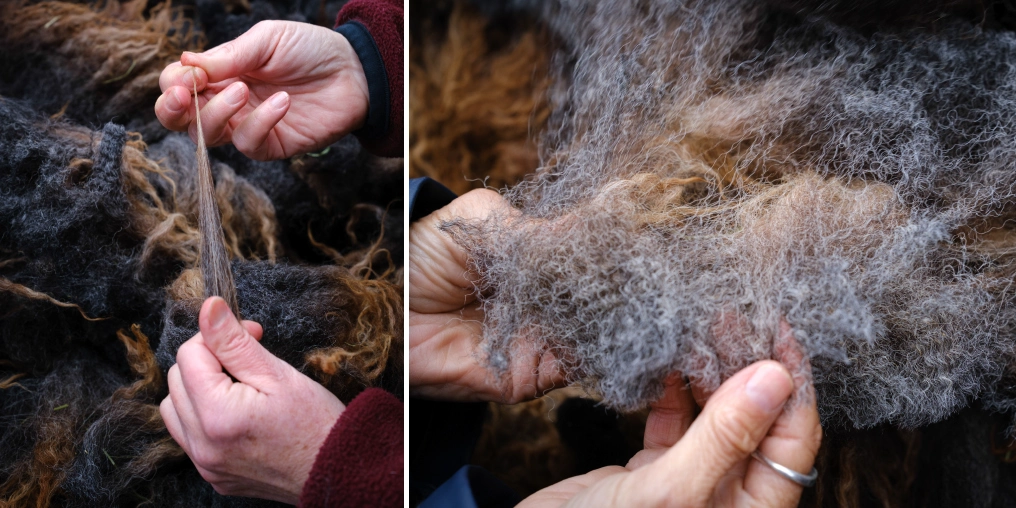
Angela knew there was a potential market for the wool from her sheep but wasn’t getting the success she wanted in producing high-quality fleece. Enter Vancouver Island Fibreshed.
In 2024, Fibreshed co-founder Amy Crook and key volunteer Sarah Thornton collaborated with IISBA to present a workshop on improving fleece quality for textile uses. Here was the missing information that Angela had been looking for, which she continues to implement with positive results.
Today was Willow Row’s second time working with VIF, and both Amy and Sarah were volunteering. Angela had organized her animals into indoor pens, and they appeared surprisingly calm. (Their mood shifted slightly as Garrett began using his tools.)

From shearing to market
Amy instructed us to remove all the muddy and matted chunks at the ends of the wool, a process called “skirting.” We also removed clotted materials—like feces—and vegetable matter caught up in the wool. Any short fibres called “second cuts” that sometimes occur from shearing were discarded; these are too short to be usable.
We were directed to get rid of the most obvious unusable bits; anyone else using the fleece will still need to clean it thoroughly. Nothing was wasted: all discarded wool was transported to Angela’s garden as mulch and a soil nutrient.
“My alternative economy is knowing my local farmer. Not some version of bitcoin, or cryptocurrency.”
Cleaned fleece was handed to Sarah for weighing and bagging; Amy then graded and priced the raw fleece. After this day, each woman connected with her extensive network, letting everyone know which fleece and types of wool were available. Besides textile production like spinning, dyeing, knitting, and weaving, there are many other uses for local wool. Two producers even turn fleece into wool pellets, which gardeners use to improve soil quality.
Building an alternative economy
At some point during a break, I heard Sarah Thornton say, “My alternative economy is knowing my local farmer. Not some version of bitcoin, or cryptocurrency.” That caught my attention.

And at the skirting table where we were cleaning fleece, I noticed that Sarah recognized each Willow Row animal’s fleece as it was deposited on the table. “That’s Mary-Lynn.” “That’s Kallie.” This is next level—identifying the sheep that provide the wool for her projects! It’s as close as you can get without raising the sheep yourself.
During my time at the farm, I was inspired by how the collaboration between VIF and IISBA connects farmers and end users in a mutually supportive relationship. I also developed a renewed appreciation for wool. This sustainable raw material deserves much better than ending up in a landfill.
Fibreshed Facts
Vancouver Island Fibreshed (VIF)’s overarching goal is to create a local textile economy based on renewable resources and climate-beneficial farming methods. VIF links small-scale, sustainable entrepreneurs such as farmers, processors, makers, and fibre consumers so wool and alpaca yarns and fibres can be put to good use.
Their Producers Directory highlights farmers with fleece for sale, artisans who spin yarn or create garments, sewing schools, dye gardens, tool lending libraries, and more. Fibreshed’s long-term vision includes a dream of establishing a commercial woollen mill on-Island, so fleece can be processed locally.