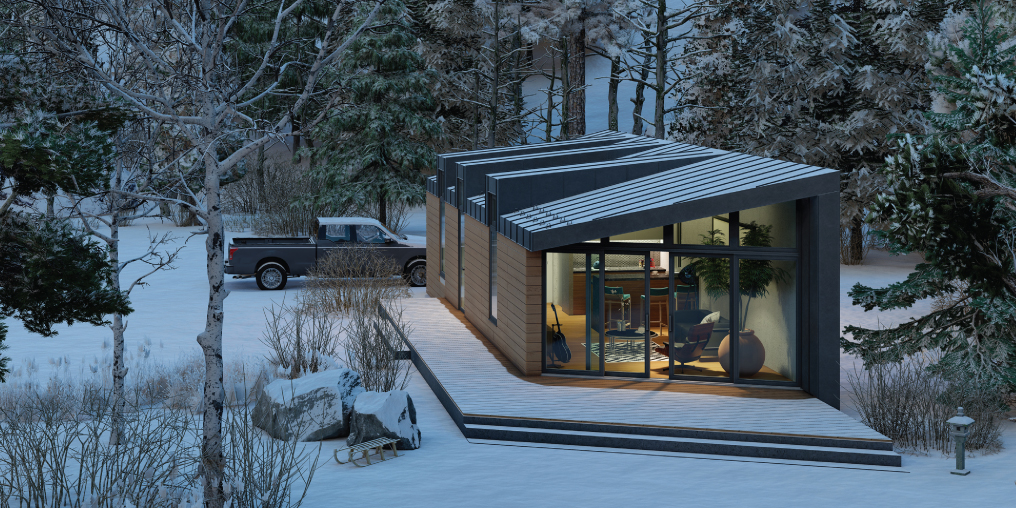

We are in a time of extreme housing challenges that necessitate that we, as a society, consider all options to get homes built. Innovative alternatives to single-family homes on a typical lot are becoming increasingly common, and, in fact, are now mandated in many towns and cities. What we do with the land available in urban settings—and how we live on it—are major considerations for many developers and home buyers.
One of the more interesting housing innovations began in the 1960s, when a Danish architect named Jan Gudmand-Høyer envisioned building affordable, intentional communities that were practical, sustainable, and responsive to the needs of the people who would live there. In his model, which came to be known as cohousing, residents had a say in how their homes were built—and in how things were run after move-in day.
After catching on in Denmark, cohousing made its way to other countries, and in 1996, the first Canadian cohousing project, named WindSong, opened in Langley, British Columbia.
The rest, as they say, is history. There are now more than 200 cohousing communities in North America, with many more being developed.
Bringing cohousing to Courtenay
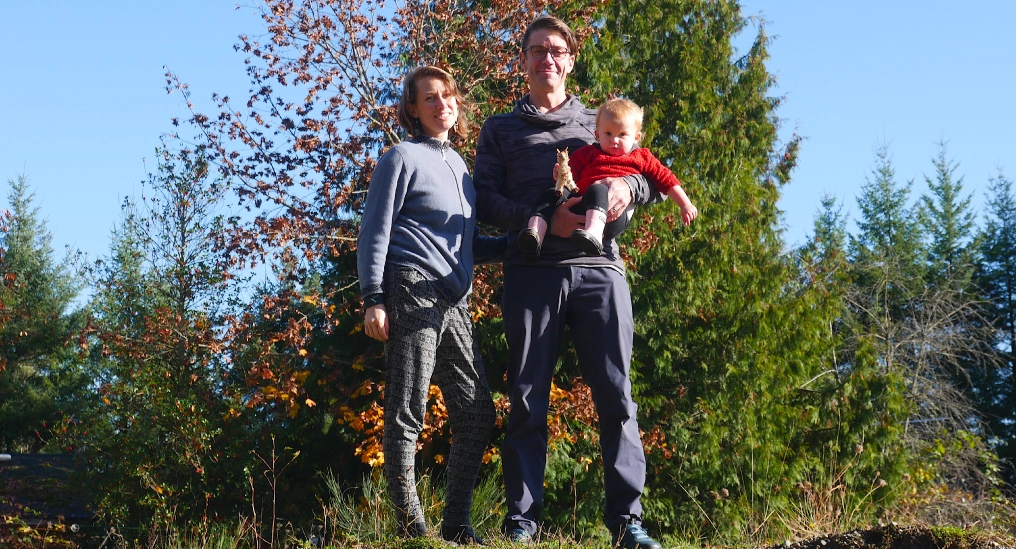
Courtenay Cohousing, now in the planning stages, is set to become the Comox Valley’s second cohousing project (Creekside Commons opened in Courtenay in 2007). Its originators, Tamara White and Tomas Nielsen, really wanted to move to the Comox Valley so they could be closer to family after the birth of their child. For many years, they had been interested in collective housing forms, and when 2.5 acres on Larsen Road in Courtenay came up for sale, “everything clicked,” Tamara says.
“People bring their experience of what’s worked and hasn’t worked for them in past living situations—and we collectively figure out how we want to live together. Everyone has different skills and interests, and capacity to take on different kinds of tasks,”
What cohousing actually is
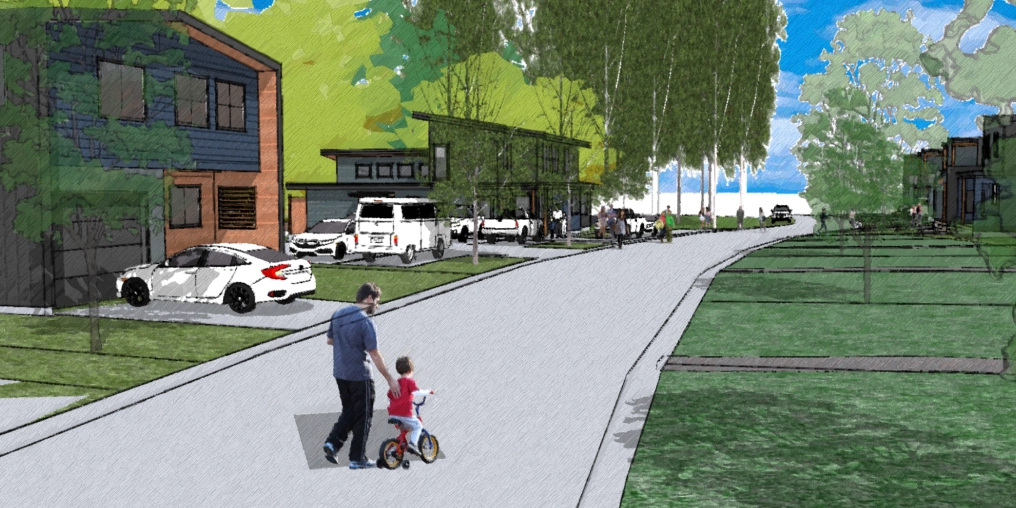
Cohousing offers residents a balance between privacy and community; homes are often clustered together and oriented around communal spaces. The same provincial laws and regulations which govern strata and co-op housing structures apply. Residents own their homes.
In new projects like Courtenay Cohousing, home buyers have a hand in designing the layout and features of their future neighbourhood, and they participate in the decision-making process. “People bring their experience of what’s worked and hasn’t worked for them in past living situations—and we collectively figure out how we want to live together. Everyone has different skills and interests, and capacity to take on different kinds of tasks,” says Tomas.
Tamara, an urban planner, says, “My personal motivation was to have a really supportive place to raise our kid—and a big bonus is that we can walk and bike to schools and grocery stores.”
As for Tomas, a builder, “My vision was to be part of creating a thriving community of well-designed homes, where we all know each other and have friends and support just up the street.” Tamara and Tomas’ dream of living with family and friends close by, sharing meals and celebrations together, has morphed into something bigger. They’re now planning for 18 homes—and seeking other folks who also want a connection with neighbours.
Building against isolation
In many cases, the way our homes, neighbourhoods, and towns are built can create social isolation. Studies point to widespread loneliness and isolation and their ill effects on our mental and physical health. According to Tamara and Tomas, cohousing is intentionally designed as an antidote to anonymous living.
Cohousing can provide social interaction; an aging-in-place environment; resources such as gardens, recreational space, and shared areas; options for housing size and layout; and (in some cases) affordability.
Location and design
Courtenay Cohousing is a 20-minute walk or five-minute bike ride to downtown Courtenay. The project’s proximity to neighbours and the shared indoor and outdoor spaces make it an ideal place for intergenerational living.
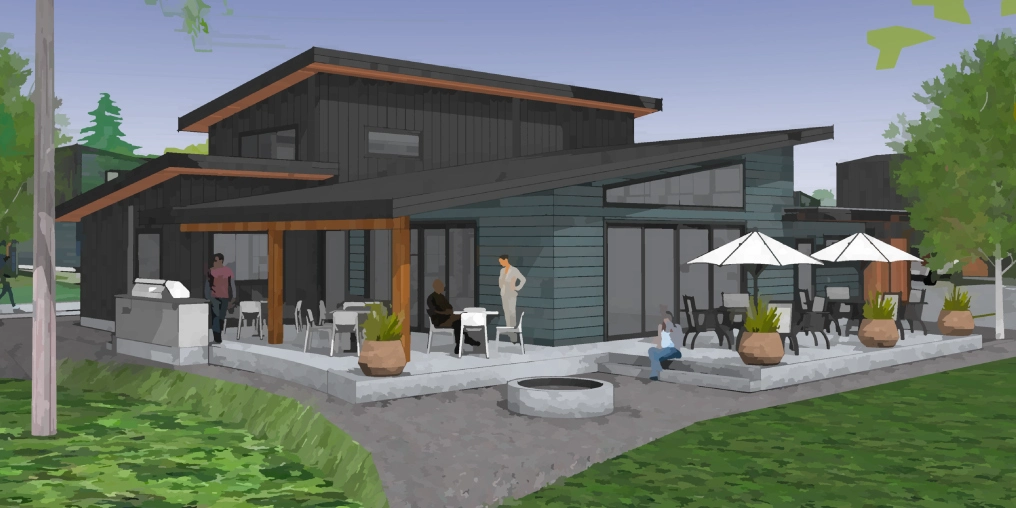
The common house will include features such as a large kitchen and dining space, a sauna, a kids’ play area, a craft room, and guest rooms for family and friends.
Diverse lifestyles and perspectives are welcome, and all residents will be encouraged to engage in shaping the community. Care for the environment and the sharing of resources are key values.
“a strong sense of belonging, regular communal meals which can ease your weekly taskload, shared resources that can reduce living costs, and a built-in social network for friendship, mutual support, and co-creation.”
The member group is currently working on designing homes that can be manufactured nearby and transported to the site for installation, thus avoiding extended, disruptive construction. The intention is to strike a balance between individual preferences and economies of scale.
What life will look like
The planned move-in date is 2026. Then residents will begin enjoying some of the multiple benefits of cohousing as listed by Tomas: “a strong sense of belonging, regular communal meals which can ease your weekly taskload, shared resources that can reduce living costs, and a built-in social network for friendship, mutual support, and co-creation.”
He adds, “We’re looking forward to doing things like ski tuning and bike maintenance together—and swapping babysitting so that we can get out to more shows and have date nights. There are lots of reasons why living in community can make life better and easier.”
Visit www.justuptheblock.com for more information, or email Tomas and Tamara at info@justuptheblock.com.