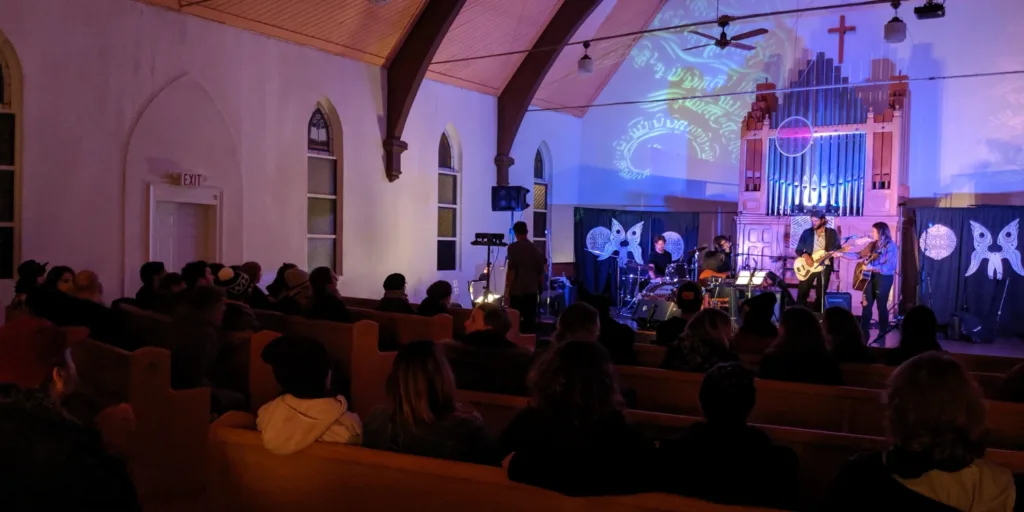
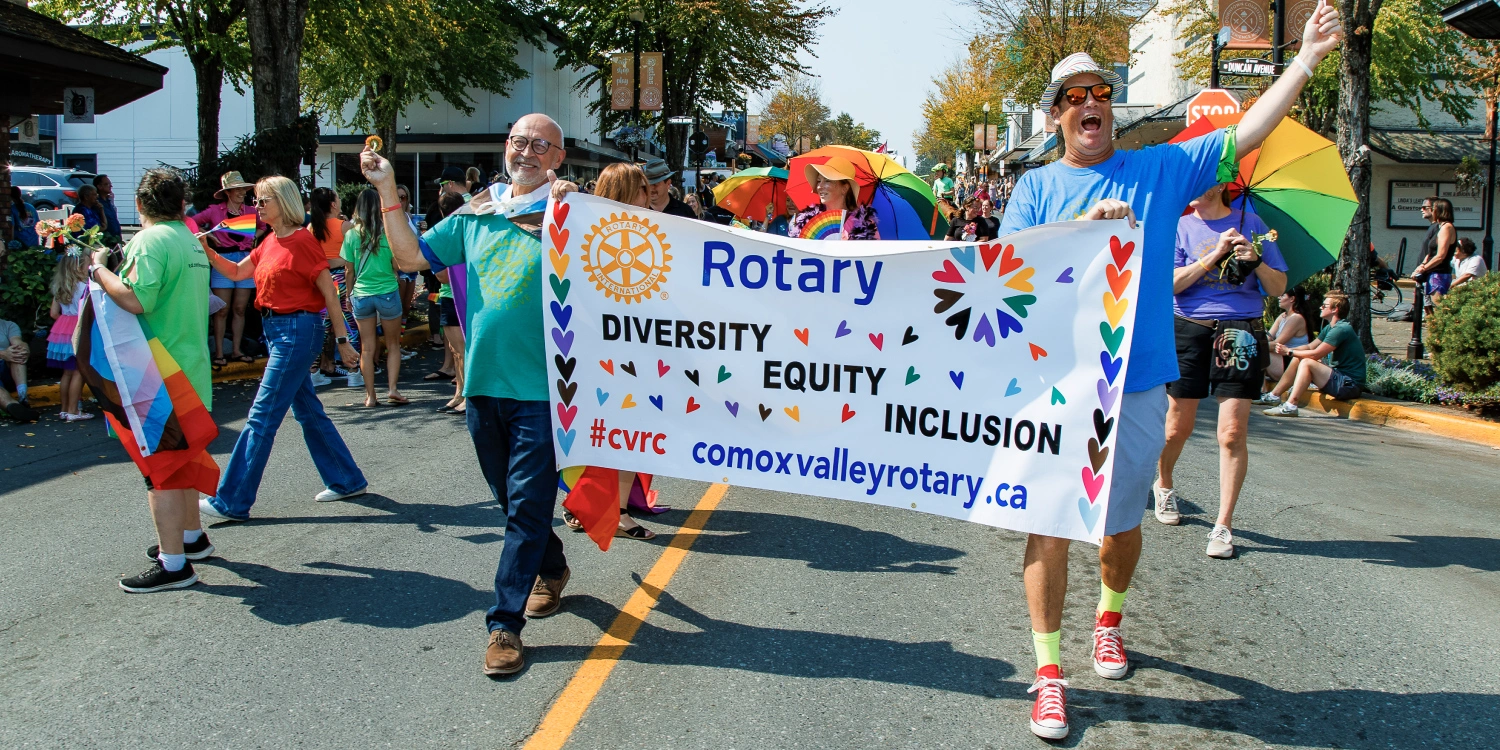
Many Comox Valley places and landmarks display the Rotary International wheel. Some are large and prominent, such as those at Simms Park, the Comox Marina splash park, No. 6 Mine Park, the stage at Filberg Park, the Skypark playground, and the pickleball courts at Highland Secondary School. Others are more modest, but no less significant: the Filberg Lodge arbour, the ramp and playground at the Comox Valley Child Development Association, and Cumberland’s historic Orchard Park. These blue-and-gold wheels represent the dedicated work of Rotary members from the five clubs in our community—and the generosity and loyalty of local citizens who consistently contribute to dozens of Rotary fundraising efforts.
Depression-era roots in Courtenay
Rotary International began in 1905 in Chicago, when a group of businessmen began meeting to work towards achieving peace and understanding. As membership grew and more clubs were formed, the mission expanded to active humanitarian service, making the world a better place for everyone by building healthy, peaceful communities. Today, there are 1.2 million Rotarians worldwide. This year marks the 90th anniversary of Rotary in the Comox Valley, which now has 180 members in five different clubs.
“The Valley’s first Rotary project was to send a boxcar-load of donated fruits and vegetables from Hornby Island to the Prairies”
In 1936, the Depression was causing widespread hardship. Businesses were falling into bankruptcy, the logging industry was struggling, layoffs were common, and the City of Courtenay, like every community in British Columbia, was being pressed by the provincial government to fund make-work projects for unemployed men with families. This is when the Courtenay Rotary Club held its first meeting. Some familiar names were among its charter members: P. Leo Anderton, Bill Rickson, Wallace McPhee, and Cliff Laver.
The Valley’s first Rotary project was to send a boxcar-load of donated fruits and vegetables from Hornby Island to the Prairies, where the suffering was the most extreme in Canada. Their second effort that year was to donate towards the survey of a site at Lewis Park as the first step toward building an outdoor public pool. The war intervened and this project did not become a reality until 1949. Although the pool is near the end of its life, it has served the community for 77 years.
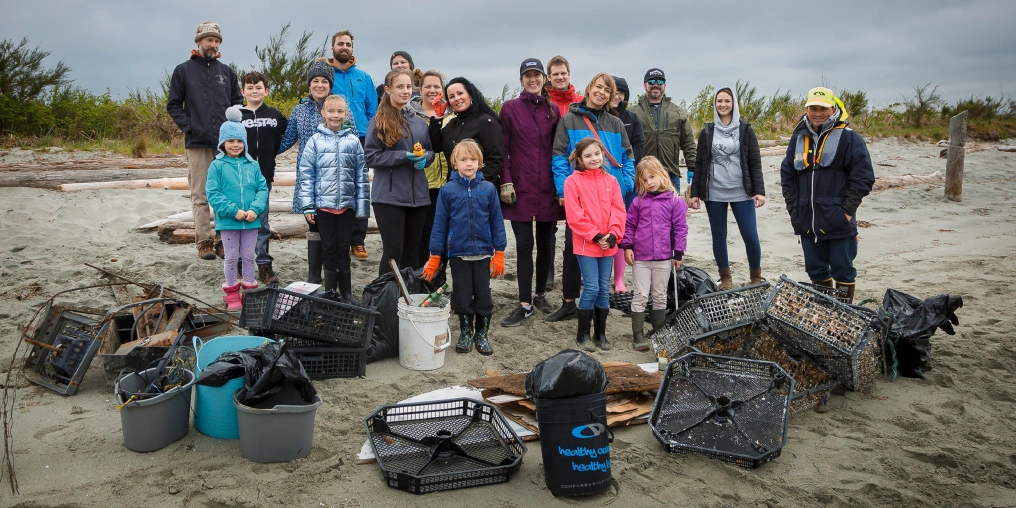
Wartime efforts focused on supporting the Air Raid Patrol and the Red Cross, and on gathering and shipping out scrap metal for the war effort. Rotary also bussed children out of town to pick berries to make jam for our bombed-out allies in Britain.
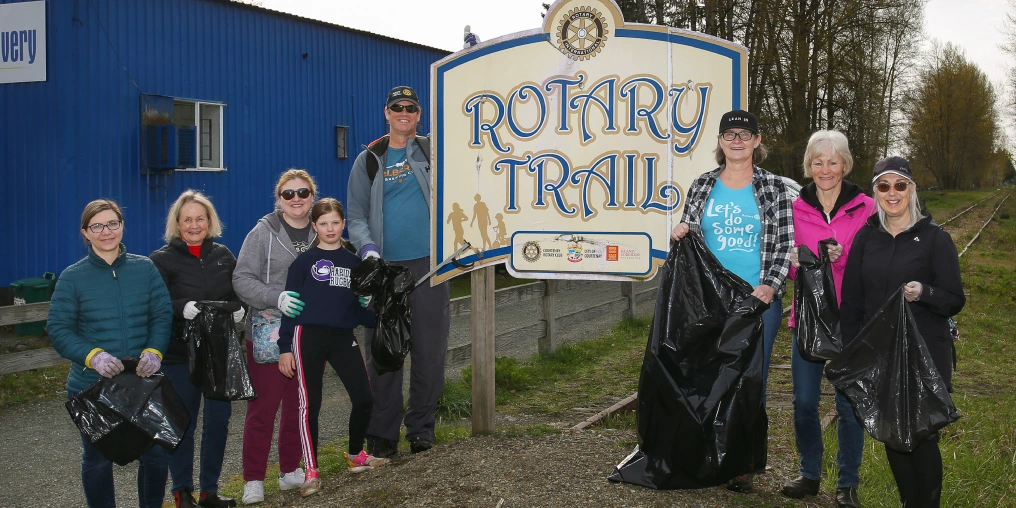
Four more clubs were chartered over the next several decades: Comox (1974), Strathcona Sunrise (1987), Cumberland (2005), and Comox Valley (2018). Together, they have contributed to the enhancement of life in the Comox Valley in many ways, from multi-use trails and fish ladders to bus shelters and publicly accessible defibrillators. This is both by fundraising and by doing some of the actual labour: putting in “sweat equity” with hammers, paintbrushes, and more is a Rotary tradition.
Youth initiatives
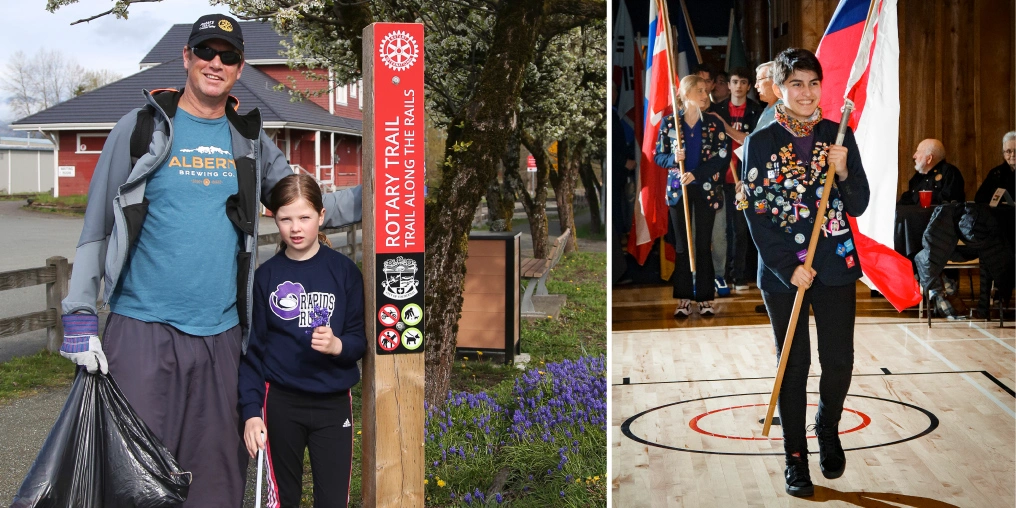
The Valley’s Rotary clubs donate funds to local youth organizations; hand out scholarships and bursaries; sponsor Interact clubs where high schoolers learn about leadership; and organize international exchanges for students 15 to 19 years old.
Ray Paquet, who has worked with young people through Rotary for almost 40 years, says, “I feel that investing in youth programs is one of the best ways to ensure that the future will be in the hands of citizens who will make the world a better and safer place. I find that working with young people we receive much more in return than the time and resources we offer.”
Not just local
Beyond the community, local Rotary clubs have championed the welfare of developing countries, becoming an important part of the World Health Organization’s drive to eradicate polio worldwide, advance food security, support literacy and maternal health, build sustainable economies in small and vulnerable communities, and provide safe water supply in Guatemala, Kenya, India, and Cambodia.
Richard Clarke notes, “Rotary is perhaps the world’s most inclusive organization, with an incredible diversity of membership in almost every country in the world. I am proud to be a member of an organization that evolves, innovates, welcomes change, and takes action to help make the world a better place.”
Some members have participated in medical missions to underdeveloped regions. Donna Cloutier is proud of the work she has been part of in the Philippines, Myanmar, and India, on missions which bring life-changing surgical care to those who have no access to treatment for cleft lip and palate conditions and burn injuries.
“We stay because we can see the difference we make, we have fun, and we create lasting friendships”
What motivates Rotarians?
Each local club has its own personality and way of doing things, as well as its own fundraising projects and events. One thing they all share is a sense of community and a spirit of fellowship—being a Rotarian is fun! Many friendships have been formed while working at the Ducky 500, Ribfest, the Rotary book sale, Whiskey Fest, dinners, auctions, and pancake breakfasts.
Joanne Coyle says, “I love being a Rotarian. We join a club to meet like-minded people intent on giving back to our community and to faraway communities through worthwhile projects—and we stay because we can see the difference we make, we have fun, and we create lasting friendships.”
A heartfelt thank you
All of Rotary’s accomplishments in the Comox Valley and beyond are due to the help and support of our local community, which is always unreservedly generous. This partnership is an essential part of Rotary’s success, and the Comox Valley never turns us down.