When you picture a paramedic, you probably associate the word with ambulances, adrenaline, and emergencies. But the word’s origins describe a professional who works alongside a medical doctor, in the same way that a paralegal works beside a lawyer.
There’s another, quieter way to be a paramedic, and that’s in community paramedicine. BC Emergency Health Services (BCEHS) Community Paramedics are highly trained and equipped to respond to emergency situations, but the bulk of their work happens at a slower pace.
That’s not to say that community paramedicine is dull. On the contrary, when BCEHS and the K’ómoks First Nation established a permanent KFN community paramedicine position in 2025, Tami Compton, Health Manager for KFN Health, was elated. “It’s exciting because it’s the first of its kind in BC,” says Compton. That is, KFN is the first First Nation to have a permanent BCEHS Community Paramedic.
Four days a week, Jason Stevens visits Elders and other KFN members in their homes to provide basic health-care services. As a BCEHS employee, Stevens is part of the provincial emergency response system and may be dispatched to high-acuity emergencies, but unlike other community paramedics who are integrated into local health-care teams on a geographical basis, he is dedicated to KFN members.
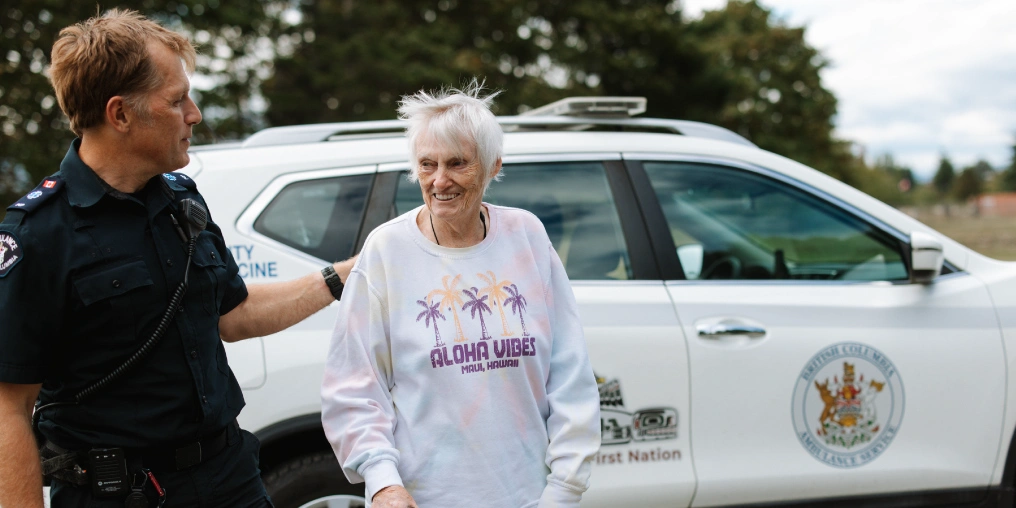
He does weekly health and wellness checks with them, checks people’s blood pressure and weight, assesses their general health, and gets them walking. “Movement is so important,” notes Compton. “It keeps people mobile, helps with their blood flow, heart health, fall prevention.”
Community paramedicine in BC
KFN now joins dozens of other places in British Columbia—mainly remote and/or rural communities—who’ve adopted a community paramedicine model since the program rolled out in 2016. The idea is to support people, especially older folks with chronic conditions, who are otherwise under-served in terms of health care. Community paramedics collaborate with local health-care providers to bridge gaps in services and deliver better patient care.
For KFN, it’s also about redesigning healthcare for First Nations to include cultural safety and advocacy. And it’s about incorporating traditional approaches into the colonial healthcare system—one of the Truth and Reconciliation Commission’s Calls to Action.
How it started
In 2022, Stevens attended an ambulance call in the Nation that left him with an uneasy feeling. “I felt a sense of mistrust between the patient and the healthcare professionals involved—just a weird kind of feeling,” he says. He followed up with Cyd Nealy, at the time a community health care nurse at the KFN Health Centre, and learned that many K’ómoks First Nation members were reluctant to call for an ambulance because they, or members of their families, had experienced perceived racism when seeking health care on and off the Nation.
“It just kind of snowballed from there”
At the time, Stevens had been thinking a lot about reconciliation. A problem solver by nature, he thought to himself, “Well, let’s do some reconciliation instead of just talking about it.” He had spent five years doing community paramedicine on Denman and Hornby islands, and he wondered if KFN could also benefit from a similar program.
As a first step, he met with Nealy and Tami Compton and volunteered to offer some exercise programs in the community.
“It just kind of snowballed from there,” Compton says. The word “snowballed” makes the process sound simple, but several authorities had to be consulted.
For about 18 months, Stevens offered twice-weekly exercise programs on a volunteer basis while his and Compton’s pitch about a trial community paramedic position made its way through KFN’s Chief and Council, and then through BCEHS and Ambulance Paramedics of BC CUPE 873 (APBC).
BCEHS and KFN’s Chief and Council approved a one-year trial position in 2023, then extended it through 2024. After two years, Compton says, “I went to Chief and Council with a question: ‘Can we make this permanent?’” The answer was yes, and BCEHS was in agreement.
“I listened to people’s stories, I was witness to their trauma”
How it’s going
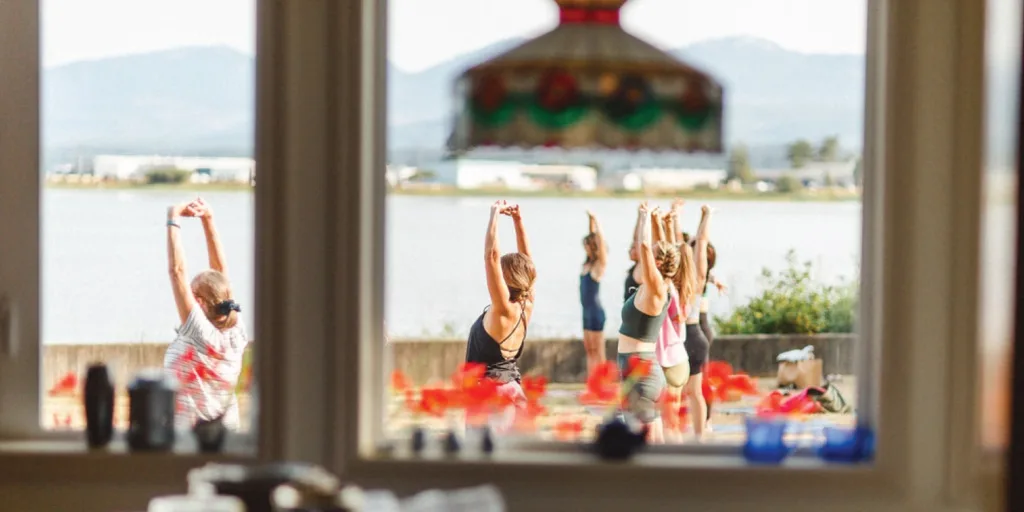
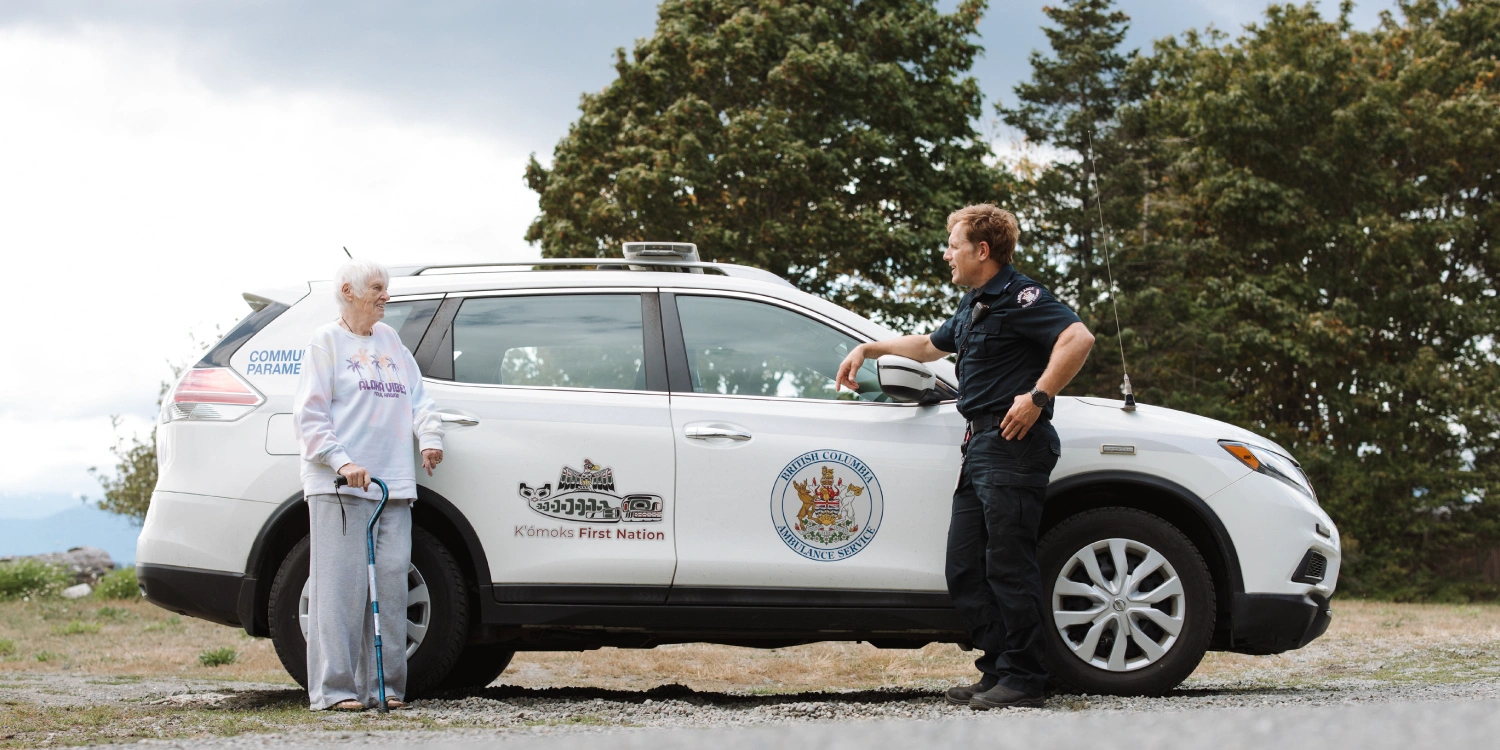
Now, in addition to offering his weekly chair exercise and chair yoga classes and the occasional educational workshop, Stevens drives to people’s homes in his BCEHS Community Paramedic SUV with the KFN logo, measuring blood pressure, assisting with diabetic care and respiratory conditions, identifying and mitigating fall hazards, assessing medications, and monitoring their recovery after an injury or illness.
A question of trust
For a time, Stevens delivered 70 meals to people’s homes twice a month. While the funding for this program has ended, it was a great way for him to get to know people and begin building relationships. He says simply, “I listened to people’s stories, I was witness to their trauma.”
Compton says: “Cultural safety is extremely important.” While no one person can undo generations of harm, Stevens’ presence in the community has helped to begin rebuilding trust, in part because he displays sensitivity and a willingness to listen and learn.
Trust also builds every time Stevens can help people navigate their health issues. Now, if someone is having a medical emergency, members call 911. After that, the KFN Health Centre team contacts Stevens to let him know a member has gone to the hospital, and he tries to meet them there.
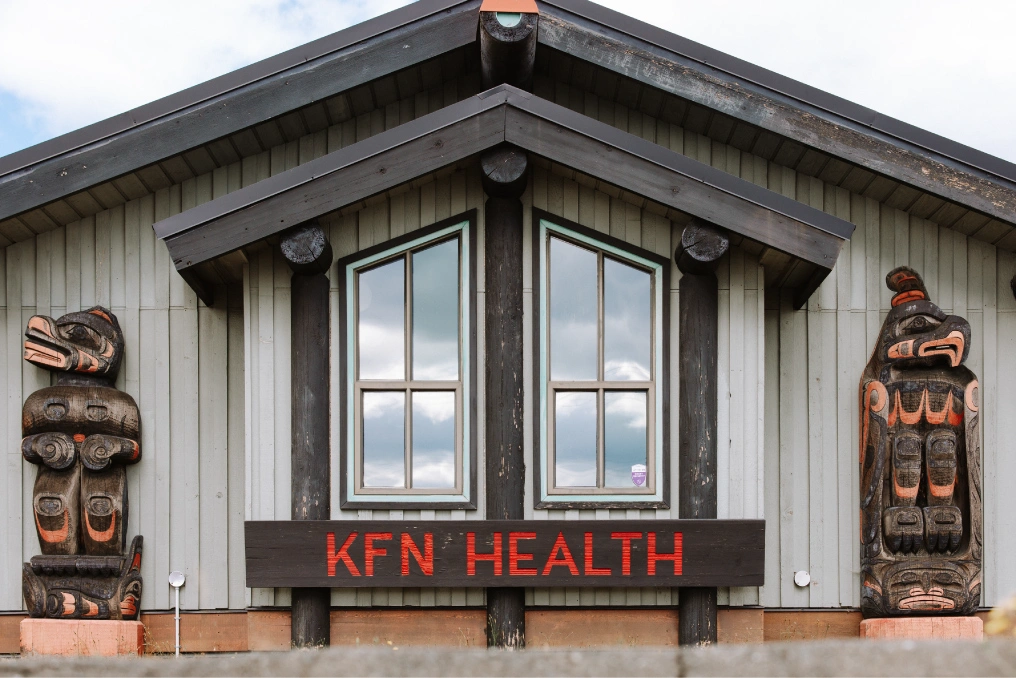
He also visits people who’ve been admitted to hospital. Compton tells the story of one such visit to an Elder, where Stevens suspected the patient was displaying signs of sepsis, a fast-moving and potentially fatal condition. He was able to advocate for the patient to receive urgent treatment that ultimately saved his life. “This person would not be here if not for Jason,” concludes Compton.
Stevens works closely with the KFN Health Centre’s two doctors, two nurses, and two counsellors and support staff. “He’s always in connection with the community nurses and physicians,” says Compton. “It’s a close-knit primary care team.”
While Stevens has no plans to leave any time soon, he’ll have to retire some day, and someone else will step into that permanent position he and Compton helped to bring about. That person will carry out the same duties: bridging gaps, building relationships, promoting health, and caring for people—the very essence of community paramedicine.