Laura Dempsey never knew her father, Hiromi Kaga, who died when Laura was a few months old. As an adult, she reconnected with her dad’s family, and, with their support, righted a decades-old wrong.
The Kaga family were originally from Cumberland, British Columbia. Sute Sumikawa was a picture bride, married by proxy, arriving in Canada in 1910. Her first husband, Naosuke Miyamoto, died of the Spanish flu in 1918, leaving her a young widow with four children under eight years of age.
When Sute later married Natsugoro Kaga, he formally adopted all the children from her first marriage—and the couple went on to have four more sons. Hiromi, who would become Laura’s dad, was Sute and Natsugoro’s second son.
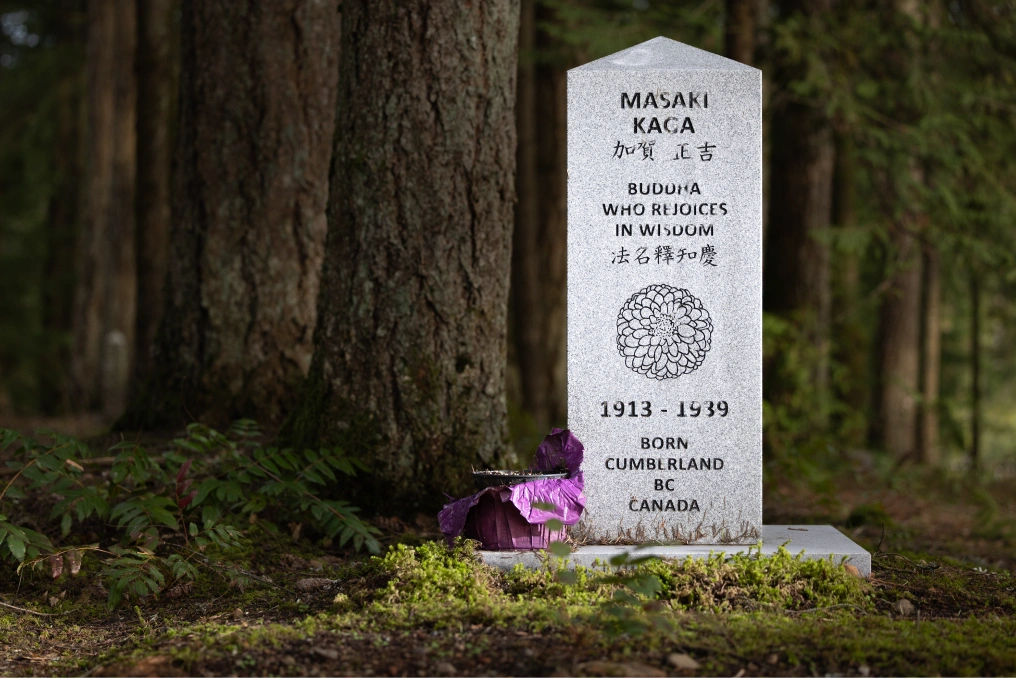
Sute lost Natsugoro and two sons, Kishio and Masaki, to separate logging accidents in the 1930s. In death, as they had been in life, Asians were separated from the community. The municipal cemetery had Catholics on one side and Protestants on the other; Japanese and Chinese had their own separate cemeteries down the road.
Natsugoro was buried beside Naosuke, Sute’s first husband, along with son Kishio, in a larger gravesite. Masaki was buried nearby. Naosuke had a small round grey granite monument for a headstone; the Kaga headstones were red granite pillars with a distinctive “K” carved on the top and sides.
In April 1942, along with almost 600 other Japanese Canadians living in the Comox Valley, the Kaga family was forcibly removed and incarcerated in Popoff, one of several WWII internment camps in the Slocan Valley.
In the postwar years, they moved to Taber, Alberta, where Hiromi met and married Laura’s mother, Miyoko Nishimura. After her husband’s death, the young widow relocated from Taber to Lethbridge, Alberta, to stay with her parents. Miyoko eventually remarried, moved to Winnipeg, and lost touch with her first husband’s family.
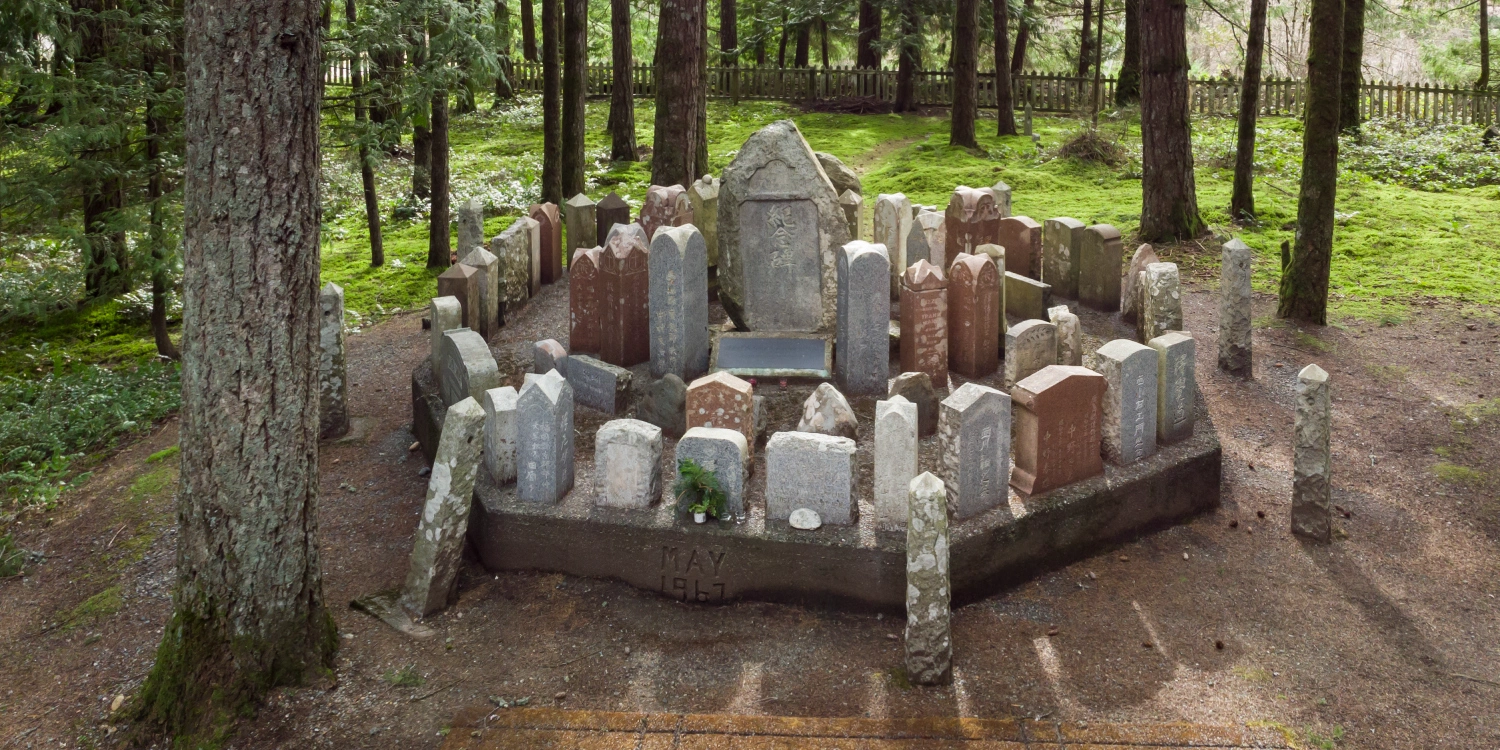
The Japanese cemetery in Cumberland was desecrated during the war, headstones scattered and damaged.In 1967, with funding from the Jodo Shinshu Buddhist Churches of British Columbia and the help of the Kiwanis Club of Courtenay, families were finally able to erect a central memorial cairn inside the main gate where the remaining stones were gathered. The Kaga family headstones were among the 59 weather-beaten stones, with classic Japanese inscriptions, on display. There was no way of determining exactly where anyone was buried, but the memorial’s presence recognized the Japanese-Canadian community members who had lived and died here.
One piece of Cumberland’s history, put back in the right place
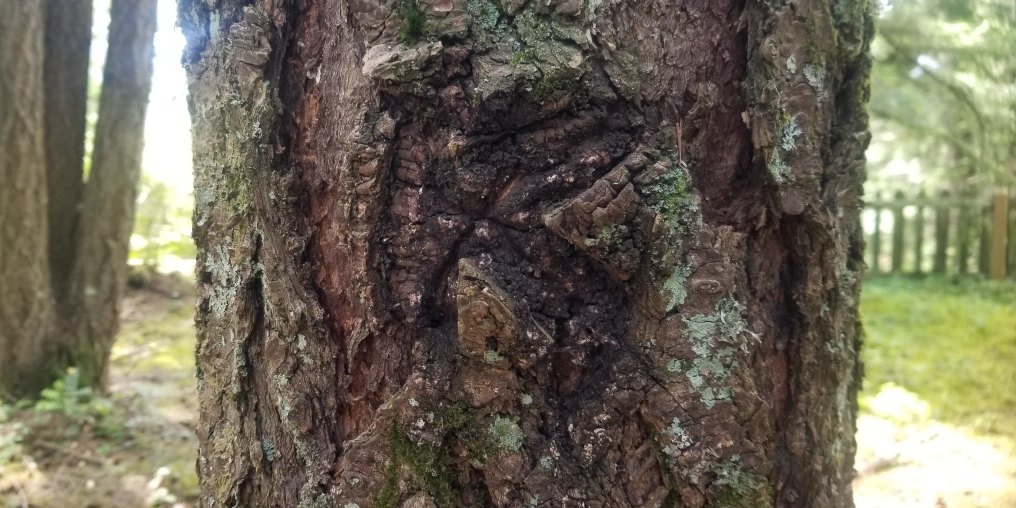
It turned out, however, that Laura’s Kaga uncles remembered the exact location where their family members were buried, even without stones to mark the place. When they returned with their families to Cumberland in the 1980s, the brothers carved a “K” into a tree near the burial site and took photos.
Years later, after reconnecting with her cousins, Laura was able to locate the gravesites using those photos. The carved “K” was grown over, but still visible.
In 2022, the BC government apologized to the Japanese-Canadian community and provided funding for redress and education. With legacy funding and family support, Laura made arrangements in June 2025 to install new monuments on the original gravesites, with inscriptions in English and Japanese. One piece of Cumberland’s history, put back in the right place.