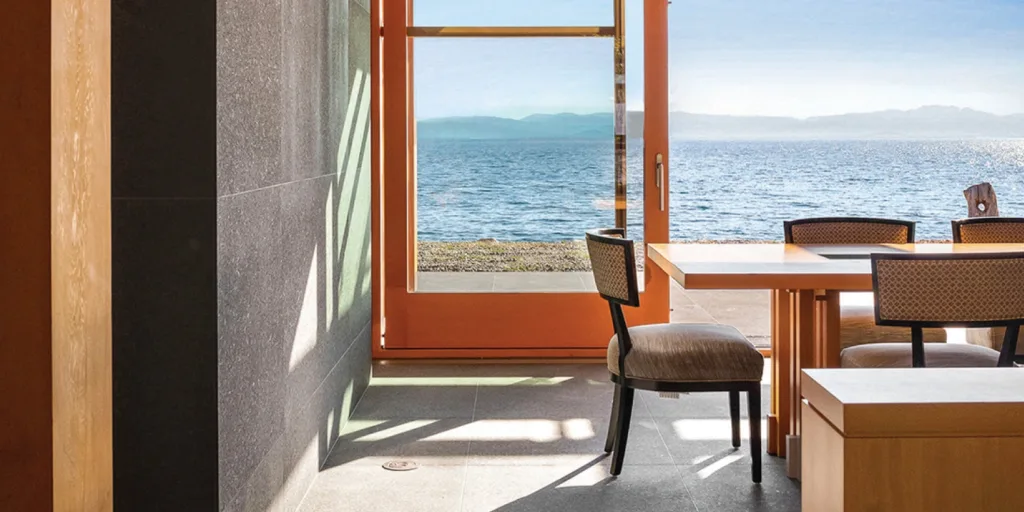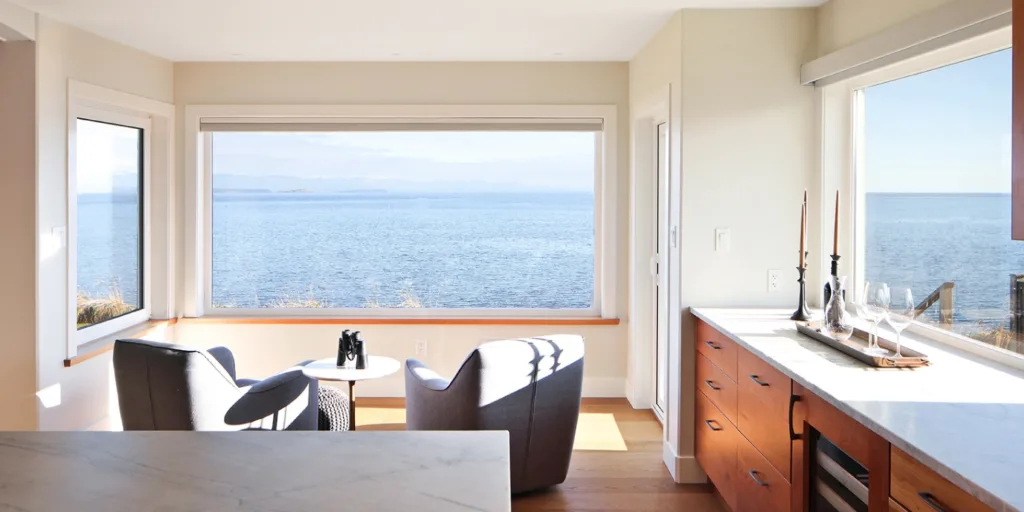

I grew up on the West Coast beaches of the Island and understand the attraction of dramatic waterfront property. The dream of buying one of these lots and renovating or building a beautiful home sounds great to me.
But hold on a second. Although that may have been relatively easy in decades past, things are not so simple today. Never has the phrase “Buyer beware!” been more apt.
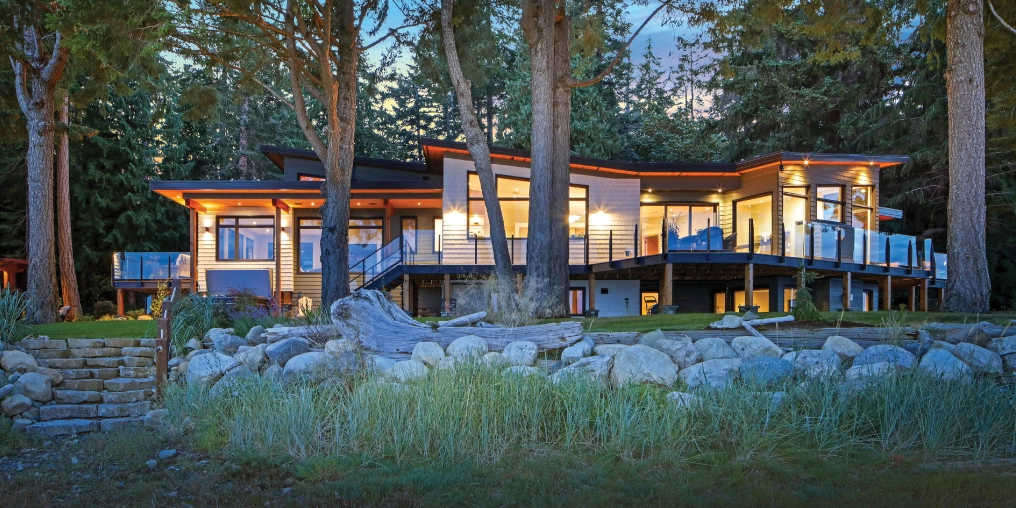
The reality of waterfront home construction on Vancouver Island
Climate change is leading to rising sea levels, and communities are working to adapt to this new reality in which coastal retreat* increasingly looks to be the responsible response.
Although it is hard to argue with this policy direction, homeowners are unfortunately left with a constantly changing regulatory environment in which the rules are often unclear, and the goalposts seem to move faster than you can plan around.
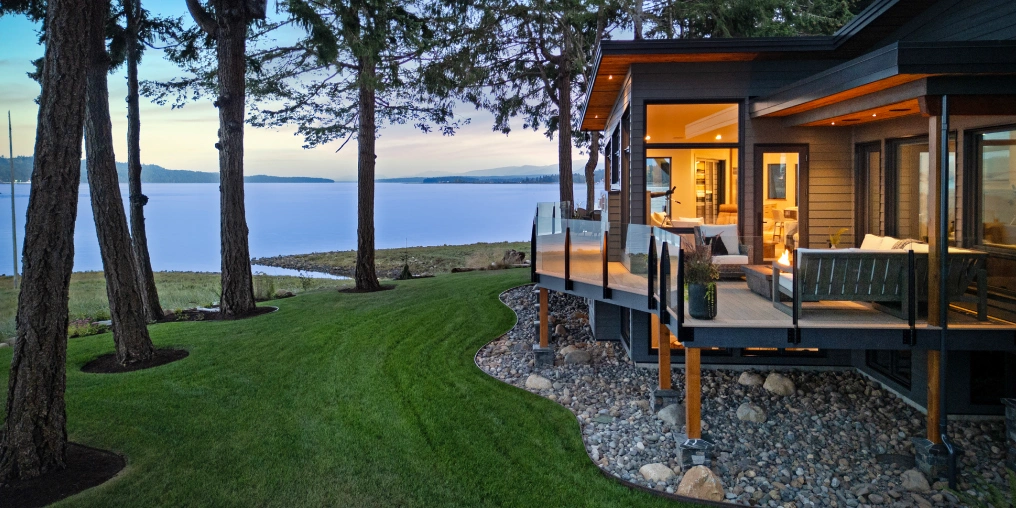
Coastal erosion: What’s happening along BC’s shoreline
A retreating coastline due to sea level rise is an inescapable reality we must face; you don’t have to look far to see examples of the impacts of erosion. When I was growing up in Tofino, for example, many properties along Chesterman Beach transitioned naturally from coastal forest dominated by Sitka spruce to thick salal bush to grass dunes interspersed with wild strawberry. Today, a stark riprap wall of blast rock at the edge of the trees runs the length of the beach, built to protect the homes from erosion damage. The dunes and beach flora? Gone.
The erosion of Savary Island’s sand banks is even more striking. In real time, the sand flows down in rivulets. Looking up, you can see exposed concrete fencepost bases and decks precariously close to the receding crest of the bank.
Navigating coastal construction regulations and sea level rise requirements
Similar stories will play out up and down the coast of British Columbia, and around the world, in years to come. Provincial and municipal governments are working to assess future risks and establish rules for long-term sustainable development.
Restrictions on coastal development, such as setbacks from the sea and the edge of steep slopes, have been in place for a long time. Generally, these have been clearly defined, predictable, and relatively simple to interpret. But as modelling and understanding evolve, governments have responded with requirements such as floodplain mapping, planning for sea level rise, and property-specific assessments. These new requirements, which often outpace official bylaw revisions, also tend to increase the need for professional reporting.
These days, building a coastal property is like boarding a train without knowing how long the trip will take, how many stops there will be along the way, the ticket price at each stop, or even where the final destination is.
Further complicating the situation, coastal properties are often subject to archaeological, environmental, and steep slope requirements.
All this makes it very challenging for homeowners to know what is possible on any given property before buying it or planning a major project. They may even find themselves facing new rules partway through planning.
The true cost and timeline of building on ocean property
These days, building a coastal property is like boarding a train without knowing how long the trip will take, how many stops there will be along the way, the ticket price at each stop, or even where the final destination is.
It is daunting, but if you go in with your eyes open—accepting of unknown costs, timelines and outcomes, and willing to accept creative solutions—you may realize your dream.
You must take a leap of faith, knowing that you will likely spend tens of thousands of dollars in professional and permitting fees and countless hours over a period that can take over a year. The cast of players can include municipal planning and building departments; provincial environmental, archaeological, and transportation departments; First Nations; designers; builders; geotechnical and civil engineers; archaeologists; and biologists.
In the end, you may find out that your original plans must be significantly altered or that you simply cannot do your project in a way that makes sense.
It is daunting, but if you go in with your eyes open—accepting of unknown costs, timelines and outcomes, and willing to accept creative solutions—you may realize your dream.
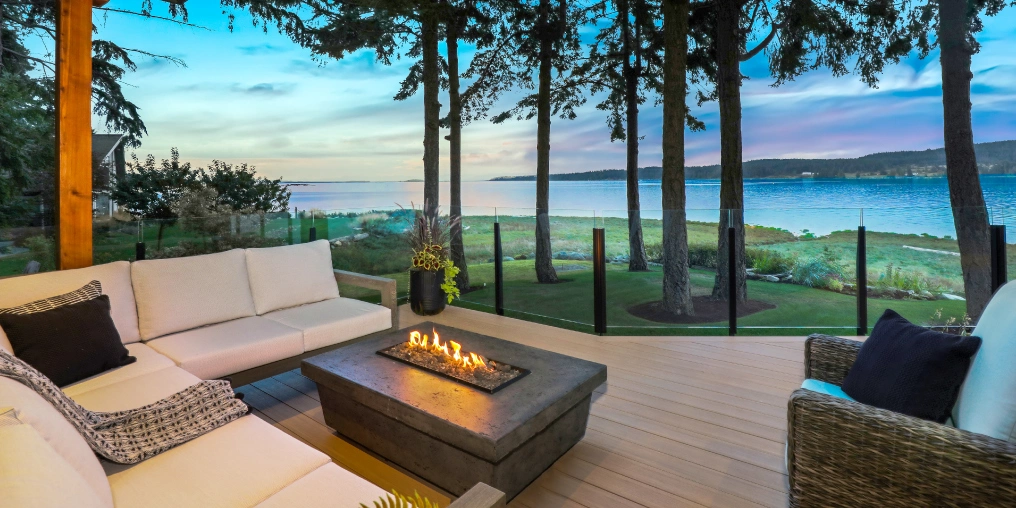
Case study: A Comox Valley waterfront home construction project
A recent project I was involved in highlights many of the of the challenges that arise with coastal development, as well as some solutions. The clients were longtime owners of a spectacular property in the Comox Valley. Although the existing house had served them well for many years, they were ready to build their dream home in which to enjoy retirement and host their friends and family. The existing house was built near the shore, with living space well below the current provincially mandated minimum Flood Construction Level for the area, so building a new house in that location was not an option.
The homeowners began working with their designer to plan an extensive renovation largely built off the existing foundation footprint. Because past renovations had left the house in quite good condition, the original plan was to move the structure to another property by barge. After this option was pursued for some time, it was deemed not allowable and had to be scrapped.
Changing course, we planned to demolish the upper level, saving the foundation, basement, and as much material as possible. The project required a Flood Hazard Assessment prepared by a geotechnical engineer to exempt the renovation from the current requirements, as well as a biologist report that studied the effects on flora and fauna. Because the property is within a provincially designated archaeological site, the homeowners also needed to hire an archaeologist and apply for a provincial archaeological permit.
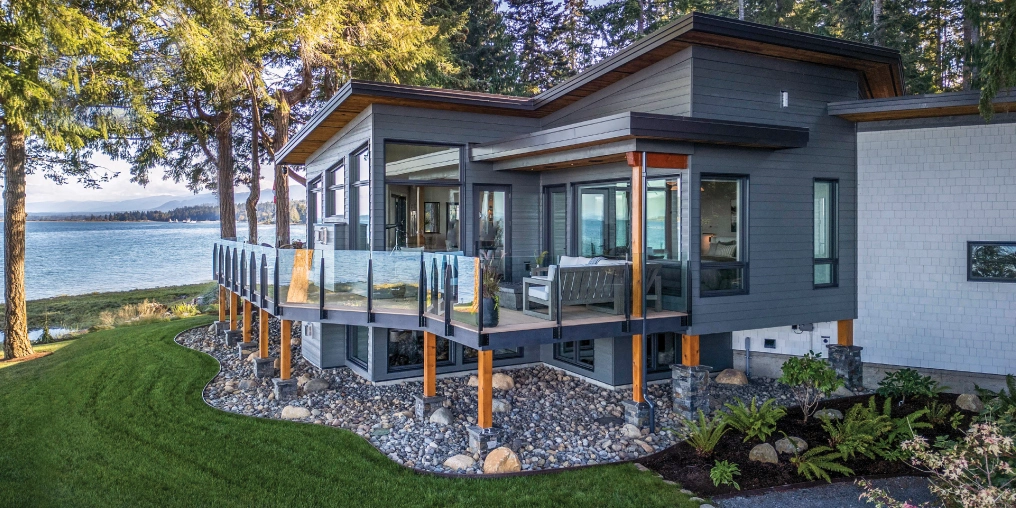
All these assessments pointed to the need to minimize ground disturbance. To achieve this, we planned for additions to the building to be built on helical piles instead of traditional concrete footings; new infrastructure lines would be laid with directional drilling instead of trenching.
The whole planning and permitting process took over three years before construction could begin. Although the train ride had its fair share of unexpected layovers, in the end, through persistence, working collaboratively with a team of professionals, and being willing to adapt, the owners eventually came to the end of their ride with a beautiful new home, wonderfully designed to nestle into its unique coastal surroundings.
The dream is still attainable, but it is important to do your homework and consult with local professionals who can help advise on the potential limitations and accept the risks inherent in these types of properties.
Even so, plans to build a small art studio have been stifled after more than two years of planning and sunk infrastructure costs due to a new interpretation of the term “habitable space,” leaving a sense of frustration with the vagaries of the regulatory system.
Should you pursue coastal home building? Expert advice
While I would not dismiss coastal development out of hand, my advice is to approach with caution. The dream is still attainable, but it is important to do your homework and consult with local professionals who can help advise on the potential limitations and accept the risks inherent in these types of properties.