
Believe it or not, I made such a choice, and I not only survived but thrived within that silent container. Were there challenges? Of course! Did I fall off the silence wagon? On occasion. Did I sneak in some digital contact here and there? I confess, I did! None of those lapses diminished the benefits of the time I spent with the Crystal Mountain Society on Galiano Island, learning from Lama Mark Webber.
From October 15, 2024 until January 22, 2025, I and thirty-two other practitioners dedicated ourselves to 100 days of silence. Housed in separate accommodations, we came together for the initial two weeks of group orientation and teaching before beginning independent practice.
My choice to attend was rooted in a strong foundation of attending retreats and personal practice since 2010. I have experienced many benefits from a dedicated meditation practice; the most profound being able to live well with a partner who has chronic leukemia.
Why do this?
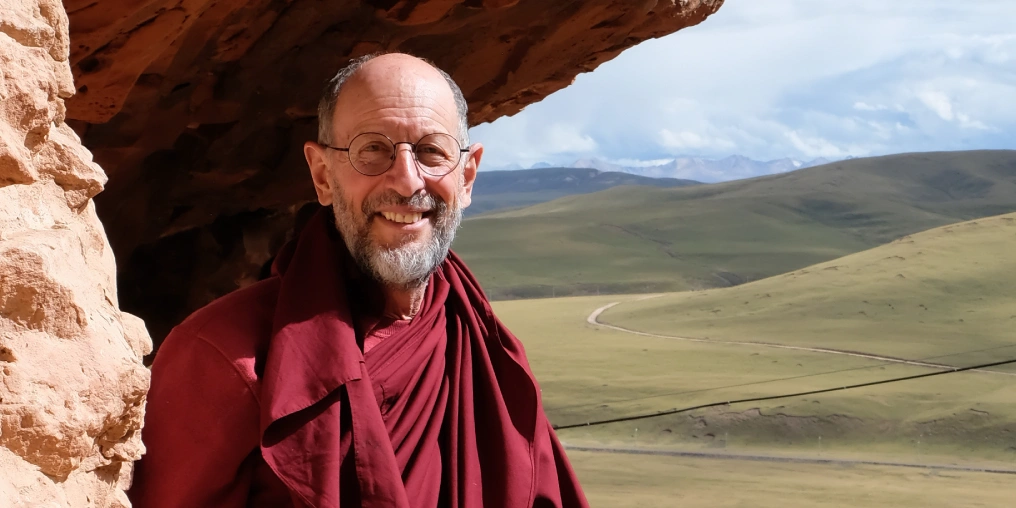
I first met Lama Mark in 2014, and I deeply respect this man. Born in Ontario, he is recognized as a reborn wisdom holder within Tibetan Buddhism, which he has been studying, practicing, and teaching for over 50 years. He is dedicated to transmitting the dharma from an unbroken lineage of teachers since the time of the Buddha—the same lineage as the 14th Dalai Lama. Because this lineage relies primarily on oral transmission, students are encouraged to study with their teacher in person
Preparing for the retreat was an important transition time, affirming my commitment to enter the unknown.
In shorter retreats over the years, I have benefited from Lama Mark’s ability to translate the ancient Tibetan Buddhist teachings for the western mind. Topics have included staying present to challenges of aging and illness, preparing for death, and embodying our innate goodness for the benefit of all beings.
Aging was another factor in my decision to attend. Lama Mark is now in his late 60s, so it’s uncertain how long he will continue to teach, or how long he will live. We are all impermanent! I felt an urgency to take advantage of this precious gift he was offering to the Crystal Mountain community.
I had a few months to prepare for my time away, which meant delegating business tasks to team members; liberating funds from my RRSP; and organizing household details, relationships, and personal responsibilities. Preparing for the retreat was an important transition time, affirming my commitment to enter the unknown.
In retreat
Basic instructions: Avoid using digital devices; limit reading to Dharma texts and no more than one hour a day (in 20-minute increments); avoid eye contact or talking to others; and construct your daily practice routines.
Friends often ask me, “What did you do for three months?” Our first two weeks were spent in group sessions with daily classes and meditation led by Lama Mark, plus regular one-to-one time with him. Then we had several weeks of open-ended time, on our own—this was more of an “inside job.” It meant developing and sticking to daily routines, including:
Morning prayers—setting the foundation for the day. I often woke at 4 a.m. with great delight (not my usual morning routine, but this is what evolved during retreat).
Breathwork—opening [italic prana] (energetic channels within the body) through sitting, walking, and standing postures.
Physical practice—yoga, balance, slow walking with constant awareness. One powerful suggestion from Lama Mark was to observe crossing thresholds—one room to another, inside the house to outside—waking up the senses.
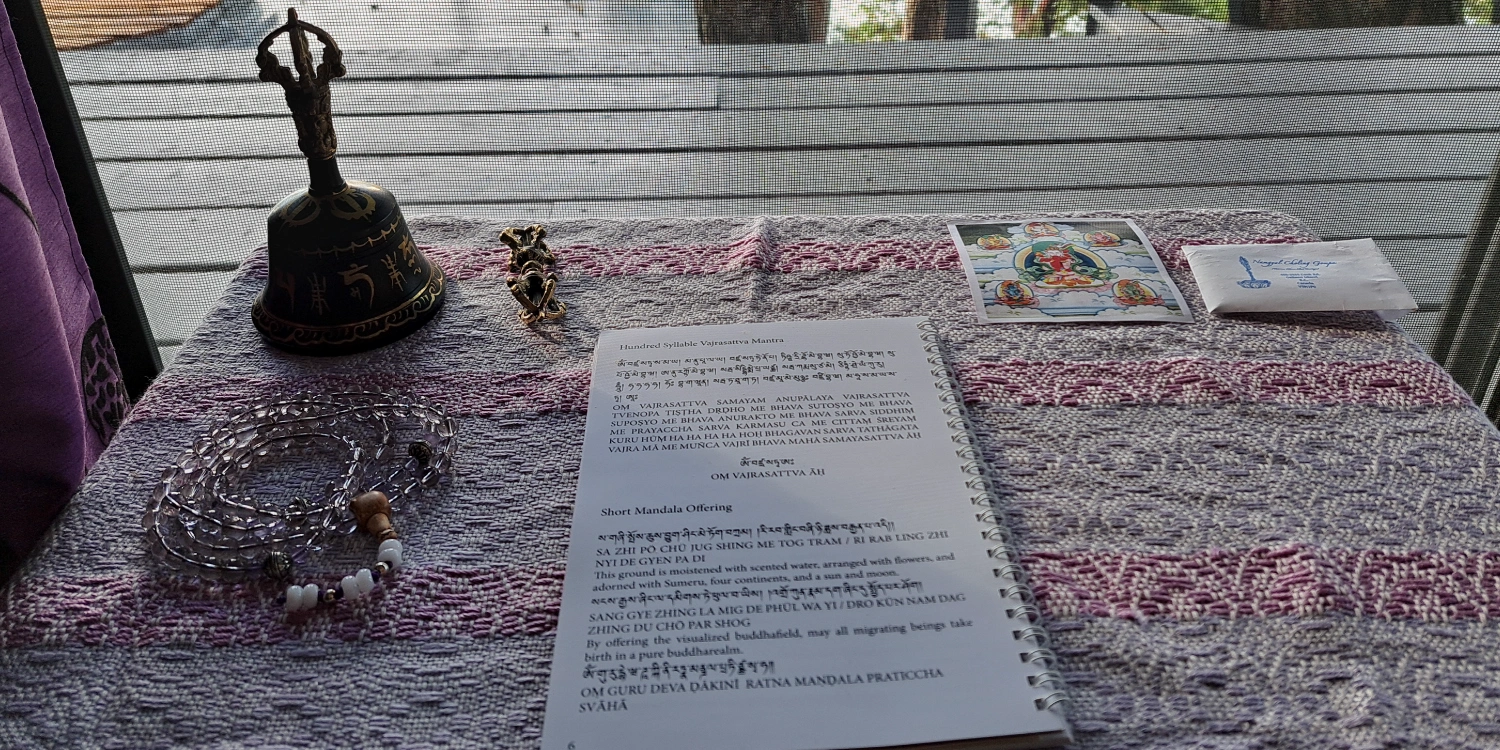
Deity meditation—integral to Tibetan Buddhist lineage teachings. Each practice cycle (sadhana) took approximately two to two and a half hours, and I would do at least two a day, sometimes three.
Deity meditation was the heart of each day. Every here and other places in this story sadhana includes time spent in “open awareness,” a pause with no discursive thought and no internal narrator cluttering up the mind. It’s a rich sensory aliveness, but not always easy to achieve; with practice, my ability to stay in open awareness increased significantly. This was one of the outcomes I was hoping for when I entered retreat.
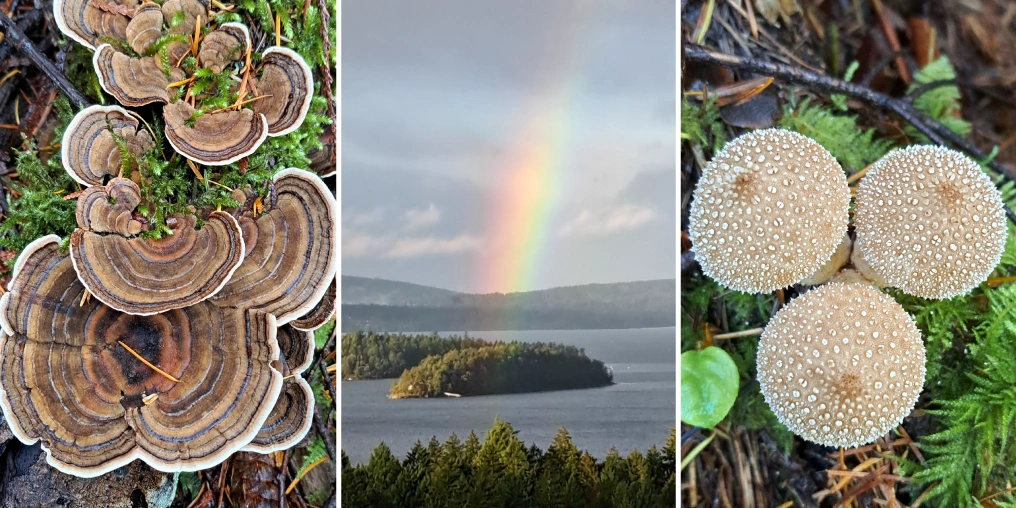
After my morning sadhana practice, which typically ended by 11:00 a.m., I would wander in one of the nearby forests for anywhere from two to four hours. The fall rains were generous, the terrain was productive (so many mushrooms!), and I had as much time as I wanted to slow down, observe, and explore. Any sense of “self” fell away as I became immersed in the interconnectedness of all.
I kept Dharma text reading to a minimum according to directions received. If I read more than 30 minutes, migraine headaches reminded me to stop.
Did I break the “rules?” Yes, I did! Even with my advance planning, things came up during retreat—including a poorly timed business audit. The unexpected did need my attention and there were situations where I broke with protocol and used text messaging on my phone, which was technically [italic verboten]. Although I wasn’t perfect, I was able to have deeper experiences of stillness, emptiness, and slowing of discursive thought.
Learning and integration
As I write this, it’s been more than six months since I arrived home. I anticipated a few weeks of relatively unstructured time as I resumed my business, reconnected with clients, and picked up the threads of daily life.
That’s not what happened. Shortly after arriving home, I received news that my sister, Annette, had a very aggressive form of untreatable cancer, and was rapidly moving toward the end of her life. I knew she had been experiencing pain in her hip but had never imagined the underlying cause. I immediately flew out to Calgary to spend several days with Annette.
I discovered an enormous capacity for staying present to her active dying process, sitting in silence with her, quietly saying prayers for an easeful transition, loving her and her family as best I could. Lama Mark had given us an image to work with as we left retreat: “sitting on your lotus” amid worldly chaos. This somatic reminder guided me; I could more easily notice when I was ungrounded and take time to breathe back to my centre—my lotus.
I’m more inclined to extend myself, to help others, and to offer the best of what I’ve learned. My mind is clear, and I feel more joyful.
Further jolting my nervous system has been the continuous stream of disturbing news from the south (and countries further afield). Nervous system regulation has become a priority; I now limit what I listen to and how much sensory input I receive.
When people ask me what has changed since attending the retreat, I notice I have more confidence. I am less concerned about outside judgments. I’m following my own inner guidance in slow, incremental steps, staying curious and observing what is in the moment. I stay present to difficult emotions and do my best to prevent worst-case scenario storytelling: “I’m having stomach cramps, nothing more. This is not cancer. Full stop.” Generally, life feels more spacious, even with a busy schedule full of challenges and celebrations. I’m more inclined to extend myself, to help others, to offer the best of what I’ve learned. My mind is clear, and I feel more joyful.
I used to think that aging was all about contraction. Buddhism is teaching me about expanding beyond the perceived limits of the Self. It’s a magnificent exploration.